July 21, 2024

The Dynasties of Italy: The House of Filangieri

Reprinted from Western Exile @westernexile

Origin: Normandy
States: Kingdom of Sicily, Kingdom of Naples, First French Empire, Kingdom of Italy

Highest Titles: Prince of Arianello, of Cutó, of Mirto, of Satriano, Duke of Cardinale, of Taormina


Heraldic Blazon

Argent a Cross Azure

Following the conquest of Jerusalem in the First Crusade, Richard of Arnes, ancestor of the Filangieri, is said to have adopted the cross, choosing blue to symbolise that his endeavours had been in the service of the King of Heaven.


Heraldic Variants


As the family split into multiple branches, numerous variations on the dynastic arms arose. The Filangieri of Sicily, for example, added nine bells in remembrance of their having sounded the alarm that unleashed the revolt of the Sicilian Vespers in 1282.

Other variants include the label of three points gules granted to the Filangieri by Charles I of Anjou, while following the Austrian conquest of the Italian South in 1720, Emperor Charles VI permitted the family to charge their arms upon the Imperial Eagle.

Extended Titles

Due to the antiquity and extent of the dynasty and its branches, across the centuries the Filangieri would hold at least 109 fiefdoms, and amass an extraordinary list of titles, including 16 countships, 2 marquisates, 8 dukedoms and 6 princeships.
Overview

The sources largely agree that the Filangieri trace their origins to a certain Richard 'Angerius' of Arnes, who in the wake of the Norman conquest of the Italian South, followed the famed adventurer Robert Guiscard and settled in the Principality of Salerno in 1045.

In 1096, Angerius would serve with distinction alongside Godfrey of Bouillon and other Norman lords of the South on the First Crusade. Rewarded with many fiefdoms, it is indeed from he that the Filangieri derive their name - 'filii Angerii' - 'Sons of Angerius'.
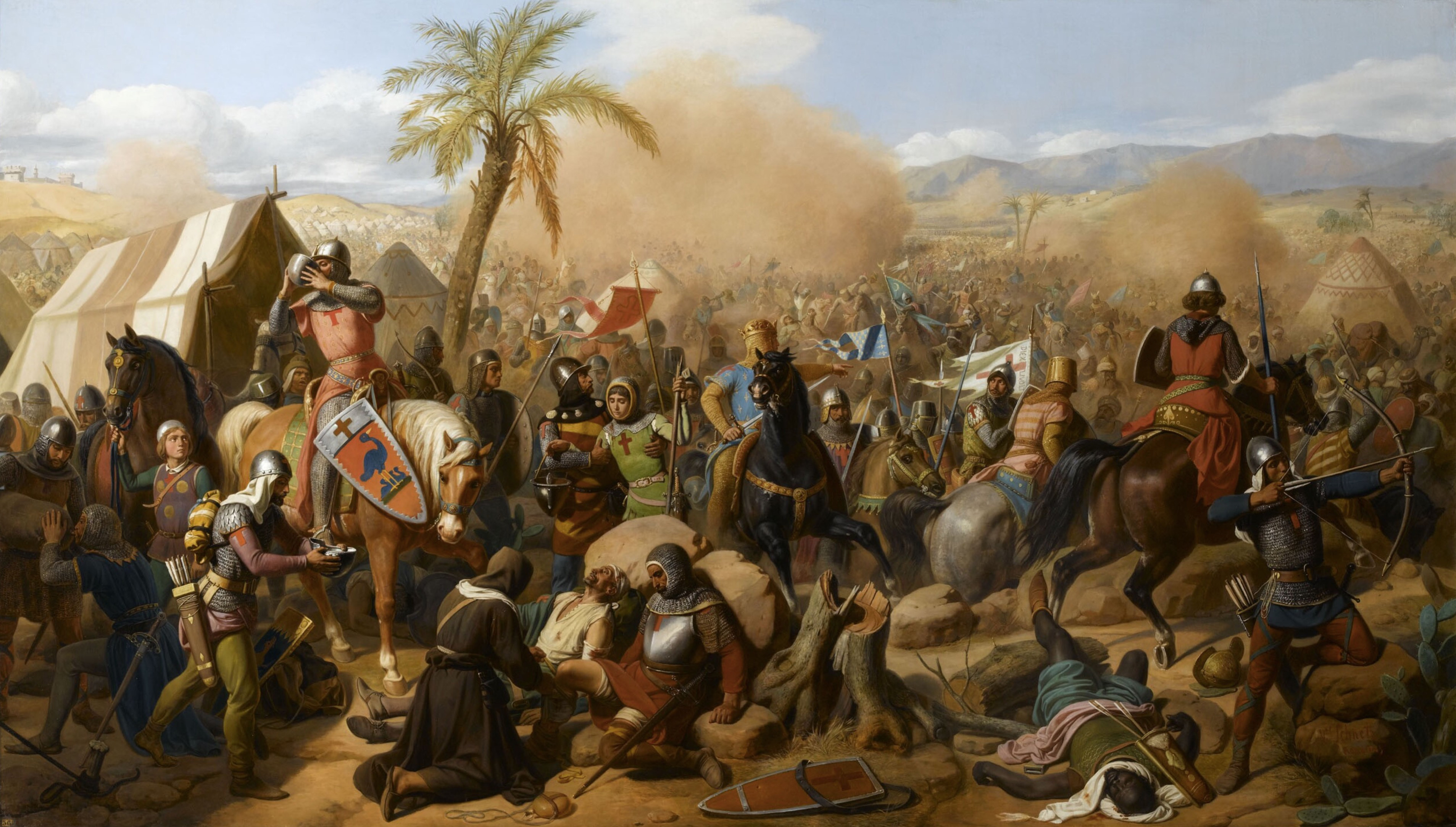
For almost the entirety of the existence of the Southern Kingdoms, under the Hauteville, Hohenstaufen, Angevin, Aragonese, Habsburg and Bourbon kings, and beyond into modern times, the Filangieri would occupy the utmost positions of civil and military prominence.

As a result of their sustained pre-eminence, through fortune, misfortune, intrigue, marriage and prowess the Filangieri would steadily establish a multitude of branches across the Neapolitan and Sicilian realms, many of which flourished in their own right.

Emblematic of the pre-nation state world, the Filangieri often distinguished themselves abroad, serving at times Spain, Austria and even Napoleon Bonaparte. Yet the rise of nationalism, which the Filangieri fought both for and against, would herald their decline.

The conquest of the South in 1860, and consolidation of the united Italian state, would see the Filangieri largely fade from political prominence, though the family has continued to produce prominent intellectuals, from historians to economists, to this day.

Illustrious Members

Richard 'Angerius' d'Arnes (pre 1045-1104)

The progenitor of the Filangieri, Richard was the first of the line to arrive in Italy from Normandy, sealing the family's rise with the valour he showed on the First Crusade.

Riccardo Filangieri (c. 1195-1278)

Like his ancestor, Riccardo would also distinguish himself in the Holy Land, fighting in the Sixth Crusade under Emperor Frederick II, before siding against the Empire in the resulting civil war.

Gaetano Filangieri (1753-1788)

Among the most prominent philosophers of 18th century Italy, Gaetano's eloquent advocacy for legal reform in the face of the Enlightenment won him the support of King Ferdinand of Bourbon, before his premature death.

Carlo Filangieri (1784-1867)

The most controversial, and therefore famed, member of the dynasty, the life of Carlo would span 83 years that changed his homeland, and Europe, forever, in events that he himself would be more than a passive observer to.

By quirk of fate, Carlo would be granted military command in the First Empire as a result of Napoleon's admiration for his father Gaetano. Unfortunately, this would lead to his treason, when he accompanied the French army in its invasion of the Kingdom of Naples in 1806.
His loyalty to the Napoleonic cause would see his career blossom in Italy and in Spain, as aide-de-camp to the Emperor's brother-in-law Joachim Murat. Fortunately for him, following King Ferdinand's restoration in 1815, he was reconciled with the Bourbon monarchy.
When Europe was convulsed by revolution in 1848, Carlo would lead the Bourbon army to victory over the nationalist junta that seized the government of Sicily, though his triumph was marred by the high civilian casualties that resulted from the siege of Messina.
In 1859 an elderly Carlo served as Prime Minister to Ferdinand II, where his proposal of a Faustian alliance with the nationalist government of Turin came to naught. Unable and unwilling to stem the onslaught of the subsequent invasion, he submitted to the new Italian state.
Gaetano Filangieri (1824-1892)
A connoisseur of the arts and renowned scholar of Neapolitan history, Gaetano played a decisive role in the protection of the cultural heritage of Naples, as well as in many of the city's learned societies.
Architectural Legacies

The Filangieri Museum, Naples

Determined to prevent the government from demolishing the historic Palazzo Como, in 1882 Gaetano Filangieri transformed it into a museum at his own expense, donating a vast collection of his curiosities to populate it.

Palazzo Mirto, Palermo

Crowning a meteoric career loyal to the Spanish Crown, in 1683, former Praetor of Palermo Don Vincenzo Filangieri, Prince of Mirto, transformed the family palace into one of the most sumptuous residences of the Sicilian capital.

July 20, 2024

Two Out of Three Ain’t Bad

Promotional posters for Hellboy: The Crooked Man, Nosferatu, and Time Bandits
The über-geek in me is really looking forward to the upcoming Nosferatu and Hellboy: The Crooked Man movies scheduled to be released later this year. Considering how bad the movie industry has been the past decade or so I should be more cynical, but the trailers for these two films look pretty promising. By contrast, I am much less excited for Apple TV’s adaptation of Time Bandits. I suppose it was too much to expect a trifecta.

Hellboy: The Crooked Man (2024)
Hellboy: The Crooked Man #1,
Dark Horse Comics, 2008
“Dark things call to dark things.” ~ Anung Un Rama (Jack Kesy), Hellboy: The Crooked Man
A big fan of retro sci-fi/steampunk (Heavy Metal), 
[1] sword & sorcery (Savage Sword of Conan), and horror (Eerie, Creepy, and Vampirella) comics, I did not read Mike Mignola’s Hellboy in the 90s. A little too old, by then I was way more into books, music, and girls, and drifting away from graphic novels. While I did enjoy the first two live-action films starring Ron Perlman, [2] I did not care for the 2019 Hellboy reboot with David Harbour.

Doing a little research, the story is supposed to take place in the desolate backwoods of Appalachia in the 1950s. [3] That alone is the stuff nightmares are made of. Similar to the way Jaws (1975) ruined the ocean for me, the rapey hillbillies in Deliverance (1972) have me almost as terrified of the American hinterlands as I am of Gotham’s crime-ridden subway system.

Without giving too much away, our cambion (half-demon) protagonist battles a coven of witches and the “Crooked Man,” an executed 18th-century war profiteer named Jeremiah Witkins who has returned from Hell and haunts the remote wilds of Virginia. [4] I have no idea how true to the lore the Crooked Man movie will be, but I like the dark and spooky ambiance of the trailer. Reportedly absolutely no CGI was used on Hellboy or the Crooked Man. 
Using only practical effects, this gives it more of an old-fashioned horror movie vibe than a superhero flick.
Jack Kesy is convincing as the corneous-shorn hell-spawn
Watch Trailer

Nosferatu (2024)
“He is coming” ~ Just about everybody in the trailer
Even more excited for Robert Eggers' Nosferatu, I have always been fascinated by vampires. As a kid, who didn’t love playing with plastic fangs on Halloween and repeating the famous line—wrongly attributed to Bela Lugosi in Dracula (1931)—“I vant to suck your blood,” in your best Transylvanian accent? Later enticing my overactive adolescent imagination, I relished, among others, the erotic vampiric depictions of Manuel Sanjulián, José González, and Frank Frazetta, especially those of the voluptuous blood-sucking temptress Vampirella.

A remake of F.W. Murnau's 1922 German silent film Nosferatu – Eine Symphonie des Grauens (Nosferatu: A Symphony of Horrors), the forthcoming film stars Bill Skarsgård as the vampire, Count Orlok. Commonly mistaken as the vampire’s name, “nosferatu” is actually an archaic Romanian word for “vampire.” Though we never see Orlok’s harrowing visage in the trailer, there is no doubt this is going to be a visually stunning period piece replete with dark, grotesque, and macabre imagery.
Count Orlok in F.W. Murnau's Nosferatu - Eine Symphonie des Grauens (1922)
Like the vast array of literary folklore, poetry, and fiction dedicated to the ghastly creatures of the night, most notably Bram Stoker’s Dracula (1897), there have been countless cinematic depictions since Murnau’s horror classic. Too many to remember, let alone list here, there are more than a few I would like to forget. Some of the better ones include the dark comedies Vampires (2010) and What We Do in the Shadows (2014).

Perhaps a bad sign, I forget my verdict on the three-part BBC/Netflix television series Dracula (2020), but I do recall being amused by the scene where Count Dracula (Claes Bang), after being imprisoned beneath the sea in his coffin for 123 years, resurfaces and is astonished by the technological advances of the modern world. "I knew the future would bring wonders," he tells his victim, "I did not know it would make them ordinary."

Considering Hollywood’s poor track record of late I shouldn’t have high expectations, but for some reason I do. Looking forward to seeing it in the theatre, my only complaint (thus far) is that Nosferatu is being theatrically released on Christmas Day.
Lily-Rose Depp as Ellen Hutter, the object of Count Orlok's unwanted affection
Watch Trailer

Time Bandits (2024)
The Supreme Being (aka God),
Time Bandits (1981)
“Is it in fact unfair to criticize a formerly great artist for his latter day sins, is it better to burn out or fade away?” ~ Barry Judd (Jack Black), High Fidelity (2000)
Unfortunately, as good as Hellboy and Nosferatu look, Apple TV’s upcoming Time Bandits series looks utterly dreadful. I had a whole tirade planned to attack the talentless hacks in the motion picture industry who incessantly set about ruining successful and beloved franchises, [5] however, I was sorry to learn, that director Terry Gilliam, the creator of the original Time Bandits (1981), is affiliated with this project. I could not be more disappointed.

Clearly marketed for children, one can say that I am not the target audience. My response to that would be, so was the original, and as far as I’m concerned it still holds up and makes me laugh. I know this because I recently watched it with my nephews and we were all rolling with laughter. Dark, gritty, smart, and irreverent, there was no sanitizing or dumbing down necessary. Its anti-materialistic message is timeless. Easily the greatest cinematic portrayal of Napoleon Bonaparte I’ve ever seen, it also boasts my favorite rendition of Frank Sinatra and Sammy Davis Jr.’s catchy ditty Me and My Shadow. The Robin Hood segment with John Cleese was comedic genius.
(Top) The real Time Bandits: Og, Strutter, Fidgit, Vermin, Randall, and Wally.
(Bottom) The wannabes: I couldn't be bothered to look up their names 
The two versions of the story feel very different. In the original movie, the diminutive highwaymen (“stunted little proles” as the Evil One calls them) have a brief disagreement over control of the map of the universe. “Do you want to be leader of this gang?” asks Randall. “No, we agreed no leader,” responds Strutter. “Right,” says Randall, “so shut up and do as I say.” Hilarious! In the remake, the new DEI time bandits are surrounded by masked warriors and a female samurai threatens to kill them if they don’t identify themselves. “I am Penelope,” says Lisa Kudrow, “and I am in effect the leader.” When all the swords are aimed at her, she cravenly changes her tune: “Fundamentally though we are all equal.” Absolute cringe! If this is the kind of drivel they’re marketing to children these days, it's no wonder they’re all messed up.

Trailers generally offer highlights and spoilers from the show to help entice viewership. If that is the best the new adaptation has to offer then they are in big trouble. Maybe it’s my twisted sense of humor, but I could not muster a single chuckle. Never mind the recent assassination attempt of President Trump, the ongoing political turmoil, or the coming global cataclysm, this garbage proves we are living in the darkest timeline.
It looks like they changed the Supreme Being into Neptune, Triton, or Poseidon
Watch Trailer (at your own risk)

~ By Giovanni di Napoli, July 19th, Feast of Saints Giusta and Rufina

Notes:
[1] Heavy Metal was a sci-fi and fantasy magazine published between 1977 and 2023. Filled with fantastic stories, characters, and artwork like Den (Richard Corben), RanXerox (Stefano Tamburini), and Druuna (Paolo Eleuteri Serpieri), my all-time favorite was a short one-off five-page story about an un-killable warrior named Kyrn by Simon Bisley and Garry Leach in the 1993 special issue Heavy Metal War Machine.
[2] Hellboy (2004) and The Golden Army (2008).
[3] The Crooked Man was a three-part miniseries published in 2008 by Dark Horse Comics in Hellboy issues 33 through 35.
[4] Ibid.
[5] The most unforgivable example to my mind was the desecration of J.R.R. Tolkien’s Lord of the Rings by Amazon’s irredeemable Rings of Power (2022).

July 17, 2024

Photo of the Week: The Farnese Bull

The largest sculpture found from Greco-Roman antiquity, The Farnese Bull depicts the Punishment of Dirce by the sons of Antiope. Museo Archeologico Nazionale di Napoli. Photo by New York Scugnizzo

July 13, 2024

Prayers for Butler, Pennsylvania

Our thoughts and prayers are with the victims killed and wounded at President Donald J. Trump’s campaign rally on Saturday, July 13th in Butler, Pennsylvania. According to initial reports, the assassin and at least one attendee are dead after shots rang out during Trump’s speech. The former president and at least one audience member, listed in serious condition, were also shot. A bloodied, but defiant, Trump was rushed offstage by Secret Service agents.

Unsurprisingly, unhinged ideologues on social media have suggested that the assassination attempt was staged. Considering the incessant dehumanizing rhetoric leveled against their political rivals, especially Donald Trump, these same mattoids would have certainly celebrated if the shooter had been successful.

May St. John Neumann and Our Lady of the Immaculate Conception protect and watch over you.

Prayer for Victims of Terrorism

Loving God, welcome into your arms the victims of violence and terrorism. Comfort their families and all who grieve for them. Help us in our fear and uncertainty, and bless us with the knowledge that we are secure in your love. Strengthen all those who work for peace, and may the peace the world cannot give reign in our hearts. Amen.

A Look at the Salian Kings and Emperors at the Imperial Cathedral of Speyer, Germany

Monument of King Rudolf I of Habsburg
A friend visiting Germany made a pilgrimage to the Romanesque Imperial Cathedral Basilica of the Assumption and St. Stephen in Speyer, Rhineland-Palatinate; and sent us pictures of the tomb of Adolf of Nassau, King of the Romans, and the monument of King Rudolf I of Habsburg in the Narthex. Behind the monument of King Rudolph I can be seen a statue of King Adolph of Nassau and a statue of King Albrecht I of Germany. Statues of King Rudolph of Habsburg and Holy Roman Emperor, Henry V, stand sentinel over King Adolf’s tomb.
Tomb of Adolf of Nassau, King of the Romans

July 12, 2024

Brief Responses to Recent “Outrages”

People have recently asked me why I didn’t write something about the debate between Trump and Biden, Archbishop Viganò’s excommunication, or the elections in Paris. Truthfully, I don’t have the time or the will to write about every "major news story" that takes place around the world. Even if I did, I’m not sure I would want to waste my time on some of them. While I’m not happy with any of these events, I certainly wasn’t surprised by them. In fact, I’m actually more shocked by the emotional outbursts of so many of our readers. Concerning the three examples I just cited, who honestly didn’t see any of this coming?

For the umpteenth time, American politics are a joke and have been for a long time. I lost faith in the system ages ago and I will not participate in a lie. Quite frankly, I’m no longer moved by any of it. I’m not saying it’s beyond reproach or discussion, nor that we should pretend things aren't as bad as they are, however, venting derision at the system while debating unhinged ideologues ultimately (at least in my case) accomplishes little. It may be cathartic to some, but it makes me angry. Instead, I try to remain detached and focus all my attention on faith, family, and culture.


More disheartening, the Vatican is equally as corrupt and the Holy Father has shown himself to be a vindictive and petty man, especially when it comes to Traditional Catholics. Whether he is right or wrong, Viganò forced Francis’ hand. Truth doesn't protect us from our overlords. People need to stop believing our adversaries in church and state are humane or play by the same rules as us. I pray for their conversion, but forever remain vigilant and, God forgive my cynicism, wary of their true intentions.


As for Le Pen and the other so-called “far right” candidates of Europe, they have all up to this point proven themselves to be nothing more than controlled opposition. True change will not come through the ballot box—democracy is a farce. As pointed out by more eloquent and learned men than me, the "established channels" (media, education, finance, etc.) are all compromised. [1] Less confident than others in mass man's "great awakening," I will end this diatribe with the more charitable words of Western Exile: 

"I do, however, dare to dream that a critical mass are now realising this - that the very system itself has evil woven into its roots, and 'voting' is watering a weed and hoping a rose will sprout." [2]

~ By Giovanni di Napoli, July 11th, Feast of St. Oliver Plunket


Notes

[1] Western Exile @westernexile (X, July 7, 2024)

[2] Ibid

July 10, 2024

Photo of the Week: The Venus Callipyge

The Venus Callipyge, Roman, 1st or 2nd century BC. Museo
Archeologico Nazionale di Napoli. 
Photo by New York Scugnizzo

Ponderable Quote: Charles A. Coulombe

The Holy Grail, both as actual relic, legend, and symbol, epitomizes everything I love, in ascending order: folklore; chivalry; monarchy and its defenders; angels, saints, and the Blessed Virgin; the Passion, Sacred Heart, and Precious Blood of Christ the King. ~ Charles A. Coulombe (X, July 9, 2024)

July 9, 2024

Ponderable Quote: Charles A. Coulombe

I cannot adequately express my hatred of Schism - not only between East and West, but between Moscow and Constantinople, and indeed between any body of Christians with the Apostolic Succession. I long for the united res publica Christiana, the Sacrum Imperium. It may be I shall only see it in Heaven - if I make it there. ~ Charles A. Coulombe (X, July 8, 2024)

July 8, 2024

New Book — The Making of Italy As Told by a Papal Zouave: The History of Italian Unification Every Catholic Should Know

New title that may be of interest to our readers. Available at Amazon.com

The Making of Italy As Told by a Papal Zouave: The History of Italian Unification Every Catholic Should Know by Patrick Keyes O’Clery

Publisher: Papal Zouave International
Publication Date: July 5, 2024
Paperback: $39.95
Language: English
Pages: 813

Read description

Click here to see more books

Listing does not imply any endorsement

July 6, 2024

The Roman Dicastery for Divine Worship Prohibits the Traditional Mass in the Basílica of Covadonga at the 2024 Oviedo Pilgrimage to Covadonga, Spain

Source: Una Voce Sevilla - Misa Tradicional
@UnaVoceSevilla
The modernist war against the Traditional Latin Mass continues unabated and claims yet another victim. The Roman Dicastery for Divine Worship has recently prohibited the Traditional Mass in the Basílica de Santa María la Real de Covadonga at the 2024 Oviedo Pilgrimage to Covadonga, Spain.

Having recently endured the suppression of the traditional Liturgy at multiple locations here in New York City, we understand the pain and sorrow our brethren in Spain and elsewhere are currently experiencing. Prayers for the clergy and pilgrims would be much appreciated. May Santa Eulalia of Mérida, St. James the Greater (Santiago), and Our Lady of Christendom (Nuestra Señora de la Cristiandad-España) protect and watch over you. La Santina, ora pro nobis.

Review — Furiosa: A Mad Max Saga

Spoiler Alert!

‘Where must we go…


we who wander this wasteland in search of our better selves?’ ~ The First History Man [1]

After several unavoidable postponements, I finally got to see Furiosa: A Mad Max Saga (2024), starring Anya Taylor-Joy and Alyla Browne as Furiosa. The fifth installment of director George Miller’s Mad Max franchise, the prequel takes place some 20 years before the action-packed events of Mad Max: Fury Road (2015). A spin-off tale set in post-apocalyptic Australia in the not-so-distant future, the film is curiously billed as a Mad Max Saga sans Mad Max (Max Rockatansky), the primary protagonist in all the previous films famously played by Mel Gibson and Tom Hardy. [2] 


A longtime fan of the franchise, I actually saw The Road Warrior in the theatre back in 1981 at the age of twelve and had a copy of Mad Max (1979) on RCA Capacitance Electronic Disc. The stories left such a strong impression on me, that to this day I foresee our dystopian future playing out more like Miller’s nightmarish vision than the more technologically advanced hellscapes predicted by Orwell (1984), Huxley (Brave New World), and others.


The current state of affairs and the frightening levels of corruption and incompetence in our halls of power all but ensure that we will never achieve the quixotic utopian futures envisioned by so many deluded dreamers. Forget about Campanella’s The City of the Sun (1602) or Faye’s A Day in the Life of Dimitri Leonidovich Oblomov (2010). Things are so bad that I think even John Carpenter’s Escape From New York (1981) and Mike Judge’s Idiocracy (2006) are too much to ask for.

Looking forward to seeing Furiosa for a while, I watched several YouTube videos about the movie and noticed that the critics shared a lot of the same criticisms and plaudits for the film. Not surprisingly I share many of them, but not all. Relatively late to the game, I will try not to be overly pedantic in my review.

First, unlike many of the other critics, I generally don’t have a problem with prequels. Just “because we already know what is going to happen,” doesn’t mean we cannot enjoy it. If a story is good and the movie is well-made it shouldn’t matter. For example, even though I know that the shark gets blown up at the end, I still enjoy watching Jaws (1975). Yes, we all knew Furiosa was going to lose her arm at some point, but I never imagined that it was her who tore off her chained mangled appendage like a she-wolf to escape her captors.

Many also complained about the poor computer-generated imagery (CGI). As someone who prefers practical effects and dislikes the overuse of CGI, I honestly did not find them to be all that bad or distracting. Strangely enough, I thought they were more noticeable in the trailers and teasers than in the actual film. [3]

While I would have preferred a new story about Max, Furiosa was very enjoyable. In addition to being visually and aurally stunning, the plot was strong, there was plenty of action, and the acting was all-around superb. As almost everyone pointed out, Anya Taylor-Joy as Furiosa and Chris Hemsworth as Dementus put in great performances and stole the show.

That being said, I still think Charlize Theron as Imperator Furiosa and Tom Hardy as Max in Fury Road were better. While Dementus was a great antagonist—certainly superior to Toecutter (Hugh Keays-Byrne) in Mad Max and Aunty Entity (Tina Turner) in Beyond Thunderdome—I believe Immortan Joe (Hugh Keays-Byrne) in Fury Road and the “Ayatollah of rock ’n’ rolla,” Lord Humungus (Kjell Nilsson) in The Road Warrior, were arguably more iconic villains. Needless to say, Mel Gibson’s Max was a tour de force. 

Another common complaint I did not share is the length of the movie. Running for 2 hours and 29 minutes I was never bored. My only real problems with the film are the unknown fate of Immortan Joe’s son Scrotus (Josh Helman), who is conspicuously absent from Fury Road, and how the verdant Green Place decayed into the crow fens in such a short period of time. We’re told in Fury Road that the earth was poisoned, but what happened to the mountainous terrain, wind turbines, and large buildings? Even more mysterious (and horrifying) was how there was a morbidly obese woman in The Green Place. Though only a few seconds long, I found this seemingly trivial detail to be the most disappointing scene in all five movies.

Even with all the criticisms, the film is still worth seeing. Especially when you consider there are so few decent movies being made these days. The last one I saw in the theatre that I enjoyed was Dungeons & Dragons: Honor Among Thieves (2023). Sorry Dune fans, but I thought director Denis Villeneuve’s recent adaptations were over-rated and not the cinematic masterpieces touted by many. [4] An unpopular opinion I know, but even though it was also unfaithful to Frank Herbert’s original tale, I’m partial to director David Lynch’s Dune (1984).

Sadly, despite being well-received by critics and the audience, Furiosa bombed at the box office. This and George Miller’s age (79) may prevent him from making his next planned project, Mad Max: The Wasteland. However unlikely, I’m still hoping to see Mel Gibson reprise his role as Max. Perhaps a silly pipe dream of mine, but this is no more ridiculous than me still holding out to see Arnold Schwarzenegger finally star as King Conan or Andrew Stanton making his sequels to John Carter of Mars (2012).

A worthy addition to the Mad Max world, Furiosa is a refreshing break from woke Hollywood’s incessant barrage of worthless trash. Mastermind George Miller gave us another epic high-octane action film without the mind-numbingly stupid storylines, tired old clichés, awful dialogue, and insincere, dogmatic, or sanctimonious progressive propaganda. Instead of another lame feminist girlboss, we got "the darkest of angels; the fifth Rider of the Apocalypse." [5]

By Giovanni di Napoli, July 5th, Feast of Sant'Antonio Maria Zaccaria

Notes
[1] Quote at the end of Fury Road.
[2] 
Technically Max makes a brief appearance nearly two hours into the film. For a couple of seconds, we see him eating canned food (Dinki-Di?) atop a hill next to his iconic V8 Interceptor (GT Falcon muscle car) while watching a severely mutilated Furiosa shamble across the Wasteland back towards the Citadel while carrion birds circle her. Though we don't see him, Max drags an unconscious Furiosa back to a maggoty old troglodyte woman living in a corpse-laden burrow outside the Citadel.
[3] No pleasing some folk, some of the same people who disliked the CGI also didn't like Chris Hemsworth's prosthetic nose.
[4] Dune: Part One (2021) and Dune: Part Two (2024).
[5] History Man describing Furiosa to Scrotus during the Forty-Day Wasteland War.

July 5, 2024

Feast of Sant’Antonio Maria Zaccaria

Sant'Antonio Maria Zaccaria, ora pro nobis
July 5th is the Feast of St. Anthony Mary Zaccaria (1502-1539), ascetic, physician, and priest. Benefactor of the sick and poor, he is the patron saint of physicians and founder of the Barnabites (The Clerics Regular of St. Paul) and Angelic Sisters of St. Paul.

In celebration, we’re posting a prayer to St. Anthony Mary Zaccaria. The accompanying photo comes courtesy of Father Eugene Carrella. The holy card is part of Father Carrella’s impressive collection of religious artifacts. Evviva Sant’Antonio Maria Zaccaria!

Prayer to St. Anthony Mary Zaccaria

Saint Anthony Zaccaria, helper of the poor and the sick, you who devoted your life to our spiritual welfare, listen to my humble and hopeful prayer. Continue your work as doctor and priest by obtaining from God healing from my physical and moral sickness, so that free from all evil and sin, I may love the LORD with joy, fulfill with fidelity my duties, work generously for the good of my brothers and sisters, and for my sanctification. Amen.

July 4, 2024

Brief Excerpt from “Essays on Catholicism, Liberalism, and Socialism” by Juan Donoso Cortés

Suffering establishes a kind of equality among those who suffer, which makes all men in a manner equal, since all are called upon to suffer. Prosperity separates us; misfortune unites us in a fraternal bond. Suffering rids us of that which we have to excess, and gives us that which we needed, so that it places man in a perfect equilibrium. The haughty do not suffer without a diminution of their pride; nor the ambitious without moderating their ambition; nor the choleric without becoming less inclined to anger; nor the luxurious without being less given to the gratification of their appetites. Pain has a sovereign power to appease the violence of the passions, and, while it takes from us what is debasing, at the same time it imparts to us what is ennobling. The cruel never suffer without being more inclined to compassion; nor the haughty without becoming more humble; nor the voluptuous without growing more chaste. The violent are subdued, the weak are strengthened. It is not in vain that we pass through this great furnace of pain. The greater number come out of this sharp ordeal with exalted virtues, which they never before possessed. The impious are converted to religion, the avaricious to almsgiving, they who had never wept gain the gift of tears, and the hard-hearted become merciful. Pain has an undefined element of power, and of depth, which is the source of all heroism and grandeur. No one has felt this mysterious contact without being thereby animated: the child acquires the manliness of the youth, the youth the maturity and gravity of manhood, men the strength of heroes, and heroes the sanctity of saints.

O
n the contrary, he who turns aside from pain to court pleasure, commences to descend; and the career of his degradation is rapid and continuous. From the height of sanctity he falls into the abyss of sin; from glory he sinks to infamy; his heroism is changed into weakness, and through the habit of yielding, he loses even the remembrance of firmness, and by falling so often he loses the faculty of rising again. Indulgence in pleasure deprives him of all vitality, paralyses the elasticity and vigor of all the muscles of his body, and all the energies of his soul. In sensual gratification there is a corrupting and enervating power, which slowly and silently kills its victim. Woe to those who respond to this syren but perfidious voice! Woe to those who, when pleasure allures with her perfumes and flowers, remain without fear, for they shall soon cease to be masters of themselves, and shall helplessly fall into that swoon of seeming death, in which she wraps the senses of those who are intoxicated with the aroma of her flowers and the vapors of her perfumes! Then, the unhappy victim either miserably succumbs to this infatuation or he is altogether transformed by it. The child never attains adolescence, the adult withers into seeming old age, and the aged perish. Man is despoiled by pleasure of the strength of his will, of the vigor of his understanding, and loses the instinct of great things. He becomes cynically selfish, excessively cruel, and nameless passions violently agitate him. If he is of mean condition, he will fall from the hands of justice into the hands of the executioner. If he is of exalted rank, he will excite terror and indignation by the unrestrained indulgence of his rapacious and ferocious instincts. When God wishes to chastise a nation for its sins, He enslaves it under the dominion of voluptuous men, who, stupefied with the opium of sensual gratification, can only be aroused from their brutal insensibility by the fumes of blood. All those horrid monsters, whom the pretorians in the days of imperial Rome saluted as emperors, were voluptuous and effeminate men. Revolutionary France worshiped at the same time prostitution and death; while prostitution triumphed in her temples and at her altars, death was worshiped in her public places and on her scaffolds.

*
Reprinted from Essays on Catholicism, Liberalism, and Socialism: Considered in Their Fundamental Principles by Juan Donoso Cortés, Marquis of Valdegamas, Preserving Christian Publications, 2014, pp.154-156

July 3, 2024

Meridiunalata: “E I’ Te Vulette Bene Assaje” by Cav. Charles Sant’Elia

Reprinted from Cav. Charles Sant'Elia's Meridiunalata / Southernade, an evocative bilingual collection of poetry written in Neapolitan and translated to English between 1989 and 2010.*

E I’ Te Vulette Bene Assaje

Quann’i’ partette ‘a Gaeta,
Nun guardavo manco ‘o cielo,
Tenevo l’uocchie nterra
E po me ne jevo usemanno l’addore ‘e mare,
Ciento suonne cupe
Passanno pe copp’’a pella
Cu ‘e carezze d’’o viento.
A Lisbona t’aggio veduta p’’a primma vota,
Nnanz’a na funtana,
E te secutavo, ncopp’’a na via,
E sentevo n’acqua nova
Ca schezzecchejava.
Tu me tenive mente
E me dunave nu surriso,
Dentezzulle mmiez’’e labbra curalline,
E me chiammaste zíngaro
E i’ te vulette bene assaje.

And I Loved You So

When I departed Gaeta,
I didn’t even look at the sky,
I had my eyes downward
And then I went away sniffing the odour of the sea,
A hundred dark dreams
Passing over my skin
With the caresses of the wind.
In Lisbon I saw you for the first time,
Before a fountain,
And I followed you, up a lane,
And I felt a new water
For it was drizzling.
And you were watching me
And you gave me a smile,
Little teeth between coral-like lips,
And you called me a gypsy
And I loved you so.

* Self-published in 2010, Meridiunalata / Southernade is a treasury of poems gleaned from Cav. Sant'Elia's previous collections (Nchiuso dint''o presente, 'A cuntrora, and 'O pino e l'éllera), which were circulated among friends in New York City and Naples. Special thanks to Cav. Sant'Elia for allowing us to reprint his poetry and translations.

Photo of the Week: The Venus Callipyge

The Venus Callipyge, Roman, 1st or 2nd century BC. Museo
Archeologico Nazionale di Napoli. 
Photo by New York Scugnizzo

July 1, 2024

Happy National U.S. Postage Stamp Day!

In celebration of National U.S. Postage Stamp Day, I thought it would be fun, since I don't have many stamps from these United States, to share a 
Spanish stamp from my private collection honoring El Gran Capitán Gonzalo Fernández de Córdoba (1453-1515) from 1958.