Showing posts with label History and Heritage. Show all posts

September 8, 2026

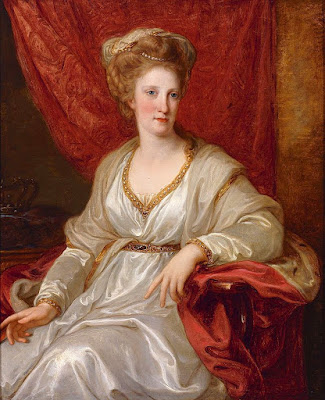
Remembering Maria Carolina of Austria, Queen of Naples and Sicily

13 August, 1752 — 8 September, 1814

In memory of Maria Carolina of Austria, Queen of Naples and Sicily, we pray for the happy repose of her soul. Viva ‘a Reggina!

Eternal rest grant unto Her Majesty, O Lord and let perpetual light shine upon her. May her soul, and the souls of all the faithful departed, through the mercy of God, rest in peace. Amen.

August 21, 2026

The Stone Legacy of Washington Heights

Castle Village, Washington Heights, 1938. Contemporary architectural
rendering depicting the redevelopment of the former Paterno estate
Every time I travel north out of the city along the Henry Hudson Parkway, my companions’ eyes are almost always drawn to the left, where the Hudson River stretches toward the majestic Palisades. It is a breathtaking vista, to be sure. Yet I often find myself looking in the opposite direction. Rising from the hillsides of Washington Heights are cyclopean retaining walls, graceful stone arches, terraces, and masonry of astonishing scale. They possess a permanence that makes even the tallest modern glass-and-steel buildings seem fleeting by comparison. Rather than imposing themselves upon the landscape, they seem to grow from the cliffs themselves, honoring the genius loci of the Heights and preserving the rugged character that makes it unlike any other neighborhood in New York.

Washington Heights is one of the city’s great monuments to stone. Around the Met Cloisters, through the wooded paths of Fort Tryon Park, and beneath the towering approaches to the George Washington Bridge, the exposed Manhattan schist gives the setting much of its distinctive character. The Billings Arcade, pedestrian underpasses, and steep stepped streets appear almost organic, as though they had always belonged to the hills themselves.

It is easy to admire this remarkable setting while forgetting the men who created it. Long before modern machinery made such work routine, innumerable laborers, a great many of them Southern Italians, drilled, blasted, hauled, and set these enormous stones by hand. Quarrymen, masons, and subway sandhogs endured punishing conditions to transform the rugged ridge into streets, parks, and neighborhoods that continue to serve generations of New Yorkers. Their labor became part of the very foundation of the city.

Dr. Charles Vincent Paterno
Among the visionaries who recognized the potential of the region was Dr. Charles V. Paterno, born Canio Paternò on August 4, 1878, in Castelmezzano, Basilicata. Perhaps it is no coincidence that a man born among the dramatic stone peaks of Castelmezzano should later feel at home among the rocky heights of northern Manhattan.

Trained as a physician but remembered as one of New York’s most innovative developers, Paterno refused to flatten the landscape to suit his ambitions. Instead, he worked with the terrain, pioneering architectural solutions that embraced the natural contours of the cliffs. His hillside developments, including the Paterno Castle, the Colosseum, Hudson View Gardens, and the Pumpkin House, demonstrated that engineering and beauty could coexist, allowing architecture to emerge from the rock rather than obscure it.

Whenever I pass through Washington Heights, I cannot help but think of the Southern Italians who left an indelible mark on these hills. They brought more than resilience and determination; they brought generations of stoneworking knowledge, refined over centuries in the mountains and villages of the Mezzogiorno. Here, that ancient tradition found a new expression, shaping one of the most distinctive urban landscapes in New York City.

The neighborhood remains one of the city’s unsung masterpieces. Its enduring masonry speaks not only of engineering skill but of vision, sacrifice, and craftsmanship. In an age increasingly defined by soulless architecture, every arch, terrace, arcade, stone stairway, and weathered wall stands as a tribute to the Southern Italian workers who built them and to pioneers like Dr. Charles V. Paterno, whose vision helped transform the Heights into one of New York’s most beautiful and monumental works of art.

~ By Giovanni di Napoli, 
August 20th, Feast of San Bernardo

August 17, 2026

The Green Fairy from the Town of Herbs

Apparently determined to outdo the friend who just brought me back a reliquary from the Santuario di San Michele Arcangelo in Monte Sant’Angelo, Puglia, another friend recently returned from Collepardo, the medieval hill town in Frosinone affectionately known as the Town of Herbs and Caves, bearing a bottle of absinthe from the historic herbalist workshop and distillery Sarandrea Marco & C. Knowing my fondness for the Green Fairy, he could not have chosen better. Until now, I had never encountered an Italian absinthe, and naturally it sent me down a rabbit hole into its history.

To my surprise, Sarandrea began producing its Absinthium in 1915, at precisely the moment France was outlawing absinthe after decades of moral panic. Switzerland had already banned it in 1910, and Italy would eventually follow in 1931. And yes, learning that Italy’s own prohibition arrived under the House of Savoy only gave me one more historical grievance to add to the list. For most of the twentieth century, the Green Fairy vanished from much of Europe, returning only after the longstanding prohibitions were lifted in 1998, allowing traditional distillers to revive authentic nineteenth-century recipes.

I look forward to opening this bottle as it was meant to be enjoyed: slowly and ritually during the Green Hour, when absinthe once flowed through the cafés of Paris and artists, poets, and dreamers gathered to debate ideas, cultivate friendships, and seek inspiration. It is remarkable that a spirit so closely associated with Belle Époque France should find such an intriguing chapter of its story in a small Italian village devoted for centuries to the study of herbs. That alone makes this bottle something more than a drink. It is a piece of history, and a thoughtful reminder that the best gifts are those that reflect not only our tastes but also our curiosities.

~ By Giovanni di Napoli, August 16th, Feasts of San Rocco di Montpellier and San Gioacchino

August 14, 2026

Viva 'o Rre! Happy Birthday King Francesco I of the Two Sicilies

b. Napoli, 14 August 1777 – d. Napoli, 8 November 1830
In memory of King Francesco I of the Two Sicilies, we pray for the happy repose of his soul. Viva ‘o Rre!

Eternal rest grant unto His Majesty, O Lord and let perpetual light shine upon him. May his soul, and the souls of all the faithful departed, through the mercy of God, rest in peace. Amen

August 12, 2026

Giacinto de’ Sivo: In Defense of the Two Sicilies

Giacinto de' Sivo (1814-1867)
Giacinto de’ Sivo (1814–1867) was one of the most influential historians and political writers of nineteenth-century Southern Italy. Born in Maddaloni, near Caserta, he dedicated much of his life to preserving and documenting the history, traditions, and institutions of the Kingdom of the Two Sicilies. A committed Catholic and Bourbon loyalist, de’ Sivo emerged as one of the leading intellectual voices opposing the Italian Risorgimento, arguing that the unification of Italy came at the expense of the South’s legitimate monarchy, cultural identity, and political independence.

Educated in law but drawn to literature and history, de’ Sivo initially pursued a career in public service, eventually serving as counselor for the province of Terra di Lavoro. Following Garibaldi’s conquest of the Kingdom of the Two Sicilies in 1860, he refused to swear allegiance to King Vittorio Emanuele II and openly opposed the new regime. In 1861, his uncompromising defense of the Bourbon cause led to his imprisonment on two occasions. Amid mounting political persecution, he left for Rome in 1862, then under Papal rule, where he spent the remainder of his life devoted to scholarship and writing.

Before composing his major historical works, de’ Sivo continued his opposition through journalism. He contributed to the legitimist newspaper L’Iride and later founded La Tragicommedia, a satirical journal that sharply criticized the new Italian government. The publication was suppressed after only three issues, illustrating the increasingly hostile climate faced by Bourbon loyalists in the aftermath of unification.

His best-known work, the five-volume Storia delle Due Sicilie dal 1847 al 1861 (History of the Two Sicilies from 1847 to 1861), remains a foundational text of the Bourbon perspective on Italian unification. Drawing upon official documents, eyewitness accounts, correspondence, and contemporary reports, de’ Sivo presented a detailed account that countered prevailing liberal interpretations. He argued that the conquest of the kingdom was driven not solely by popular enthusiasm for national unity but also by military invasion, diplomatic pressure, internal betrayal, and foreign influence. Among those he criticized most sharply was the liberal statesman Liborio Romano, whom he regarded as instrumental in the kingdom’s demise. Few writers did more than de’ Sivo to shape the historical memory of the Bourbon Kingdom, providing later generations of legitimists and historians of Southern Italy with the intellectual framework for reassessing the fall of the Two Sicilies.

Throughout his writings, de’ Sivo emphasized the legitimacy of the Bourbon monarchy and defended the social, religious, and legal institutions that had developed over centuries in Southern Italy. He regarded the Kingdom of the Two Sicilies as a distinct civilization rooted in Catholic faith, regional traditions, and centuries of institutional continuity. In his view, it was an independent state whose political and cultural identity deserved to endure. His works consistently highlighted the contributions of the South to Italian and European civilization while criticizing the post-unification policies he believed marginalized the Mezzogiorno.

Although his views have remained the subject of academic debate, de' Sivo is widely regarded as the foremost Bourbon critic of the Risorgimento and an indispensable source for understanding the collapse of the Kingdom of the Two Sicilies. His writings became an important precursor to later discourse surrounding the Southern Question, regional inequality, and the long-term consequences of Italian unification. Largely dismissed by mainstream liberal historiography of the late nineteenth century, his scholarship received renewed attention after Benedetto Croce reassessed his work in 1918. While rejecting de’ Sivo’s Bourbon political conclusions, Croce nevertheless acknowledged the depth of his research and the historical value of his work.

Whether read as a passionate defender of the Bourbon cause or as a significant historian of his age, de' Sivo's writings remain an enduring testament to the profound complexity of Italian unification and the importance of preserving perspectives that challenged its dominant narrative.

~ By Antonio Isernia

August 8, 2026

Remembering Maria Teresa of Austria, Queen of the Two Sicilies

31 July, 1816 — 8 August, 1867
In memory of Maria Teresa of Austria, Queen of the Two Sicilies, we pray for the happy repose of her soul. Viva ‘a Reggina!

Eternal rest grant unto Her Majesty, O Lord and let perpetual light shine upon her. May her soul, and the souls of all the faithful departed, through the mercy of God, rest in peace. Amen.

July 22, 2026

The Southern Italian Origins of the Vita Eremitica

The Ascension of Mary Magdalene, by
Tilman Riemenschneider (1460–1531)
Among the many traditions surrounding St. Mary Magdalene, few are as intriguing as her vita eremitica, the belief that she spent the final years of her life as a hermit devoted to prayer, fasting, and contemplation.

Although the New Testament says nothing about her life after the Resurrection, an anonymous medieval work known as the Vita eremitica Beatae Mariae Magdalenae profoundly shaped the image of the Magdalene as one of Christianity’s great contemplatives. Modern scholars believe this text was composed in the early ninth century in the monasteries of Southern Italy, where Greek and Latin monastic traditions converged in a remarkable synthesis that left an enduring mark on medieval Christian culture. Drawing heavily upon the Life of St. Mary of Egypt, it presents Mary Magdalene not simply as the first witness of the Resurrection, but as a woman transformed through solitude, asceticism, and union with the Godhead.

Its influence was immense. Many of its themes were later reflected in Jacobus de Voragine’s Golden Legend, while its portrayal of Mary Magdalene as the long-haired penitent who retreated to the wilds of Provence inspired generations of medieval and Renaissance artists.

As the legend spread across medieval Europe, it took on new forms. In Provence, Mary Magdalene came to be associated with the cave of Sainte-Baume, where she was believed to have lived as a hermit. In the Italian Alps, she appears in folklore as the Magdalena Selvadega, the “Wild Magdalene.” Naked, clothed only by her long hair, and living apart from society, she became a mysterious figure of forests and mountains, preserving echoes of the vita eremitica while absorbing elements of local folklore.

Devotion to Mary Magdalene found renewed favor in Southern Italy under the Angevin dynasty, whose close ties to Provence, one of the principal centers of her medieval cult, helped foster devotion to the saint throughout the Kingdom of Naples. Thus, a tradition first shaped in the monasteries of the Mezzogiorno continued to flourish under Angevin patronage, reinforcing the dynasty’s prestige and legitimacy.

Though far removed from the biblical narrative, these traditions testify to the enduring fascination with Mary Magdalene as the saint who left the world behind in search of God. They also illustrate that one of the most influential chapters in her medieval legend was first written in Southern Italy, long a crossroads of the Byzantine East and Latin West.

~ By Giovanni di Napoli, July 15th, Feast of Santa Rosalia

July 14, 2026

Remembering Jacques Cathelineau, the “Saint de l’Anjou”

b. 5 January 1759 — d. 14 July 1793
In memory of the “Saint de l’Anjou” Jacques Cathelineau, Vendée royalist and premier généralissime de l'Armée catholique et royale, we pray for the happy repose of his soul.

Eternal rest grant unto him, O Lord and let perpetual light shine upon him. May his soul, and the souls of all the faithful departed, through the mercy of God, rest in peace. Amen

July 7, 2026

A Gift from Orkney

My friend and his wife recently returned from a vacation in Scotland and, knowing my longstanding interest in Italian history and culture, surprised me with a small booklet telling the remarkable story of the Italian Chapel. They also shared the beautiful photographs they had taken during their visit, bringing to life a most extraordinary place of worship.

Built during the Second World War by Italian POWs stationed on the Orkney Islands, the chapel stands as a testament to faith, resilience, and the enduring power of beauty in the midst of hardship. Fashioned from humble materials, including two joined Nissen huts, its richly painted interior gives the impression of carved stone, marble, and mosaic. At its heart was the vision and artistry of Domenico Chiocchetti, whose devotion transformed a simple military hut into a sacred sanctuary that continues to inspire visitors from around the world.

Before creating the chapel, Chiocchetti fashioned a striking statue of Saint George from scrap barbed wire and cement salvaged around the camp. More than a work of art, it became a symbol of hope for the prisoners and their longing for peace. Hidden within its plinth, the prisoners placed a milk bottle containing the names of the men of Camp 60, along with a few Italian coins and banknotes, leaving behind a lasting testament to their shared ordeal. The success of the statue helped convince the camp commandant, together with the camp priest, to allow the prisoners to build the Italian Chapel itself.

Surrounded by the touching traditions that have grown up around it, one enduring legend centers on Giuseppe Palumbi, a gifted blacksmith from Abruzzo who fashioned the chapel’s elegant wrought-iron screen. According to local tradition, he fell in love with a young Orcadian woman during his time on the islands, despite having a wife and family waiting for him in Italy. When the war ended and he returned home, he is said to have left behind a small wrought-iron heart embedded in the chapel floor as a silent token of his unfulfilled love. Whether fact or folklore, the story lends another layer of poignancy to a place already rich in sacrifice, longing, faith, and hope.

The story of the Italian Chapel is more than a chapter in wartime history. It is a reminder that even in captivity, the human spirit can create something lasting and beautiful. I am grateful to my friends for thinking of me and for introducing me to this remarkable little sanctuary through the booklet, the photographs they brought home, and the stories they shared from their visit.

~ By Giovanni di Napoli, July 6th, Feast of Santa Domenica di Tropea

July 4, 2026

The Last Settlers?

On this Independence Day, as Americans celebrate the 250th anniversary of These United States, I have found myself reflecting upon a meme I recently came across online and how much truth it actually contains.

Like most memes, it simplifies a more complicated history. Italians did not arrive in an undeveloped wilderness. By the time the great wave of Italian immigration began in the late nineteenth century, the United States was already becoming a major industrial power, with growing cities, expanding railroads, and a dynamic economy, even as parts of the West were still being settled. Italians entered a society whose institutions, customs, and public life had largely been shaped by the nation’s longstanding Majority population.

Still, the meme captures something important that is often forgotten. Immigration is not only a story of opportunity received but of contribution offered. Millions of Italians came seeking a better life. They brought skills, labor, traditions, faith, and a strong sense of family. They did not merely benefit from America; they helped shape it.

Many Italian immigrants labored on roads, railways, tunnels, docks, farms, factories, and construction projects. They helped expand neighborhoods, churches, businesses, and civic institutions that remain part of the American landscape today. In cities like New York, Boston, Philadelphia, New Orleans, and countless others, Italians left a visible mark upon the nation’s physical and cultural fabric. Like countless other Americans, Italians and their descendants answered the nation’s call in times of war and peace alike.

Yet the story is more complicated than either celebration or condemnation. America did not always treat Italians justly. Many faced discrimination, poverty, suspicion, and, in some cases, violence. The lynching of Italian immigrants remains one of the darkest and least remembered chapters of American history.

More broadly, the United States itself has never been free of faults. Like all countries, its history contains episodes worthy of admiration alongside those worthy of criticism, and the present day is no exception. Acknowledging what is noble in the American experiment does not require ignoring its failures or remaining silent about the misguided causes, conflicts, and policies in which the nation remains involved.


That said, it is worth remembering that our ancestors did not cross an ocean without reason. The Italy many left behind was often poorer and offered fewer opportunities than the America in which they hoped to make a life. For many Southern Italians, the promises of unification quickly gave way to disappointment. In the decades that followed, economic hardship, political neglect, heavy taxation, military repression, and persistent regional inequalities convinced millions that their future lay elsewhere. For all of its shortcomings, the United States represented possibilities that many could not find at home.

At the same time, Italians were not always good to America. No people are without faults, and Italians were no exception. Odious criminal organizations such as the Mafia brought dishonor to communities that otherwise sought only honest work and stability. A small number also embraced radical political movements that stood at odds with the country’s institutions and traditions.

While we did not endure the trials of America’s earliest settlers, neither did we have it as easy as many who followed. Ours is a unique chapter in the American story, shaped by hardship, perseverance, and the determination to build a better future for our children.

The greatest challenge facing Italian Americans today is not the prejudice of the past but the forgetfulness of the present. The pressures of modernity have accomplished what neither discrimination nor poverty could. Secularism has weakened the religious life that once stood at the center of many communities. Materialism has encouraged comfort over duty and sacrifice. Assimilation and globalization have loosened ties to place, family, faith, and tradition.

Today, too many of our own have embraced ideological currents that have contributed to America's cultural and moral decline. The descendants of immigrants who crossed an ocean to preserve their way of life often struggle to remember what that way of life was.

Corruption, rootlessness, and the homogenizing tendencies of modern American life have only accelerated this process. In many respects, deracination rather than exclusion has become the defining challenge of our age. The danger today is not that we will be prevented from being Italian Americans, but that we will forget what being Italian American once meant.

~ By Giovanni di Napoli, July 3rd, Feast of San Leone II

July 3, 2026

In Search of the Devil’s Bridge with the Ghost of the Count of Sciancato

In Search of… with the Ghost of the Count of Sciancato explores mysteries where history and legend blur and conjecture begins—along with the strange, the macabre, and the uncanny. What follows suggests possible explanations—though not the only ones.
The Medieval Aqueduct of Salerno: The Devil’s Bridge

In the historic center of Salerno, rising unexpectedly between narrow streets and weathered facades, stand a series of dark stone arches.

They call it the Devil’s Bridge.

Constructed in the ninth century, the aqueduct once carried water to the Monastery of San Benedetto. Built during the Lombard period, its pointed arches cut sharply against the southern sky, a geometry at once practical and severe. For centuries it served the city quietly.

Local legend insists the aqueduct was not built by human hands alone. It was said that a Salernitan magician—sometimes identified with Pietro Barliario, a shadowy figure associated with forbidden knowledge—made a pact with darker forces to complete the arches in a single night. Others claimed the Devil himself assisted in its construction, leaving behind the structure as proof of his labor.

The name endured: Ponte del Diavolo.
19th-century engraving of the Medieval Aqueduct of Salerno,
known as Ponte del Diavolo ("Devil's Bridge").
In later medieval and early modern folklore, such remarkable feats of engineering often attracted supernatural explanation. Towering bridges and aqueducts—seemingly defying gravity—were natural candidates for diabolical attribution. Across Europe, similar structures bear the same name.

During the Middle Ages, the city was renowned for its medical school, the Schola Medica Salernitana, where Greek, Latin, Arab, and Jewish knowledge converged. It was a place where science and superstition coexisted uneasily. Where healing and alchemy, theology and experiment stood in tense proximity.

To some, the arches were a triumph of Lombard ingenuity; to others, they marked a threshold—an intrusion of something not entirely benign.

At night, the structure takes on another character. The arches loom. The spaces between them darken. For generations, townspeople avoided passing beneath them after sunset. It was said witches gathered there, spirits lingered in the shadows, and something watched from the empty span.

Was the Devil’s Bridge merely a marvel of early medieval engineering?

Or did the imagination of a fearful age project its anxieties onto stone and mortar?

……………………………………
Sebastiano III, Conte di Sciancato, a minor prince of forgotten Lucania, was said to have loved his wife more than his soul. When his beloved bride, Donna Lucrezia di Nerafiora, died in a tragic accident, he could not accept the will of fate. In his grief, he turned to ancient books and desperate learning, searching for a way to restore her to the world of the living. The attempt cost him his life. The ruins of his torre lie hidden, and when the earth trembles, some whisper he still searches for her.

June 28, 2026

Remembering Archduke Franz Ferdinand and Duchess Sophie

Sophie, Duchess of Hohenberg and Archduke Franz Ferdinand of Austria
In memory of Archduke Franz Ferdinand and his wife Sophie, Duchess of Hohenberg, who were assassinated in Sarajevo on 28 June 1914, we pray for the happy repose of their souls.

Eternal rest grant unto Their Highnesses, O Lord and let perpetual light shine upon them. May their souls, and the souls of all the faithful departed, through the mercy of God, rest in peace. Amen

June 27, 2026

Remembering Alfonso V of Aragon

Alfonso the Magnanimous, King of Aragon, Naples and Sicily
sculpted by Achille D'Orsi on the western facade of the
Royal Palace in the Largo del Palazzo Reale in Naples
In memory of Alfonso the Magnanimous (1396 — 27 June, 1458), King of Aragon, Naples (as Alfonso I) and Sicily (as Alfonso V), we pray for the happy repose of his soul. Viva ‘o Rre!

Eternal rest grant unto His Majesty, O Lord and let perpetual light shine upon him. May his soul, and the souls of all the faithful departed, through the mercy of God, rest in peace. Amen

June 26, 2026

Isis-Aphrodite and the Egyptian Cults of Southern Italy

Isis-Aphrodite with Egyptian Vulture Cap,
ca. A.D. 161-180, Metropolitan Museum of Art
Photo by New York Scugnizzo
This elegant bronze statuette depicts Isis-Aphrodite, a fascinating fusion of ancient Egyptian and Greco-Roman religious traditions. Created around A.D. 161–180, during the reign of the philosopher-emperor Marcus Aurelius, the goddess is shown wearing the distinctive Egyptian vulture cap, an ancient symbol of divine queenship and maternal protection. Some scholars have suggested that the figure may have been modeled upon Empress Faustina the Younger, reflecting the Roman tendency to associate members of the imperial family with divine virtues and sacred imagery.

Although this bronze was produced in Roman Egypt, images of Isis and related Egyptian deities were also familiar throughout Southern Italy, where the goddess enjoyed a particularly devoted following in the port cities of Campania.

By the first century A.D., the cult of Isis had become firmly established throughout the Mezzogiorno, particularly in the thriving ports of Campania. Naples, Pozzuoli, and Pompeii maintained close commercial and cultural ties with the eastern Mediterranean, allowing Egyptian religious traditions to take root far from the Nile. The celebrated Temple of Isis at Pompeii remains one of the most complete surviving sanctuaries of the goddess in the Roman world.

~ By Giovanni di Napoli, June 25th, Feast of Santa Febronia

June 24, 2026

An Introduction to Giambattista Vico and The New Science

Portrait of Giambattista Vico, attributed
to Francesco Solimena or his circle

“Men first feel necessity, then look for utility, next attend to comfort, still later amuse themselves with pleasure, thence grow dissolute in luxury, and finally go mad and waste their substance.” ~ Giambattista Vico, The New Science

Giambattista Vico (1668–1744) was a Neapolitan philosopher, historian, and jurist deeply rooted in the civic, linguistic, and historical traditions of Naples. Though formally educated, he pursued extensive independent study, distinguishing himself from the dominant rationalist currents of his age. A serious childhood fall interrupted his early schooling, an episode noted by later biographers, though its long-term significance remains uncertain.

He spent most of his career as a professor of rhetoric at the University of Naples, where his study of language, law, poetry, and history became central to his philosophy.

Vico’s major work, Scienza Nuova (The New Science), offered a critique of Cartesian rationalism and of attempts to reduce history and civil life to geometric certainty. Rather than treating civilization as governed by universal formulas, Vico argued that laws, customs, institutions, myths, and histories must be understood as societies create and preserve them. This principle, known as verum factum (“the true is precisely what is made”), stands at the center of his thought.

In The New Science, Vico also proposed that civilizations move through recurring historical cycles, or corsi e ricorsi, passing through the divine, heroic, and human ages. Early societies, he argued, expressed themselves through myth, religion, and poetic imagination before giving way to more reflective and rational forms of political life. 

This cyclical understanding of history opposed the linear idea of inevitable progress favored by many Enlightenment thinkers and instead presented civilization as a process of rise, decline, and renewal. His attention to language, symbolism, memory, and custom anticipated later developments in the philosophy of history and cultural thought.

Little recognized during his lifetime, Vico’s work gained influence in later centuries among historians, philosophers, and scholars. Today, he is regarded as one of the foundational figures in the philosophy of history and as one of the earliest major critics of purely rationalist accounts of civilization. 

His enduring importance lies in his insistence that societies are understood not through abstraction alone, but through the traditions, institutions, and historical memory they inherit and preserve across generations.

~ By Antonio Isernia

June 19, 2026

The Dancing Mænad of Tarentum

Terracotta statuette of a woman, probably
a mænad, Greek, South Italian,
Tarentine, late 3rd-2nd century B.C.
Among the most evocative survivals of Magna Graecia are the terracotta figures produced in the workshops of Tarentum (modern Taranto), the great Greek city of Apulia in Southern Italy. This small statuette of a woman—probably a mænad, a female devotee of Dionysus—was fashioned in the late 3rd or early 2nd century B.C. and now resides in the collection of the Metropolitan Museum of Art. Though modest in scale, the figure preserves something of the ecstatic and theatrical spirit associated with the cult of Dionysus in the ancient Mediterranean.

The woman appears suspended in movement. Her raised arm, flowing drapery, and forward step evoke ritual dance, as though she belongs to a sacred procession or ecstatic rite. The mænads of Greek tradition were companions of Dionysus, god of wine, frenzy, fertility, and divine intoxication.

Another view of the statuette
In poetry and art, they move through mountains and forests carrying torches, drums, or ivy, overcome by sacred frenzy and divine possession. South Italian artists, particularly those of Tarentum, frequently depicted such figures with a softness and lyricism distinct from the more restrained classical traditions of mainland Greece.

The statuette also reflects the broader artistic world of Hellenistic Southern Italy, where Greek religion, drama, and craftsmanship flourished centuries after the founding of the colonies of Magna Graecia. Terracotta figures like this were often placed in sanctuaries, tombs, or domestic shrines.

Their survival is remarkable precisely because they were made from humble clay rather than marble or bronze. Yet the fragility of the material forms part of the figure's charm. Time has worn away details, softened the colors, and broken the limbs, but the gesture remains. Across more than two millennia, the little dancer still appears caught between ritual and motion, between earthly form and ecstatic abandon.


~ By Giovanni di Napoli, June 17th, Feast of Beata Teresa del Portogallo

June 17, 2026

Reflections at the Jacques Marchais Museum (Part 2)

See Part 1

One of the most striking aspects of the Jacques Marchais Museum of Tibetan Art is not found within its galleries, but in the grounds themselves. Winding stone paths, terraced gardens, meditation spaces, and rustic stonework give the impression of a remote Himalayan retreat hidden within Staten Island.

Yet behind this Tibetan sanctuary stood the labor and craftsmanship of a remarkable group of local builders, many of them Italian immigrants or the sons of immigrants. Chief among them was master stonemason Joseph Primiano (1895-1967), who worked closely with Jacques Marchais to transform her vision into reality.

Born in Vinchiaturo, a small town in the province of Campobasso in Molise, Southern Italy, Primiano immigrated to the United States in 1912 at the age of sixteen. Settling on Staten Island, he brought with him the skills and traditions of the old-country stonemason. Together with a team that included fellow Italian workers and craftsmen, he helped construct the museum’s distinctive buildings, terraces, stairways, and gardens, leaving an enduring Southern Italian imprint upon one of America’s most remarkable Tibetan cultural institutions.

~ By Giovanni di Napoli, June 15th, Feast of San Vito