July 8, 2022

Feast of San Procopio di Cesarea di Palestina

San Procopio di Scitopoli, ora pro nobis

July 8 is the Feast of San Procopio di Cesarea di Palestina (also San Procopio di Scitopoli), Ascetic, Exorcist and Martyr. A native a Aelia Capitolina, Jerusalem, Procopius was the first Christian to be martyred in Palestine under Emperor Diocletian’s decree of persecution in 303. He is the patron saint of San Procopio in Reggia Calabria.


In celebration, I’m posting the prayers to St. Procopius the Great from Byzantine Catholic Prayer for the Home. They are meant for private use. 


The accompanying image depicts the great protomartyr as a holy warrior. Evviva San Procopio di Scitopoli!


Troparia


Troparion Tone 8 Receiving heaven's invitation, O saint, you turned from ancestral infamy and traditional homage, begging zealous like Paul for Christ. You endured many tortures and wounds, and you have been repaid with a crown of glory; so pray to Christ to save us, O great martyr Procopius.


Kontakion Tone 2 Inflamed with a heavenly zeal for Christ, and protected by the might of the Cross, you leveled the rages and the gall of the fire. You raised up the Church, O Procopius, by the strength of your faith. You enlighten us!


Stichera from For a Martyr.

Sessional Hymns from the weekday. 

July 7, 2022

Novena to Our Lady of Mount Carmel

Our Lady of Mt. Carmel at Most
Precious Blood Church, Little Italy, NYC

Pray Novena to Our Lady of Mount Carmel for nine consecutive days, July 7th to July 15th, in preparation for the Feast on July 16th. Ave Maria!


Flos Carmeli (Flower of Carmel)


O most beautiful flower of Mount Carmel, splendor of heaven, Blessed Mother of the Son of God and Mother of mine, support me by your never failing love and help and protect me. Show me that you are my Mother. May I, unworthy as I am, come one day to exchange your scapular that I had the privilege to wear for the wedding garment of heaven, and dwell with you and all the saints of Carmel in the kingdom of your Son. (Here make your petition: Let us also pray for those preparing to make their vows.) Sweet Mother, I place this cause in your loving hands. O Mary, my Mother, I consecrate myself to you forever. I offer you my body with all its miseries, my soul with all its imperfections, and my heart with all its affections and desires. I offer you all my prayers, works, joys and sufferings, my struggles and especially my death with all that it will entail. I unite all of these, Mother, with your own joys and sufferings. Amen.


Queen and Beauty of Carmel, pray for us.

July 6, 2022

Feast of Santa Domenica di Tropea

Santa Domenica di Tropea, ora pro nobis

July 6 is the feast of Santa Domenica di Tropea (also called Santa Ciriaca), Virgin and Martyr. Widely venerated throughout Southern Italy, she the patron saint of Tropea (VV), Scorrano (LE), Torre di Ruggiero (CZ), Caraffa di Catanzaro (CZ), Santa Domenica di Ricadi (VV), Tremestieri (ME), and Mandanici (ME), among others.


Born in 287 in a profoundly Christian household in Tropea, Calabria, Santa Domenica and her parents, Doroteo and Arsenia, were tried and sentenced to exile in Western Asia. The young maid was brought to Campania instead and attempts were made to make her renounce her faith. Unwavering, she was condemned to death. First, she was to be burned alive at the stake, but the flames did not harm her. Next, she was to be torn to pieces by wild beasts, but the ferocious animals became docile at her feet. Each attempt to execute her led more and more witnesses to convert to Christianity. Brutally tortured, she was finally beheaded on 6 July 303. 


Her relics were first interred in Vizzini, Catania and later moved to the Cathedral in Tropea in 1893 by the bishop of Nicotera-Tropea Domenico Gallucci, where her cult flourished.


In celebration, we’re posting a prayer in Italian. The accompanying image, commissioned by Duke Carlo Guarini in 1921, was painted by Luigi Scorrano (Lecce 1849-Urbino 1924). Evviva Santa Domenica di Tropea!


Preghiera


O Martire coronata, che davanti ai tribunali testimoniasti con animo invitto Cristo Gesù; o Sposa eletta del Verbo umanato; o Ramo bellissimo di radice gloriosa, carico di frutti di celeste trionfo; o Domenica, noi ti celebriamo venerando l’arca delle tue Reliquie, memori e riconoscenti dei tuoi benefici.


O Verginità, tempio di Dio! O Verginità, gloria dei Martiri! O Verginità, socia degli Angeli! Domenica gloriosa, al tuo splendore le tenebre del paganesimo sono fugate: i tormenti, il fuoco, la morte sono per te un nulla. Tu pura, tu incorrotta, tu bellissima. Invitta fra tutti i Martiri, giglio nella convalle profumata di Cristo.


Nella effusione del tuo sangue immergesti i nemici infernali; rendesti tempio di Dio l’anima tua candidissima.


Nel tuo agone mortale, o Domenica celeberrima, hai trasceso le forze della natura; tra i leoni rendesti lode al tuo Gesù e superasti la fierezza delle belve. Agnella condotta al macello per amore dell’Agnello divino, al bellissimo tuo sposo conservasti il candore dell’anima tua.


Apristi un mare di grazia a chi t’invocò; ed il glorioso tuo corpo emana torrenti perenni di salute a chi ti supplica.


Deh! Lava le macchie dei vizi e dei peccati. Fa’  che noi superiamo le tentazioni. E la gloriosa tua memoria allontani ogni male e conforti coloro che ti venerano. Amen.

July 5, 2022

Announcing the Revival of the San Leucio Society of Paterson, New Jersey

San Leucio di Brindisi, ora pro nobis
Dear friends, it is with great pleasure that we write to inform you about the highly anticipated revival of the San Leucio Society of Paterson, New Jersey. The nascent group’s initial priorities are reestablishing Masses and processions in honor of San Leucio di Brindisi, the glorious patron of San Salvatore Telesino, Benevento. These celebrations will be held annually on January 11 and the last Sunday in July. Evviva San Leucio!

Anyone interested in this worthwhile venture can find the San Leucio Society in Paterson, New Jersey, at the following web addresses:


Website - https://saintleuciosociety.org/

Facebook - https://www.facebook.com/saintleuciosociety

Instagram - https://www.instagram.com/saint_leucio_society/

Email - saint_leucio_society@protonmail.com

Photo of the Week: Sacro Cuore di Gesù inside the Chiesa di Sant’Agostino in Salerno

Photo by Andrew Giordano

July 4, 2022

A Prayer for Highland Park, Illinois

Mary Immaculate, ora pro nobis
Our thoughts and prayers go out to the victims of the horrific mass shooting at the Fourth of July Parade in Highland Park, Illinois and their families. May St. Frances Xavier Cabrini, St. Joseph and Our Lady of the Immaculate Conception watch over you.

Prayer for the victims


Loving God, welcome into your arms the victims of violence and terrorism. Comfort their families and all who grieve for them. Help us in our fear and uncertainty, and bless us with the knowledge that we are secure in your love. Strengthen all those who work for peace, and may the peace the world cannot give reign in our hearts. Amen.

Reflections on “Italian American” Identity

Guest Op-Ed


Submitted by Erasmo Russo

While an ever growing literature on “Italian American” identity is coming out of American academia, several key issues have been largely ignored. From a Neobourbon/Two Sicilies perspective the terms “Italo-americano” and “Italian American” have become common shorthand for a vague set of markers, but which at the end of the day, at best fall short of any meaningful descriptiveness of the ethnos and at worst are mere constructs of Americans for American purposes. For purposes of this article the term “Italian American” will be used according to general American usage to include broadly all people and cultures of the Italian peninsula and islands transplanted to the United States. “Italian” will be used in the political and legal sense of “citizens of the modern nation of Italy."

The Italian American community has fallen prey to the worst aspects of American “pick me” political culture. As is well known, for generations Italians living in the Americas identified themselves within the diaspora communities based on their region or city of origin and only vis-à-vis outsiders would merely employ the term “Italian.”  “Italians” are a vastly diverse people based on regional languages and traditions and unique local history. Most foreigners are even acutely aware of this. In the United States the lumping of distinct peoples into one monolithic group was done formally by authorities and by the outside American society for simplicity sake to create voting blocks and groups to be proselytized to and to be more readily assimilated. From the left, “Italians” were a mass of radical workers and syndicalists, and from the right they were a mass of conservative middle class and upwardly mobile voters. Political and sociological ideologies as well as the diversity of the immigrant diaspora communities allowed “Italians” to be all of these simultaneously. Businessmen and men of letters, and activists radicals and laborers at the same time. The net effect of constant recruitment efforts from the left and from the right has led to many Italian Americans seeking prominence via America's “pick me” culture. Most notably in American academia, which is dominated by the left, Italian Americans often vie to please Anglo American liberals by loyal lockstep displays of ideology, while in politics and economics many vie to please Anglo American leadership by party support and voting loyalty. By this mechanism, Italian Americans, like all ethnic groups in the American empire, clamor to show loyalty to the dominant elite du jour, insisting they are “not like the rest” of their own group but are “just like good Americans.” Some often may even go so far as to claim they alone represent and typify their group’s best traits in this “pick me” posture. They then actively turn to their own group and demand conformity to their articulated positions and demean and denounce members of their own group who dare challenge their narrative.

As second and third generation members of the diaspora further assimilate and a new wave of younger better educated Italian immigrants moves to the United States, many public debates have challenged individuals and organizations who succumb to “pick me” culture and who proclaim they and their views are “Italian American” culture or ways. The pages of newspapers, scholarly journals and websites are replete with these debates. Among some of the most amusing pieces to appear in the last twenty years are self-proclaimed “Italian American” pundits from both the right and left who are now writing articles and books on how Italy should be as Americanized as possible and consume the same foreign products, be ashamed of its native culture, abandon religious practices, and should even become a nation of immigration and accept more outside groups in order to show its true progress as a NATO and G8 nation. This is clear proof that an “Italian American” identity has everything to do with the American landscape and nothing to do with the expression of italianità.


This American “pick me” phenomenon is a social and economic dead end for the diaspora community. In fact, it is a suicidal move for the ethnos. The American invention and manipulation of hyphenated identities is a modern notion which seeks to reconcile the foreign immigrant with the power of the centralizing nation state. In the 19th and 20th century as old world traditional empires which comfortably and organically were able to include many peoples faded away, the ethno state or nation state based on evolving checklists of authenticity became de rigueur. Groups such as those coming from modern nations like Italy are clearly unique and identifiably different than the Anglo dominant culture of the United States and its peculiar mixture of Protestant-Enlightenment limited oligarchic structure. Hyphenization culture is the easiest way to assimilate such ethnic groups. The foreign ethnos can keep its food and even religion, but must speak English and support local political parties, and indeed the host country’s entire socio-economic system and hierarchy. The creation of this third midway identity- “Italian American” leads to something that is neither American nor Italian. In these conditions the diaspora community is faced with a few options: become generic American, become Italian (in a generic modern Italian state way/pan Italianism), or retain their true original regional identity. For the Neobourbon and Two Sicilies minded people this latter regional identity represents the true path. Firstly, this is the most sincere and “authentic” choice, the easiest path, to continue living one’s life according to one’s true history and cultural ways. Secondly, adopting an ersatz pan-Italian mythology (based on Risorgimento and Fascist era propaganda) is often flatly incoherent and ultimately rings false. Finally, becoming “American” presents a vast amount of challenges, in that “American” often is reduced to either the deracinated absence of identity, or to obedience to Enlightenment ideas as filtered through English Freemasonry and Protestant settler theology from the British Empire predicated on divide and conquer strategies of governance.

T
his scenario plays out concretely every year in ongoing debates over whether the Genovese explorer Christopher Columbus should or should not be used as a symbolic rallying point for italianità in America; to what extent one may be “Italian” or “Italian American” if one is an Italian Jew or an Italian Waldensian and not a Catholic; or is it more or less authentic to be a Democrat or a Republican while living in the U.S.; and what position should the “Italian American community” take with respect to alliances with other ethnic groups.  The Neobourbon response is simply that all of these debates are fruitless and moot because they are all internal American discussions at the end of the day and serve only American political and economic purposes. They do not provide an outlet or pathway for our people to live out our history or culture. The vast majority of the diaspora community has its roots in the former Kingdom of the Two Sicilies, ranging from Sicily and Malta to Campania, Abruzzo, Molise, Calabria, Basilicata, and Puglia. Therefore, being Duosiciliano or keeping one’s regional identity, as stated above, proves to be the most coherent choice. Similarly, this majority identity includes the unique way Catholicism is practiced by these regional groups. The Kingdoms of Naples and Sicily, and later the Two Sicilies, all having deep and lasting linguistic, cultural and economic ties to the Spanish Empire, it is logical that the Duosiciliano community finds its natural allies in Hispanic cultures and nations. These prongs of the Duosiciliano identity are in no way a limitation. On the contrary, they represent an authentic and organic point of departure to approach the world and all other groups. It is patently false and obtuse to attempt to construct an “Italian American” identity predicated upon blind loyalty to changing American political landscapes, atheism, globalism, or antiquated leyenda negra propaganda that specifically denigrates the Latin Mediterranean Catholic ethos.

S
o what should one do? The young especially should visit the Patria, i.e. their true Patria, the regions their ancestors truly came from, not a pseudo Grand Tour organized for outsiders which barely showcases Rome, Florence and Venice. They should learn both standard Italian and their regional language. They should study their regions’ history. They should practice their faith. They should conduct their daily lives as our people do and always did. They should learn the real reasons why their families emigrated and continue to emigrate. They should then share their knowledge and enthusiasm for their culture with the world as living exemplars. Lastly, they should remove themselves from the false dialectic of American nomenclature and discourse. When one is part of an ethnos one has no need of invented political or ideological identities. We must ask ourselves, who is served by us assuming a hyphenated identity? Is a hyphenated identity truly such a badge of honor and “success”? Be free Duosiciliani, not colonial “pick me” lackeys.

July 3, 2022

New Book: Mal trattati... E partirono p' 'e tterre assaje luntane

New title that may be of interest to our readers. Available at www.ibs.it

• Mal trattati... E partirono p' 'e tterre assaje luntane by Annamaria Pisapia


Publisher: Magenes

Publication Date: June 22, 2022

Paperback: 17,10 €

Language: Italian

Pages: 220


Read description


Click here to see more books


Listing does not imply endorsement

July 1, 2022

Happy National U.S. Postage Stamp Day!

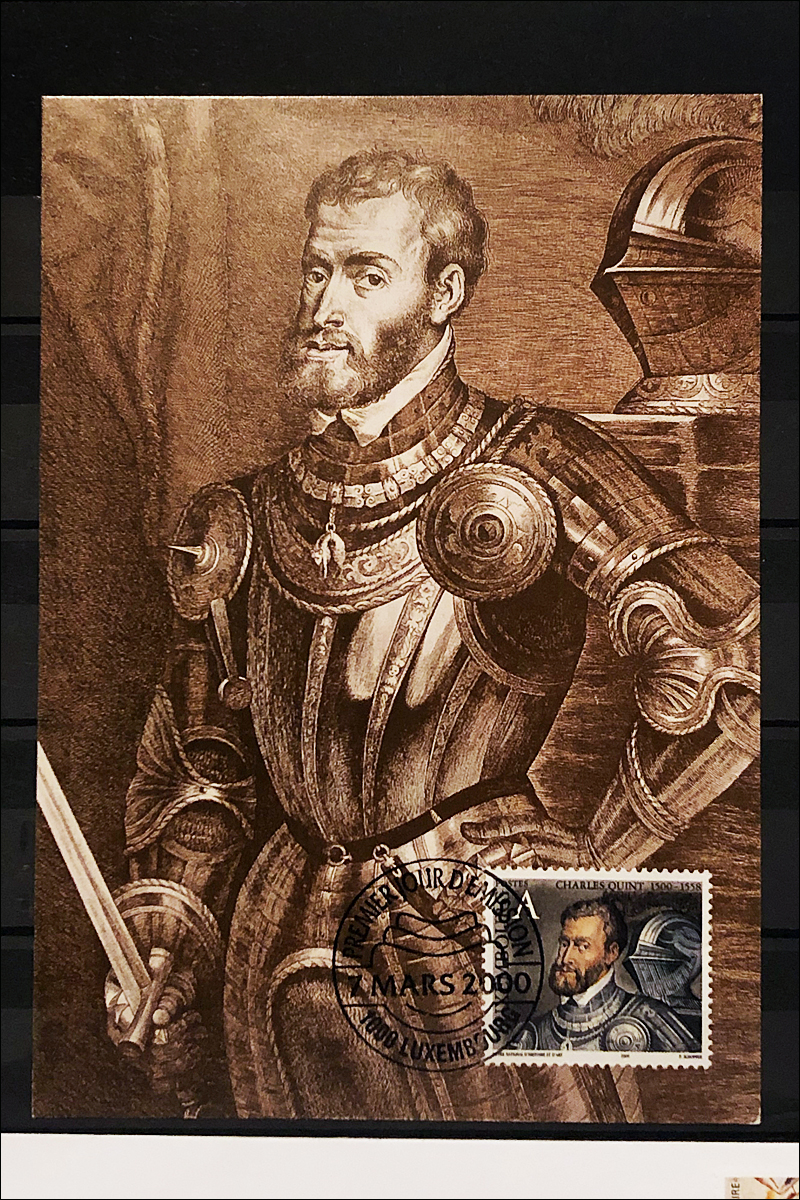
Luxembourg, 2000, postes A, Maximum card — 500th Anniversary

of the Birth of Emperor Charles V/Charles Quint, Cancelled

In celebration of National U.S. Postage Stamp Day, I thought it would be fun to share a few favorites from my Luxembourg collection. 

Luxembourg, 2000, postes A, 500th Anniversary

of the Birth of Emperor Charles V/Charles Quint

Luxembourg, 2008, First Day Issue — 700th Anniversary

of Henry VII, King of the Romans, Cancelled

Detail of Luxembourg, 2008, First Day Issue — 700th

Anniversary of Henry VII, King of the Romans, Cancelled

June 28, 2022

Remembering Archduke Franz Ferdinand and Duchess Sophie

Sophie, Duchess of Hohenberg and Archduke Franz Ferdinand of Austria
In memory of Archduke Franz Ferdinand and his wife Sophie, Duchess of Hohenberg, who were assassinated in Sarajevo on 28 June 1914, we pray for the happy repose of their souls.

Eternal rest grant unto Their Highnesses, O Lord and let perpetual light shine upon them. May their souls, and the souls of all the faithful departed, through the mercy of God, rest in peace. Amen

June 27, 2022

Remembering Alfonso V of Aragon

Alfonso the Magnanimous, King of Aragon, Naples and Sicily
sculpted by Achille D'Orsi on the western facade of the
Royal Palace in the Largo del Palazzo Reale in Naples

In memory of Alfonso the Magnanimous (1396 — 27 June, 1458), King of Aragon, Naples (as Alfonso I) and Sicily (as Alfonso V), we pray for the happy repose of his soul. Viva ‘o Rre!

Eternal rest grant unto His Majesty, O Lord and let perpetual light shine upon him. May his soul, and the souls of all the faithful departed, through the mercy of God, rest in peace. Amen

June 26, 2022

Photo of the Week: Carlotta d'Asburgo a Miramare by Francesco Jerace in the Museo Civico di Castel Nuovo, Naples

Photo by New York Scugnizzo

Feast of San Pelagio di Cordova

San Pelagio di Cordova, ora pro nobis

June 26 is the Feast of San Pelagio di Cordova (San Pelayo Mártir, St. Pelagius of Córdoba), Martyr. Held hostage by the caliph of Andalusia, Spain circa 926 AD, the young Christian boy was brutally tortured and beheaded for spurning the Moors lascivious advances and for refusing to renounce the Faith. He is the patron saint of chastity, abandoned people, torture victims and Carlist youth. In celebration, we’re posting a prayer to San Pelayo. Pictured is the martyrdom of San Pelayo. Evviva San Pelagio di Cordova!


Prayer to San Pelayo


Lord, our Father, who promised the pure of heart the reward of seeing your face, grant us your grace and your strength, so that, following the example of Saint Pelayo, martyr, we put your love before the seductions of the world and keep the heart clean from all sin. Through our Lord Jesus Christ, your Son, who lives and reigns with you in the unity of the Holy Spirit and is God for ever and ever. Amen 

Gala Cocktail Reception in Hawthorne, New Jersey to benefit the Restoration of Saint Agatha of the Goths

St. Agatha of the Goths

Fri, July 22, 2022, 7:00 PM – 10:00 PM EDT
Wedding Venue NJ – Macaluso's, 55 4th Avenue, Hawthorne, NJ 07506

A Gala Cocktail Reception in true Southern Italian style, to benefit the restoration of the Roman Church of Saint Agatha of the Goths in Rome, will be hosted by the American Delegation of the Constantinian Order of St. George on Friday, July 22, 2022 at 7 pm in Hawthorne, New Jersey. His Eminence Raymond Leo Cardinal Burke, the titular priest of St. Agatha’s, will be the keynote speaker at the reception, to discuss the great work that needs to be done for the ancient church’s restoration. 

Prepaid tickets of $150 each are available for the reception (cocktail dress), and must be reserved no later than Monday, July 18. 

Please email info@smocsg.org regarding tickets and sponsorship opportunities.

For tickets visit eventbrite

June 24, 2022

Celebrating Saint John’s Eve

Falò di San Giovanni, or St. John's Fire

“He must increase, but I must decrease” (John 3:30)

This year we celebrated the Vigil of the Nativity of St. John the Baptist at Joe’s of Avenue U in Brooklyn, New York. Smaller than previous years, we kept all our friends and brethren who could not be with us in our prayers. As always, the dinner and service were outstanding. Heartfelt thanks to Paolo and his crack waitstaff for another terrific evening.


Afterward, we honored my saintly namesake with a traditional Falò di San Giovanni, or St. John bonfire. Customarily a night of betrothal (St. John is invoked for good marriages) and moonlight bathing to help cure spiritual and physical ailments, we simply retired to a friends house for some prayer, wine and a little ballo di San Giovanni (St. John’s Dance) around the fire.[1] Evviva San Giovanni Battista!

We erected a small shrine to the Sacred Heart of Jesus, San Giovanni Battista, San Paolino di Nola and Sant'Andrea at the head of our table
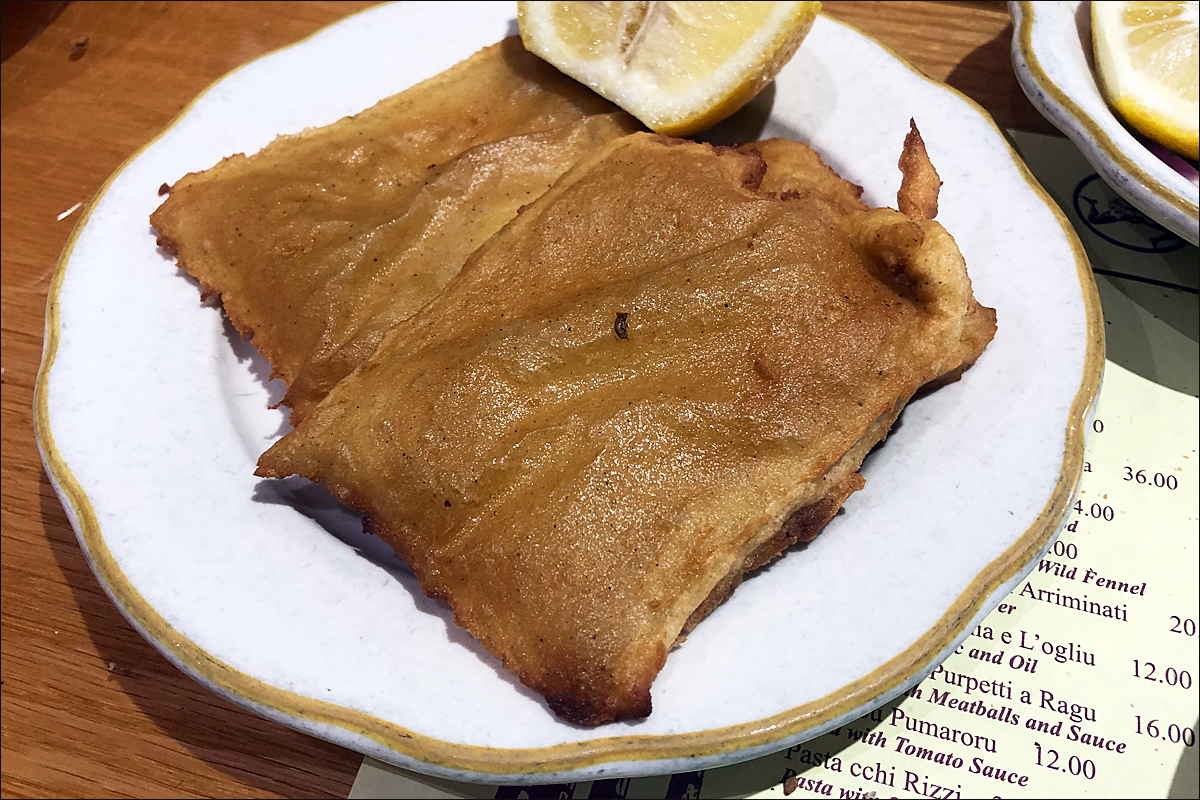
Panelle with lemon
Mista polpo e calamari
Vongoli Riganati
Cavolfiore
Scungilli fra Diavolo
Spaghetti cu Niuru a Siccia
Trippa Olivetana
Purpittuni di Carni o Furnu

Prayer:


P: Our help is in the name of the Lord.

All: Who made heaven and earth.


P: The Lord be with you.

All: May He also be with you.


Let us pray.

Lord God, almighty Father, the light that never fails and the source of all light, sanctify + this new fire, and grant that after the darkness of this life we may come unsullied to you who are light eternal; through Christ our Lord. All: Amen.


The fire is sprinkled with holy water; after which the clergy and the people sing the following Hymn: Ut queant laxis


1. Ut queant laxis resonáre fibris

Mira gestórum fámuli tuórum,

Solve pollúti lábii reátum, Sancte Joánnes. 


2. Núntius celso véniens Olýmpo

Te patri magnum fore nascitúrum,

Nomen, et vitae sériem geréndae

Ordinae promit. 3. Ille promíssi dúbius supérni,

Pérdidit promptae módulos loquélae:

Sed reformásti genitus perémptae

Organa vocis.


4. Ventris obstrúso récubans cubíli

Sénseras Regem thálamo manéntem:

Hinc parens nati méritis utérque Abdita pandit.


5. Sit decus Patri, genitaéque Proli

et tibi, compare utriúsque virtus,

Spíritus semper, Deus unus, omni

Témporis aevo.

Amen.


1. O for your spirit, holy John, to chasten

Lips sin-polluted, fettered tongues to loosen;

So by your children might your deeds of wonder

Meetly be chanted.


2. Lo! a swift herald, from the skies descending,

Bears to your father promise of your greatness;

How he shall name you, what your future story,

Duly revealing.


3. Scarcely believing message so transcendent,

Him for a season power of speech forsaketh,

Till, at your wondrous birth, again returneth,

Voice to the voiceless.


4. You, in your mother's womb all darkly cradled,

Knew your great Monarch, biding in His chamber,

Whence the two parents, through their offspring's merits,

Mysteries uttered.


5. Praise to the Father, to the Son begotten,

And to the Spirit, equal power possessing,

One God whose glory, through the lapse of ages,

Ever resounding.

Amen.


P: There was a man sent from God.

All: Whose name was John.


Let us pray. God, who by reason of the birth of blessed John have made this day praiseworthy, give your people the grace of spiritual joy, and keep the hearts of your faithful fixed on the way that leads to everlasting salvation; through Christ our Lord. All: Amen.[2]

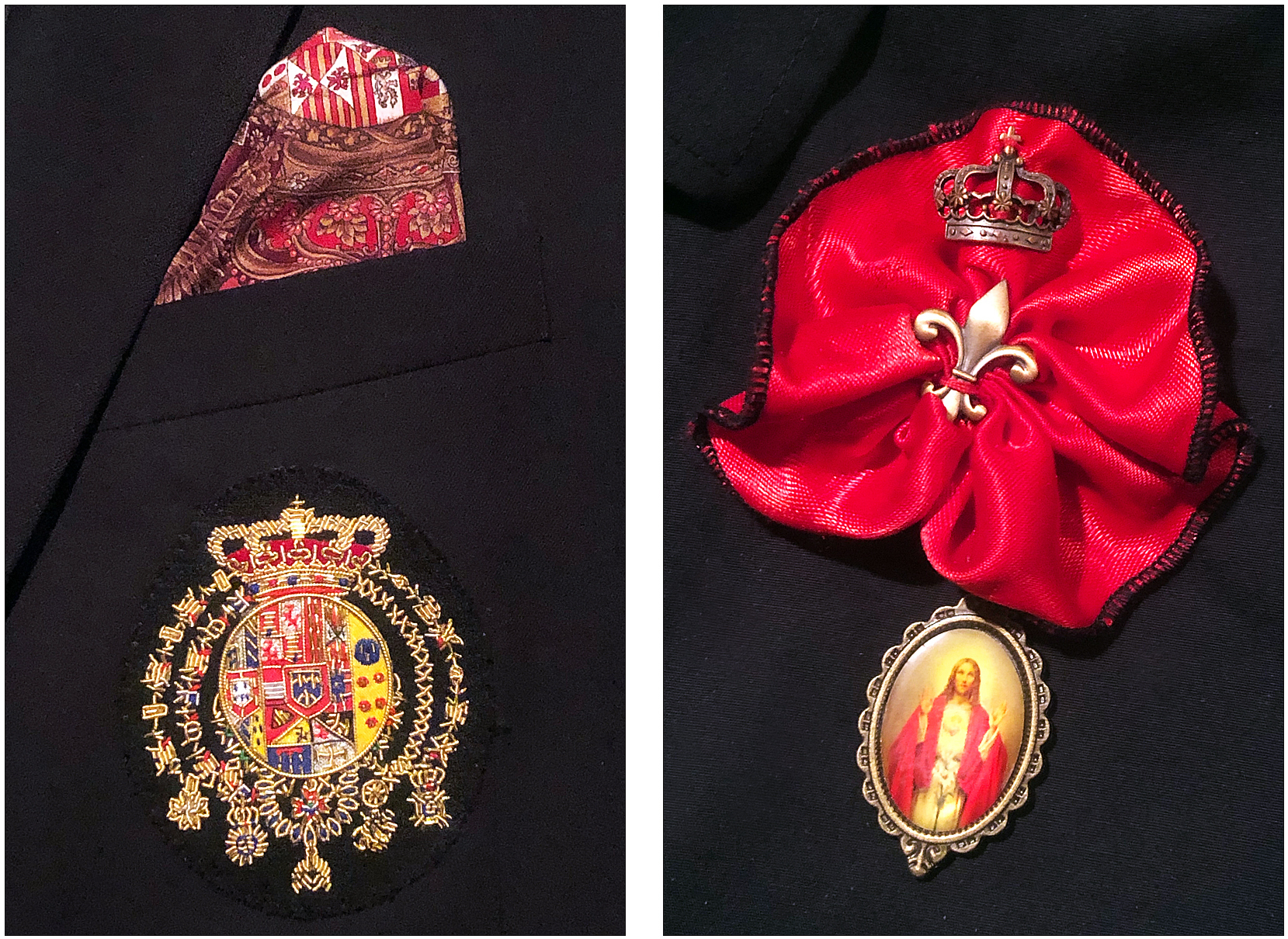
There was a little Catholic and Monarchist flair on display
(L) Constantinian Order rosette. (R) San Giovanni, ora pro nobis

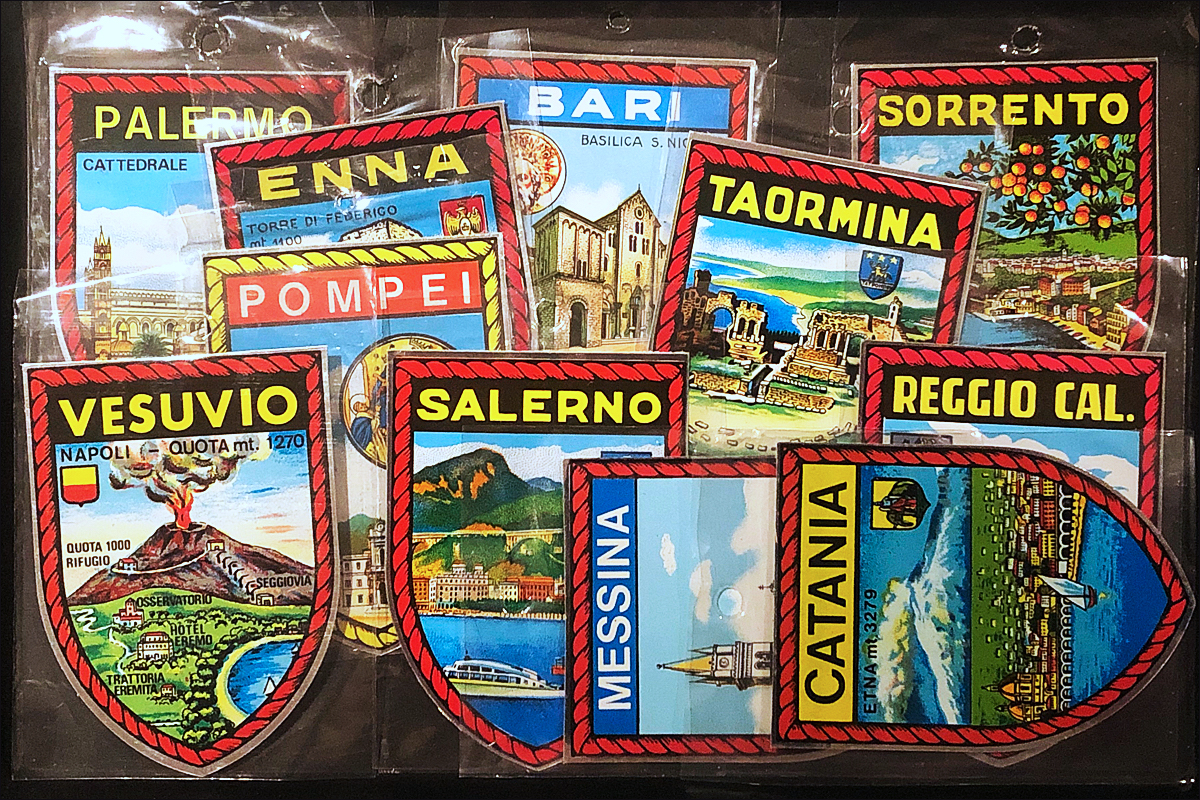
(Above & below) Revelers received some old
Two Sicilie patches and stickers
[1] For more information about the local customs of St. John's vigil in Naples see Becoming Neapolitan: Citizen Culture in Baroque Naples, John A. Marino, John Hopkins University Press, 2011
[2] The prayer and hymn used in our solemn celebration were obtained from catholicculture.org. Roman Ritual, The, Complete Edition by Philip T. Weller, S.T.D., The Bruce Publishing Company, Milwaukee, WI, 1964