July 26, 2024
July 23, 2024
The Dynasties of Italy: The House of Chiaramonte
Reprinted from Western Exile @westernexile
Origin: Clermont, France (Disputed)
States: Kingdom of Sicily
Highest Titles: Count of Modica, Count of Caccamo, Grand Seneschal, Grand Admiral and Master Justiciar of the Kingdom of Sicily
Heraldic Blazon
Party per fess, in base argent and on a chief gules a mount of five peaks argent
A literal depiction of the family name, from chiaro meaning light and monte mountain, which is also possibly derived from the French noble House of Clermont.
Overview
While certain legends trace the origins of the Chiaramonte to the days of Charlemagne himself, the dynasty likely arrived in the Italian South in the 12th century from the French region of Picardy, where it had been known as the House of Clermont.
The first named kin are an Edgardus of Capua and Hugo, Lord of Colubraro and Policoro, in the early 12th century, whose sons Alessandro and Riccardo were exiled by Roger II, the first King of Sicily, before the latter reconciled with the fledgling Norman monarchy.The Chiaramonte would be infamous for their uneasy relationship with the Crown, both under the Norman Hauteville and German Hohenstaufen dynasties, before opportunity came in the chaos of the vast rebellion that convulsed the island in 1282 - the Sicilian Vespers.On the evening of the 31st March 1282, when an Angevin soldier groped a Palermitan noblewoman on the steps of a church, her outraged father struck the Frenchman down in a spark which lit the tinderbox of revolt against Sicily's latest conqueror - Charles of Anjou.The revolt unleashed a terrible fury, as Angevin troops and officials across the island were cut down or expelled, and the Sicilians offered the crown to King Peter III the Great of the Catalan House of Barcelona, beginning the age of Aragonese Sicily.Manfredi Chiaramonte Prefoglio, who served King Peter loyally, would be rewarded by his son King Frederick III in 1296 with the fiefdoms of the disgraced pro-Angevin Lord of Modica, whereupon the title was elevated to a countship. The Chiaramonte dominion had begun.Over the next hundred years, the heirs of Manfredi Chiaramonte would rival only the Archbishops of Monreale as the most powerful men in Sicily, such that the County of Modica was referred to as the Regnum in Regno - the 'Kingdom within a Kingdom'.The Chiaramonte therefore were well placed to exploit the anarchy into which Sicily fell amid the Black Death, especially when King Louis himself succumbed to the plague without heirs in 1355, and the Castilian Civil War tied down Aragonese forces in Iberia.Yet the rebellious Chiaramonte, complicit in the abduction of the dead King's niece in 1379 in an attempt to force an advantageous marriage, fatally overreached. Aragon, outraged, mounted a naval expedition to bring the Sicilian barons to heel.Slowly, but surely, their allies were peeled back into the royal fold, until Andrea Chiaramonte himself was captured and executed in Palermo in 1392. The County of Modica was thereafter awarded to the Catalan House of Cabrera, and the Chiaramonte never recovered.Illustrious MembersManfredi I Chiaramonte (?-1321)
After allying to the Aragonese cause, and enduring incarceration in Calabria as a result, Manfredi earned the favour of Frederick III, who following the latter's coronation in 1296, ennobled him as Count of Modica.
Manfredi would repay the King's generosity by fighting with distinction and determination against the forces of Charles II of Anjou, playing a major role in crushing Angevin attempts to reconquer the island and unite it to their Neapolitan realm on the Italian mainland.Manfredi achieved the height of his prestige when he represented Frederick III at the coronation of Holy Roman Emperor Henry VII on the 29th June 1312, negotiating within days a potent alliance between both monarchs, for which he was rewarded with an Imperial fiefdom.
Manfredi III Chiaramonte (?-1391)Expanding the Chiaramonte realm to its greatest territorial extent, Manfredi III acquired virtually the entire southern coast of Sicily as well as the island of Malta, becoming one of the most powerful noblemen in Europe.Andrea Chiaramonte (?-1392)
Such was the power of the dynasty that Andrea took up residence not in Modica, but the royal capital of Palermo itself, receiving the title of Admiral from Pope Boniface IX. Yet by 1392, that power was an illusion.Widespread Chiaramontine abuses of power, and the newly ascendant Aragonese, would see Andrea's allies almost entirely abandon him in the face of King Martin of Aragon, who in 1392 landed on Sicily to crush the barons' revolt and bring an end to half a century of chaos.After a gruelling siege, Palermo capitulated to the royal forces, who were in no mood for clemency. Convicted of high treason, Andrea Chiaramonte was beheaded in front of his own palace on the 1st June 1392, bringing the age of the Chiaramonte to the most ignoble of ends.Architectural Legacies
Chiaramontine Gothic
Blending Arab-Norman influences with Catalan flourishes, particularly in intricately decorated arches, the entire architectural movement which spread across 14th century Sicily takes its very name from the dynasty.
Palazzo Chiaramonte-SteriCompleted in 1307 by Count Manfredi III Chiaramonte, the imposing edifice was the dynastic seat of power in Palermo, and so too the scene of the family's downfall, as the site of Andrea Chiaramonte's execution in 1392.Chiesa di San Francesco d'Assisi, Palermo
One of the finest Gothic churches to survive in the Sicilian capital, and the final resting place of many illustrious members of Palermitan aristocracy. In 1302 the Chiaramonte sponsored the beautiful façade.Modica
The stronghold of Chiaramonte power, as the comital seat and home to the island's highest court of appeal, Modica swelled into one of Sicily's major cities, laying the foundations for her actual and architectural glory.
Photo of the Week: The Farnese Bull
July 22, 2024
New Book — More Than Maradona: The Birth, Death and Rebirth of SSC Napoli
• More Than Maradona: The Birth, Death and Rebirth of SSC Napoli by Kirsten Schlewitz
Publisher: High Press Publishing
Publication Date: 2024
Paperback: $19.75
Language: English
Pages:290
Read description
Click here to see more books
Listing does not imply any endorsement
July 21, 2024
The Dynasties of Italy: The House of Filangieri
Reprinted from Western Exile @westernexile
Origin: Normandy
States: Kingdom of Sicily, Kingdom of Naples, First French Empire, Kingdom of Italy
Highest Titles: Prince of Arianello, of Cutó, of Mirto, of Satriano, Duke of Cardinale, of Taormina
Heraldic Blazon
Argent a Cross Azure
Following the conquest of Jerusalem in the First Crusade, Richard of Arnes, ancestor of the Filangieri, is said to have adopted the cross, choosing blue to symbolise that his endeavours had been in the service of the King of Heaven.
Heraldic Variants
As the family split into multiple branches, numerous variations on the dynastic arms arose. The Filangieri of Sicily, for example, added nine bells in remembrance of their having sounded the alarm that unleashed the revolt of the Sicilian Vespers in 1282.
Other variants include the label of three points gules granted to the Filangieri by Charles I of Anjou, while following the Austrian conquest of the Italian South in 1720, Emperor Charles VI permitted the family to charge their arms upon the Imperial Eagle.
Extended TitlesDue to the antiquity and extent of the dynasty and its branches, across the centuries the Filangieri would hold at least 109 fiefdoms, and amass an extraordinary list of titles, including 16 countships, 2 marquisates, 8 dukedoms and 6 princeships.Overview
The sources largely agree that the Filangieri trace their origins to a certain Richard 'Angerius' of Arnes, who in the wake of the Norman conquest of the Italian South, followed the famed adventurer Robert Guiscard and settled in the Principality of Salerno in 1045.
In 1096, Angerius would serve with distinction alongside Godfrey of Bouillon and other Norman lords of the South on the First Crusade. Rewarded with many fiefdoms, it is indeed from he that the Filangieri derive their name - 'filii Angerii' - 'Sons of Angerius'.
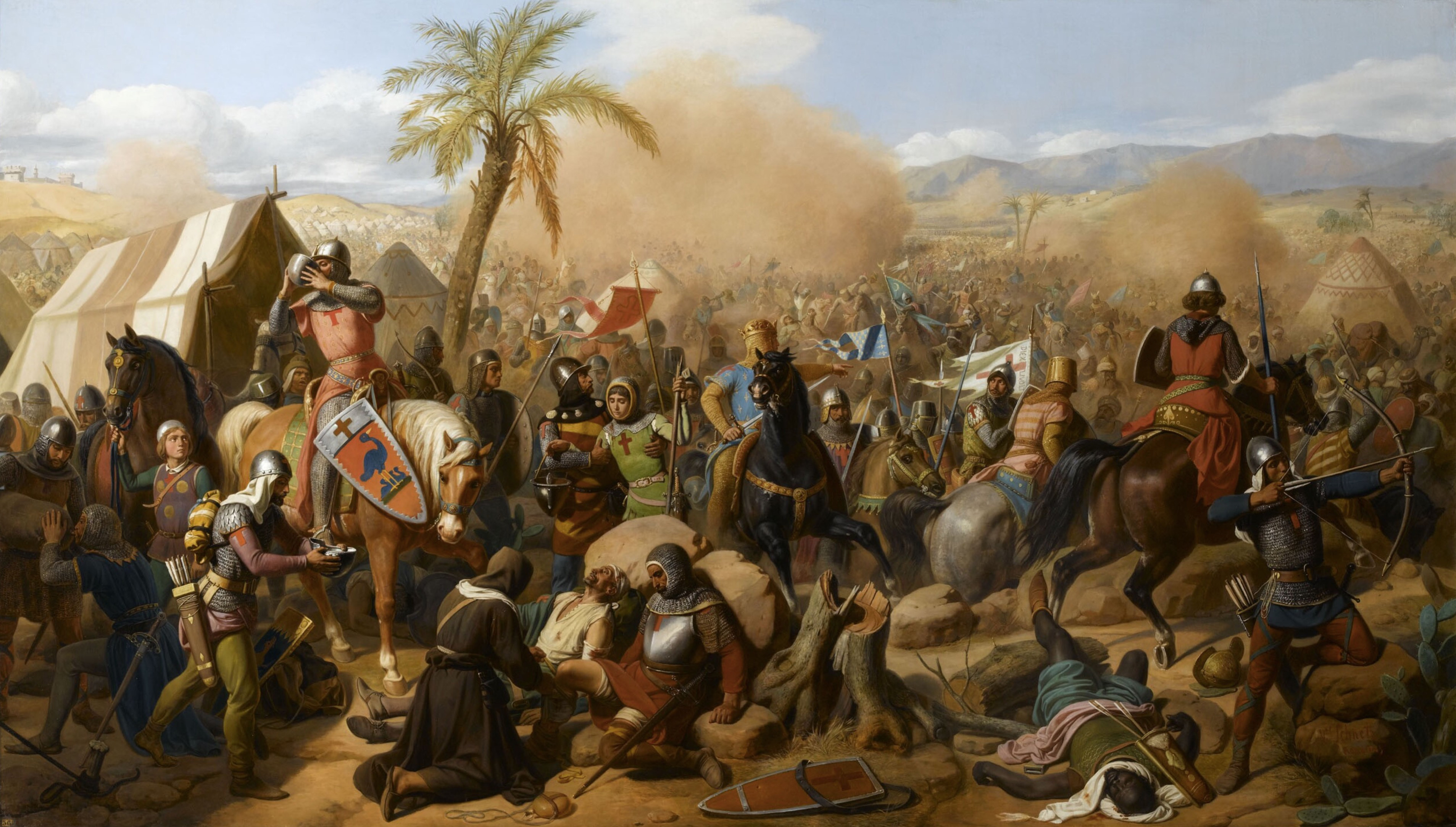
For almost the entirety of the existence of the Southern Kingdoms, under the Hauteville, Hohenstaufen, Angevin, Aragonese, Habsburg and Bourbon kings, and beyond into modern times, the Filangieri would occupy the utmost positions of civil and military prominence.
As a result of their sustained pre-eminence, through fortune, misfortune, intrigue, marriage and prowess the Filangieri would steadily establish a multitude of branches across the Neapolitan and Sicilian realms, many of which flourished in their own right.
Emblematic of the pre-nation state world, the Filangieri often distinguished themselves abroad, serving at times Spain, Austria and even Napoleon Bonaparte. Yet the rise of nationalism, which the Filangieri fought both for and against, would herald their decline.
The conquest of the South in 1860, and consolidation of the united Italian state, would see the Filangieri largely fade from political prominence, though the family has continued to produce prominent intellectuals, from historians to economists, to this day.
Illustrious MembersRichard 'Angerius' d'Arnes (pre 1045-1104)
The progenitor of the Filangieri, Richard was the first of the line to arrive in Italy from Normandy, sealing the family's rise with the valour he showed on the First Crusade.
Riccardo Filangieri (c. 1195-1278)
Like his ancestor, Riccardo would also distinguish himself in the Holy Land, fighting in the Sixth Crusade under Emperor Frederick II, before siding against the Empire in the resulting civil war.
Gaetano Filangieri (1753-1788)
Among the most prominent philosophers of 18th century Italy, Gaetano's eloquent advocacy for legal reform in the face of the Enlightenment won him the support of King Ferdinand of Bourbon, before his premature death.
Carlo Filangieri (1784-1867)
The most controversial, and therefore famed, member of the dynasty, the life of Carlo would span 83 years that changed his homeland, and Europe, forever, in events that he himself would be more than a passive observer to.
By quirk of fate, Carlo would be granted military command in the First Empire as a result of Napoleon's admiration for his father Gaetano. Unfortunately, this would lead to his treason, when he accompanied the French army in its invasion of the Kingdom of Naples in 1806.His loyalty to the Napoleonic cause would see his career blossom in Italy and in Spain, as aide-de-camp to the Emperor's brother-in-law Joachim Murat. Fortunately for him, following King Ferdinand's restoration in 1815, he was reconciled with the Bourbon monarchy.When Europe was convulsed by revolution in 1848, Carlo would lead the Bourbon army to victory over the nationalist junta that seized the government of Sicily, though his triumph was marred by the high civilian casualties that resulted from the siege of Messina.In 1859 an elderly Carlo served as Prime Minister to Ferdinand II, where his proposal of a Faustian alliance with the nationalist government of Turin came to naught. Unable and unwilling to stem the onslaught of the subsequent invasion, he submitted to the new Italian state.Gaetano Filangieri (1824-1892)A connoisseur of the arts and renowned scholar of Neapolitan history, Gaetano played a decisive role in the protection of the cultural heritage of Naples, as well as in many of the city's learned societies.Architectural Legacies
The Filangieri Museum, Naples
Determined to prevent the government from demolishing the historic Palazzo Como, in 1882 Gaetano Filangieri transformed it into a museum at his own expense, donating a vast collection of his curiosities to populate it.
Palazzo Mirto, Palermo
Crowning a meteoric career loyal to the Spanish Crown, in 1683, former Praetor of Palermo Don Vincenzo Filangieri, Prince of Mirto, transformed the family palace into one of the most sumptuous residences of the Sicilian capital.