December 11, 2018

Meridiunalata VIII: A Bilingual Offering of Duosiciliano Poetry

Inspired by Cav. Charles Sant'Elia's Meridiunalata/Southernade,* an evocative bilingual (Neapolitan/English) collection of poetry written between 1989 and 2010, we offer the reader an accessible introduction to vernacular (Neapolitan, Sicilian, et al.) verse with the aim of awakening enthusiasm for contemporary and historical poesia Duosiciliano
In this installment we're featuring the Neapolitan poetry of Pino Rispo D.R. 
Storia e civiltà
Di Pino Rispo

Penzanno te veco..
E sempe cchiu forte te sento..
Sì museca rint’’o core...
Ca se rregn’’e passione..
Fra poco stamme ‘nzieme..
E ddimane chesti rime...
Sarrane penziere d’ajere
Trovo sempe ‘o mutivo pe’ te penzà...
Pecchè ogge sacce chi songo...
E pecchè me trovo ccà...
Je apparteng’â ‘nu populo
Semplice cu tanto ‘e dignità
Fatto prigiuniero e no libberato
Ca ogge ancora d’’a l’italia
Abbandunato e discriminato
Ma ogge assaje se só scetate..
E cu ‘e ffiglie ll’ore ‘e chesta
Storia nosta n’hanno parlato
Dimane apparten’â ll’ore
L’italia ca venette arrubbà...
‘E chisto nnemico c’avimma libberà
Pecchè nuje tenimme
‘Nu mare ‘e storia e civiltà!!

History and Civilization
By Pino Rispo

Reflecting I see you..
And ever more strongly I feel you..
You're music in my heart...
That fills with passion..
In a little bit we'll be together..
And tomorrow these rhymes...
Shall be thoughts of yesterday
I always find a reason to think of you...
Because today I know who I am...
And why I find myself here...
I belong to a people
Simple with so much dignity
Taken prisoner and not freed
Still today left by Italy
Abandoned and discriminated against
But today so many have woken up..
And with their children they have spoken
Of this history of ours
Tomorrow belongs to them
The Italy that came to steal...
We have to free ourselves of this enemy
Because we have
A sea of history and civilization!!

Translated by Cav. Charles Sant’Elia


* Self-published in 2010, Meridiunalata/Southernade is a treasury of poems gleaned from Cav. Sant'Elia's previous collections (Nchiuso dint''o presente, 'A cuntrora, and 'O pino e l'éllera), which were circulated among friends in New York City and Naples. Special thanks to Cav. Sant'Elia for allowing us to reprint his poetry and translations.

December 9, 2018

Photo of the Week: Narcissus or Dionysus at Axel Munthe's Villa San Michele in Anacapri

Edicole with bronze Narcissus or Dionysus
at Axel Munthe's Villa San Michele in Anacapri 

Photo by New York Scugnizzo

December 8, 2018

Distributing Food to the Homeless on St. Nicholas Day

Three cheers for this month's volunteers!
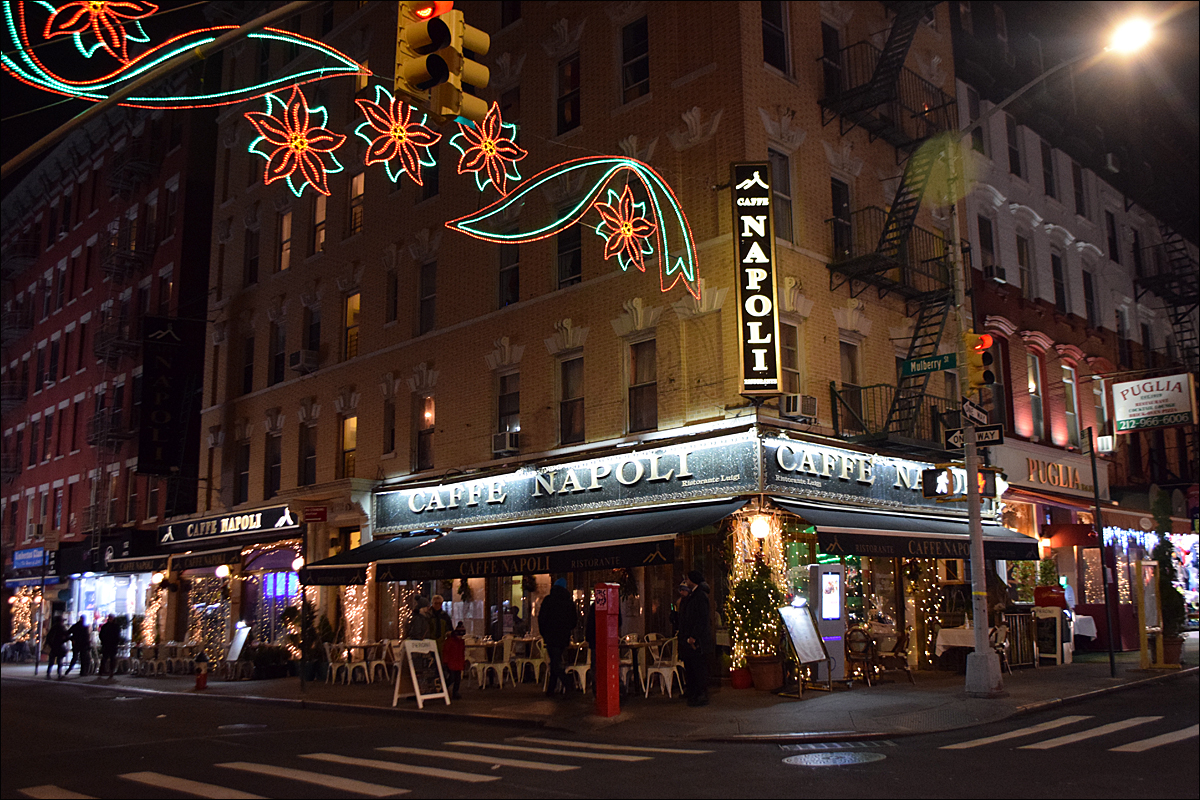
Thursday, December 6th, members of the Constantinian Auxiliary joined the Knights and Dames of the Order to prepare and distribute food to the homeless in Chinatown and Two Bridges, New York on the Feast of St. Nicholas. Meeting at the Church of the Transfiguration (29 Mott St.), volunteers prepared 30 care packages replete with winter accessories, toiletries and ready to eat food, including containers of freshly cooked penne marinara generously donated by our dear friends at Caffé Napoli (191 Hestor Street) in Little Italy.

Once again, we want to thank Antonio, Anna and Konstantinos Mavrianos-Cesare for their hard work and dedication. You are an inspiration to us all. Thank you Louis Fontana of Caffé Napoli; Andrew Giordano of the St. Rocco Society of New York; Michela Mussolino of Terra Sangue Mare; John Russo and his students Jason and Jalil from Summit Academy Charter School in Red Hook, Brooklyn; Raymond Guarini of Italian Enclaves; and my confratelli Cavalieri Charles Sant’Elia, Marc Reynolds and Vincent Gangone for your continued assistance. Your heartfelt generosity and selflessness is greatly appreciated. And as always, special thanks to Pastor Lo for your support and blessings. It is an honor to serve with such an outstanding group of people. God Bless you all. IHSV

The next walk will be on Thursday, January 3rd—the Feast of the Most Holy Name of Jesus—at 7:00 PM. In addition to ready to eat foodstuff and daily necessities, we’re are asking volunteers to donate hats and scarves for the cold weather. Anyone interested in supporting this charitable endeavor can contact Cav. John Napoli at jnapoli@smocsg.org or call Anna Mavrianos-Cesare at 917-592-4181.

Before heading to the church, we picked up the food from Caffé Napoli.
John, Jason & Jalil from Summit Academy Charter School in Red Hook, Brooklyn.
Volunteers sporting their new Constantinian aprons.
Caffé Napoli donated a heaping tray of penne marinara. 
Cavs. Marc Reynolds and Charles Sant'Elia. 
Andrew Giordano. 
We divvied up the pasta into thirty healthy portions.
Hats and gloves were added to this month's care packages.
Cav. Charles Sant'Elia, Andrew Giordano, Cav. Marc Reynolds
and Cav. John Napoli with the flag of the Kingdom of the Two Sicilies 
Originally posted in The Constantinian Chronicle

December 5, 2018

One Day Suddenly

My Napoli scarf with the coat-of-arms
of the Kingdom of the Two Sicilies
One day suddenly, Vesuvius will erupt, and fire will wash this city of (expletive). Cholera and salmonella, but you are still here. What is the epidemic, that will annihilate you. Ale ale ale, Vesuvio ale ale. ~ A coarse spoof of the Napoli anthem “Un giorno all’improvviso” sung by A.S. Roma fans*
Jeered by a passerby the other day for wearing my S.S.C. Napoli scarf, I was reminded of a dicey incident that took place during my last trip to Italy. While sporting a Napoli shirt in a rival city, I was warned by a concerned stranger that I was offending some locals and it was a potentially dangerous situation. Alone in a foreign country, I found it prudent to heed his advice and leave the premises before things got out of control. But that was in la Bel Paese (the beautiful country), where they live and breath calcio (Italian football), not New York City. 
Unlike the heated arguments we regularly get into over local sports affiliations, I don’t ever recall getting into a row with someone here (friends aside) for being a Napoli supporter. In fact, thanks to their impressive style of play, rooting for Napoli has become somewhat fashionable these days, with many a frontrunner singing the current team’s praises. Far from getting upset by the encounter (after all, “suffering” for the team is a badge of honor and comes with the territory), the antagonist and I exchanged a few verbal barbs before parting ways.
Oddly enough, I was not altogether unsympathetic with my adversary, who took umbrage with me following a foreign team and not supporting Major League Soccer (MLS). However, in my defense I was rooting for Napoli long before there was a MLS and, at the risk of sounding “un-American,” I feel more kindred to the city of Naples on a visceral level than I do to my own hometown, which becomes more and more unrecognizable to me with each passing day.
Back in 1997 and ’98 I did attend a few NY/NJ MetroStars (now NY Red Bulls) games at Giants Stadium in the Meadowlands, but remained altogether unimpressed with MLS. While fans of the league have accused me of being a “football snob,” the truth of the matter is I’m fervently loyal to Napoli and the only homegrown team I would even consider following is the New York Cosmos, who I watched play as a child. As an aside, the revived Cosmos under Calabrese American cable magnate Rocco B. Commisso, along with ten other clubs, are currently affiliated with the National Premier Soccer League (NPSL) and are set to debut in the spring of 2020. 
I was first introduced to calcio in high school, thanks to my new friends who were the children of immigrants from southern Italy, mostly Sicily. Being Neapolitan American, I instinctively started rooting for Napoli, while my classmates were all oddly diehard fans of northern Italian teams like Juventus, A.C. Milan and Inter Milan. Naturally, with such passionate and knowledgeable (tor)mentors, it didn’t take long for me to learn the intricacies of the game and adopt the historical rivalries. The regional pride and identity connected to the team's fanbase were well suited to my nascent Neobourbon political views.
The lone Napoli supporter in the bunch, my team and I were incessantly poked fun of, especially in the ’90s when the club began to decline. Since my friends are southerners themselves, the banter never reached, even during our most intense exchanges, the egregious levels of “territorial discrimination” we witness today in the terraces in Italy. For example, opposing ultras (fanatical fans) from the north often cheer on Mount Etna and Mount Vesuvius in the hopes that the two potentially dangerous volcanoes will erupt and wipe southern Italy off the face of the planet. 
A crude meme, curiously circulated in English
Even though I'm no ultra, my attraction to the sport has always been the medievalesque pageantry and martial aspects associated with them. In my mind’s eye the songs, choreographed clapping, and flying of one’s colors looks like warring city states cheering on their favorite condottieri or mercenary company, especially since nowadays many of the players in Serie A (Italian football’s top flight league) are not autochthonous. Not surprisingly, this picturesque passion and local particularism, clearly connected to Italy's legendary campanilismo (extreme localism), is an aspect of the sport that modern football (calcio moderno) is trying to suppress and do away with.

As to be expected from tifosi (fans) of winning teams, my friends count silverware and Scudetti (championships), while I take solace in knowing that through thick and thin I remain loyal to the team that represents the city I carry in my heart. Their respective clubs—Juventus, Milan and Inter—won a combined 24 out of the last 28 titles since Napoli last finished top of Serie A in 1989/90. U.C. Sampdoria, S.S. Lazio and A.S. Roma each won once, while in 2004/05 the Scudetto wasn’t awarded after first place Juventus and runners up Milan (among others) were implemented in the notorious match-fixing scandal known as Calciopoli
Napoli’s ascendancy, as well as being the sole representative of the south in the ongoing 2018/19 Serie A campaign, has been a source of pride. The team looks strong and expectations are high. Though not without criticism, owner and prominent movie mogul Aurelio De Laurentis and his war room have built a team worthy of the city. Not since the glorious Diego Maradona years (1984–1992) has there been so much optimism and belief in the Scudetto. 

All said, in the end all that matters is that the lads respect the shirt and give it their all on the pitch. More than just a game, calcio is, as the cliché says, “a way of life.” It is a mentality; a culture imbued with ardor and élan. One's regional pride and dignity are at stake. It may be considered “backwards” and “dangerous” by the governing bodies trying to sanitize, monetize and globalize the sport, where each team and fan base become cookie cutter copies of one another, except with different colored uniforms, but they are learning that for some of us old loyalties die hard. Forza Napoli sempre! 
One day suddenly, I fell in love with you. My heart was beating, don’t ask me why. Time has passed, but we are still here, and now as then, I defend the city. Ale ale ale, Ale ale ale. ~ One day suddenly (Un giorno all’improvviso)
* Quoted from http://www.italianfootballdaily.com/offensive-chants-from-roma-fans-towards-the-city-of-napoli/

December 4, 2018

Congratulations Ernie Rossi!

Ernie Rossi proudly showing off his new plaque
Monday evening, our esteemed Delegate HE Cav. John M. Viola presented Ernie Rossi of E.Rossi & Company (193 Grand St.) in Little Italy, New York, a beautiful plaque emblazoned with the Coat of Arms of Royal House of Bourbon–Two Sicilies on behalf of HRH Prince Carlo di Borbone–Due Sicilie, Duke of Castro. The honor was bestowed to Mr. Rossi in recognition of his efforts to share the history and culture of the Two Sicilies through the many products he carries in his store. 
Plaque with Royal coat-of-arms of the Kingdom of the Two Sicilies
The Prince discovered Ernie’s shop back in September of this year while inspecting the fairgrounds of the Feast of San Gennaro during the Royal Family’s visit to Little Italy. Spotting a window display with t-shirts and Argenio Napoli products bearing the royal coat-of-arms, the Prince couldn’t resist visiting the shop and meeting the proprietor. Fondly recalling the warmth and hospitality offered by Mr. Rossi during that chance encounter, Prince Carlo conferred upon him this sincere token of gratitude.

Originally posted in The Constantinian Chronicle

December 3, 2018

Photo of the Week: Copy of Dionysus at Axel Munthe's Villa San Michele in Anacapri

Copy of bronze bust of Dionysus in the loggia at
Axel Munthe's Villa San Michele in Anacapri, Capri
Photo by New York Scugnizzo

Members of the Sacred Military Constantinian Order of Saint George Remember HRH Princess Carmen of Bourbon–Two Sicilies in Park Slope, Brooklyn

Mosaic above the altar in the St. George chapel 

Divine Liturgy was offered Sunday afternoon at the Church of the Virgin Mary (216 8th Ave.) in Park Slope, Brooklyn for the eternal memory in blessed repose of HRH Princess Maria del Carmen Carolina Antonia di Borbone – Due Sicilie (1924-2018), who fell asleep in the Lord at the age of 94. Serving the Melkite Catholic community of New York City, Mass was concelebrated at the beautiful church in English and Arabic by Pastor Fr. Antoine, Rt. Rev. Msgr. Economos Romanus V. Russo, and Deacon Naji Youssef. Cavalieri John Napoli and Vincent Gangone were in attendance.


Warmly welcomed by the congregation, the Knights and Auxiliary were invited to join them for their Sunday social gathering in the church basement. Guests enjoyed fellowship, coffee and some lite refreshments, including a delicious wheat berry and pomegranate dessert reminiscent of Sicilian cuccia. 

Wheat berry and pomegranate dessert

Thanks to Msgr. Russo, we also had the joyous opportunity to venerate the relic of the True Cross.

Cross and double-headed eagle reliquary pendant with relic of the True Cross

Before leaving, the Knights took the opportunity to explore the church, admire its many religious and artistic treasures, and offer prayers of thanks and praise. IHSV

Mosaic of Our Lord Jesus Christ
Mosaic of the Blessed Mother
Archangel Michael icon
St. Nicholas icon
Stained glass window of St. George
Nativity Scene with Christmas Tree
Detail of ornate sedilia showing double-headed eagle motif
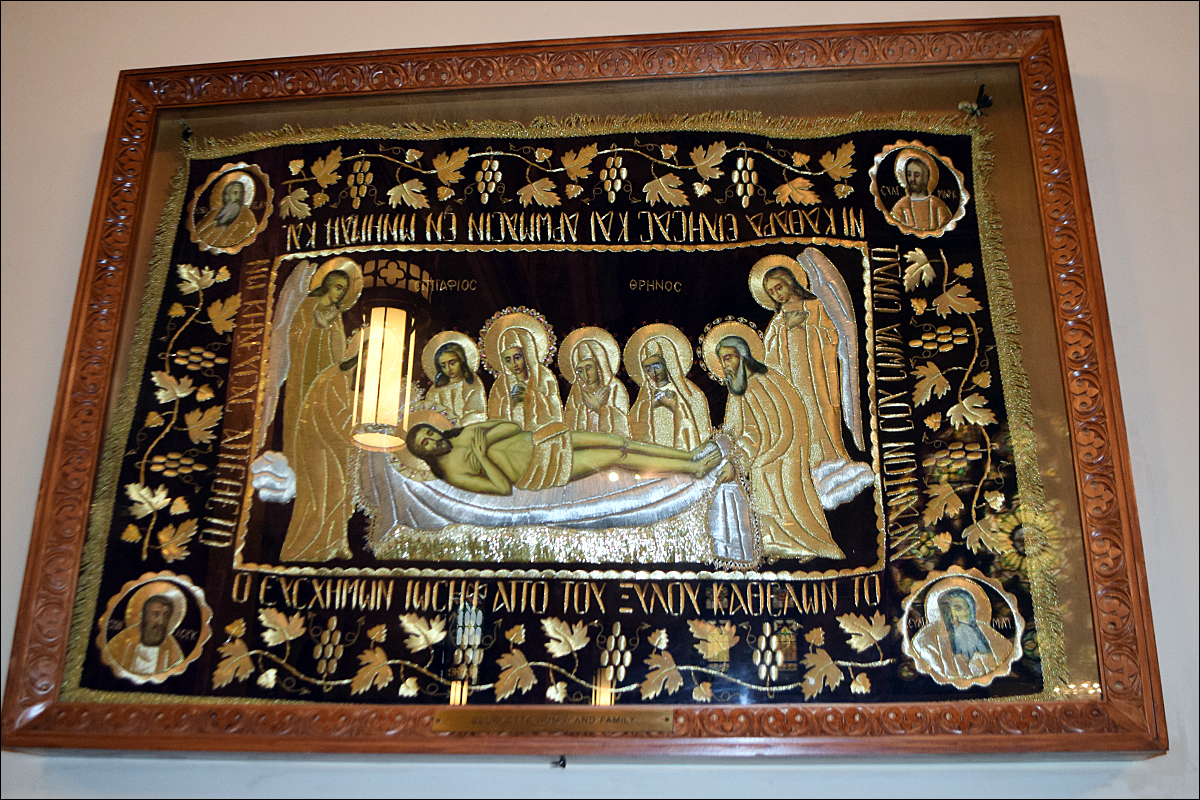
Tapestry depicting the Lamentation over the Dead Christ
Mosaic of the Virgin Mary above the church entrance
Church of the Virgin Mary
Originally posted in The Constantinian Chronicle

December 2, 2018

New Books (December 2018)

Forthcoming titles that may be of interest to our readers. Available at Amazon.com
Magnificent Interiors of Sicily by Richard Engel, Samuele Mazza and Matteo Aquila
Publisher: Rizzoli
Publication Date: April 30, 2019
Hardcover: $65.00
Language: English
Pages: 244

After Vesuvius: Treasures from the Villa dei Papiri by Kenneth Lapatin
Publisher: J. Paul Getty Museum; 1 edition
Publication Date: July 16, 2019
Hardcover: $65.00
Language: English
Pages: 295
Click here to see more books
Listing does not imply any endorsement

November 29, 2018

Divine Liturgy for Her Royal Highness’ Eternal Memory in Blessed Repose in Park Slope, Brooklyn

HRH Princess Carmen di Borbone
Sunday, December 2nd at 11am

Church of the Virgin Mary
216 8th Avenue
Park Slope, Brooklyn, NY 11215

The US Delegation will hold a Divine Liturgy in the Greco-Albanian Catholic Rite for the repose of the soul of HRH Princess Maria del Carmen di Borbone of the Two Sicilies on Sunday, December 2nd at 11AM at the Church of the Virgin Mary (8th Ave & 2nd St) Park Slope, Brooklyn, NYC. Mantles and Mozzetta to be worn.

The SMCSG has historically included in its rites the Byzantine Catholic Divine Liturgy as well as the Latin Liturgy.

November 28, 2018

Photo of the Week: Bust of Axel Munthe in the Villa San Michele Gardens

Bronze bust of Axel Munthe in the Villa San Michele gardens in Anacapri, Capri
Photo by New York Scugnizzo

November 27, 2018

Meridiunalata VII: ‘O Luciano d’’o Re - The King’s Luciano by Ferdinando Russo (Parts VII-IX)

Ferdinando Russo
Translated and annotated by Cav. Avv. Charles Sant’Elia
[In this installment of Meridiunalata/ Southernade, a bilingual offering of Duosiciliano poetry, we are publishing Ferdinando Russo's epic poem ‘O Luciano d’’o Re - The King’s Luciano in its original Neapolitan and for the first time ever in English. Due to space considerations, we are posting the masterpiece in three parts. – Il Regno]
See parts I-III, IV-VI

VII
46ª.
Già, quanno stu Ramaglia fui chiammato,
primma ca stu viaggio se facesse,
dicette ‘o Rre: – “Ramà, si scienziato?
E vedimmo sta scienzia che dicesse!„
Ramaglia ‘o vesetai. – “State malato!
È niente, ma però… ve prupunesse…„
‘O Rre ‘o guardai. – “Che prupunisse, di’?„
-“Maiestà… ve prupunesse… ‘e nun partì!„
47.ª
-Pecchè? dicette ‘o Rre; ch’è funnarale?
-No… nient”e chesto! Mill’anne ‘e saluta!
Ma che facimmo? Pe scanzà nu male,
mettimmo ncopp’a cuotto acqua vulluta?
E ‘o Rre: -Ramaglia mio, si’ n’animale!
Sta cosa ‘ncapo chi te l’ha mettuta?
Nun me vuò fa’ partì? Pe chi me piglie?
Quant”e avuto, pe darme sti cunziglie?!
48.ª
E vulette partì! Nu cuoccio tuosto,
ca ‘o simmelo comm’isso, nun ce steva!
Tu l”e chiammato? E chillo t’ha rispuosto…
Na cosa bona pure t”a diceva!
Ma che buò fa’? pe malaurio nuosto,
quanno ncucciava, niente nce puteva!
‘A pigliai storta, se mettette ‘ntuono,
e vulette partì, malato e buono!
49.ª
Che v’aggia di’? Chi sa!… Si nun parteva
ferneva tuttecosa a ppazziella,
e chella sfenetezza che senteva
sarrìa passata cu na misturella…
Arïano aspettava, isso nun jeva,
e scumbinava buono ‘a jacuvella,
e te lassava comm’a statue ‘e sale
a Munzignore e a tutt”e libberale!
50.ª
Pirciò fui smaleditto, stu viaggio
cu ‘a jettatura ‘e trònole e saette!
E pirciò, pe sta causa ‘e stu rammaggio,
anfino a Manferònia nun se jette!
Jettemo a Bare… Già traseva Maggio…
Era ‘o vintotto ‘Abbrile… o vintisette…
E nce arrivàimo mmiezo a spare e suone,
e na gran folla ‘e pupulazzione.
51.ª
Ma n’ato malaurio l’attuccava!
Te pareva na cosa fatt’apposta!
Sott”e balcune ‘a folla aumentava,
(genta tutta fedele ‘a causa nosta)
e lle sbatteva ‘e mmane, e l’accramava:
Vivò!… Vivò!… Vivò!… Botta e risposta…
Embè, ‘o ccrerite? Justo mmiezo ‘a via,
‘o Rre a chi vede? Na cunfrataria!
52.ª
Cosa ca, si se conta, uno te dice:
“A chi l’assigne? Va ncujeta a n’ato!„
E isso, (ca ‘o Signore ‘o benedice!)
nce rummanette troppo spaventato!
Ogne mumento sunnava nemice,
e, p”a paura, sempe cchiù malato,
ve putite penzà cu che allegrìa
ricevette, accussì, Maria Sufia!
53.ª
Nun se gudette niente, ‘e chelli ffeste!
Parlava appena, passanno ‘e paise!
Quatto, cinco parole, lestu-leste,
addò ca chillo ne facea fa’ rise!
C’argentaria! C’adduobbe e frusce ‘e veste!
‘E Ppuglie ne spennettero turnise!
Triate, balle, serenate, sciure,
e isso ncopp”a branda cu ‘e delure!
54.ª
Ogge, nu poco meglio, e respirava;
dimane, verde peggio d”e ccutogne!
A tavula, penzava e nun magnava…
Cu ‘a capa sotta, se guardava ll’ogne…
Murtrïuso, accussi, sfarnetecava,
penzanno certo a chelli gran carogne
c’aveano armato contr’a isso ‘a mano
e ‘a bbajunetta ‘e Gisalao Milano.
VIII
55.ª
Bare era propio na galantaria,
cu tutte chilli princepe rignante
c’accumpagnàino ‘a sposa! E p”allegria
tu te sentive overo n’ato ttanto!
Chesto, pe dint”e ccase e mmiezo ‘a via,
pecchè add”o Rre se ne faceano chiante!
Po’ avevano urdinato: -Lengua ‘mmocca!
-Comme sta ‘o Rre? -Sta buono… ma se cocca…
56.ª
Aviveve ‘a vedè chella Riggina!
Pe dà sullievo ‘o Rre, facev’un’arte!
Jeva essa stessa pure int”a cucina!
Na santa ‘n cielo m”a mettite ‘e parte!
Senza vulè durmì, sera e matina,
a priparà dicotte, a firmà carte…
E parlava cu miedece e dutture,
danno curaggio a ‘e stesse prufessure!
57.ª
Passava ‘o tiempo… ‘O mmale aumentava…
Nisciuno cchiù diceva na parola…
Nisciuno cchiù durmeva o risciatava,
nfra nu silenzio ‘e quanno ‘a mosca vola…
Lampe allumate, gente ca pregava,
e ll’uoglio santo, e l’acqua ‘e San Nicola,
e l’abbetiello ‘e Sant’Affonzo… Che!…
Mò era n’ombra ‘e Rre, nun era ‘o Rre…!
58.ª
E venette ‘o scatascio! Se sapeva!…
Giesù! Chill’uocchie suoi!… Comme guardava!.
Vivo, senteva ‘a morte, e nun mureva,
vedenno ‘o cuorpo ca se nfracetava!…
delure dint’ali’osse, friddo, freva,
nu tremmulicchio ca te spantecava,
na smània ‘e sete, senza arrepusarte,
e vierme ca ll’ascéano ‘a tutte parte…
IX
59.ª
Comm’ ‘o purtàimo, a buordo ‘o Furminanto?
Comme jette da Puortece a Caserta?
Erano mise, e chi assaggiava tanto!?
Erano mise, ch’io durmevo allerta!
Doppo prïato a Dio santo pe santo,
‘a povera Riggina, amara e sperta,
dice: – Tentammo st’urdema speranza,
e mannammo a chiammà Vicienzo Lanza!
60.ª
Chisto era gran duttore e libberale,
ma currette, dicìmmola comm’è!
Surtanto, le fui ditto, tale e quale,
ch’isso, ‘o malato nun l’avea vedè!
S’era penzato ca pareva male
fa trasì stu nemico nnant’ ‘o Rre;
e Lanza se strignette dint’ ‘e spalle:
“A saluta d”o Rre nun va tre calle!„
61.ª
– Comme, nun va tre calle? – V”o ddich’io!
È inutele, sta vìseta add”o Rre!
Io so’ chi so’ ! Faccio ‘o mestiero mio!
Ma è troppo tarde, mo! Sentite a me!…
P”o riesto, nu miracolo ‘o fa Dio;
ma… si ‘o facesse… ‘o vvularria vedè!
‘O fatto è chiaro comm’acqua ‘e funtana!
Dàtele latte ‘e femmena, e se sana!
62.ª
‘O miedeco curante era Rusato,
e se mettette a ridere. – N”o ccrire?
dicette Lanza; fai c’aggio sbagliato?
Nnanza a Vicienzo Lanza nun se rire!
E, certo, o scienzia, o c’ato fosse stato,
nui simmo jute cu ‘e vestite nire!
Speràvamo, nce dèvamo curaggio,
ma ‘o Rre murette ‘o vintiduie ‘e Maggio…
63.ª
Chest’è, quann”a Furtuna è na zuzzosa!
Si tu ‘o rilorgio ‘o guaste int”o cungegno,
hai voglia ‘e l’accuncià, ca nun è cosa!
E accussì fui! Muort’isso, muorto ‘o Regno!
‘A strata se facette ntruppecosa,
Calibbarde aspettava e avette ‘o segno;
cade Gaeta, doppo quatto mise,
e nui… natàimo ttutte int”e turnise!
64.ª
Ah! Ah! Me vene a ridere, me vene!
Ogneruno sperava ‘avè na Zecca,
tanta renare quanto so’ ll’arene,
‘a gallenella janca, ‘a Lecca e ‘a Mecca!
Faciteme ‘e berè, sti ppanze chiene!
Seh, seh! Quanno se ngrassa ‘a ficusecca!
Comme scialammo bello, dint’a st’oro!
Sciù pe la faccia vosta! A vuie e a lloro!
65.ª
Ccà stammo tuttuquante int”o spitale!
Tenimmo tutte ‘a stessa malatia!
Simmo rummase tutte mmiezo ‘e scale,
fora ‘a lucanna d’ ‘a Pezzentaria!
Che me vuò di’? Ca simmo libberale?
E addò l’appuoie, sta sbafantaria?
Quanno figlieto chiagne e vo’ magná,
cerca int”a sacca… e dalle ‘a libbertà!
VII
46ª.
Already, when this Ramaglia was called,
before this voyage was made,
the King said: – “Ramà, you’re a scientist?
And let’s see what this science says!„
Ramaglia visited him. – “You are ill!
It’s nothing,  however… I’d propose you…„
The King looked at him. – “What would you propose, do tell?„
-“Majesty… I’d propose you… do not depart!„
47.ª
-Why? asked the King; it is a funeral?
-No… nothing of the sort! A thousand years of health!
But what do we do? To avoid any harm,
shall we throw oil on the fire?
And the King: -My Ramaglia, you’re an animal!
Who put this thing in your head?
You don’t want to let me depart? Who do you take me for?
How much did you get, to give me this advice?!
48.ª
And he wanted to depart! A stubborn man,
the likes of which, were not to be found!
You called him? And he answered you…
He even told you a good thing!
But what can one do? To our chagrin,
when he dug in, nothing could be done!
He took it the wrong way, he straightened himself out,
and he wanted to depart, good and sick!
49.ª
What can I tell you? Who knows!… If he didn’t depart
everything would have ended as a trifle,
and that exhaustion that he felt
would have passed with a little calming mixture…(31)
Arïano would have waited, he wouldn’t have gone,
and he’d have undone the silly intrigue real good,
and he’d have left like statues of salt
Monsignor and all the liberals!
50.ª
Therefore was cursed, this journey
with the jinx of thunder and lightning!
And therefore, on account of this harm,
he didn’t go as far as Manferònia!(32)
We went to Bari… May was already approaching…
It was the twenty-eighth of April… or twenty-seventh…
And we arrived amid shots and sounds,
and a great crowd of the population.
51.ª
But another ill omen was due him!
It seemed to you as if done on purpose!
Under the balconies the crowd was growing,
(all people faithful to our cause)
and they were applauding, and were acclaiming him:
Vivò!… Vivò!… Vivò!(33)… Call and answer…
Well, do you believe it? Right in the middle of the street,
who did the King see? A religious confraternity!
52.ª
A thing which, if one recounts it, one tells you:
“Who are you kidding? Go bother someone else!„
And he, (may the Lord bless him!)
he remained too afraid of it!
Every moment he was dreaming of enemies,
and, out of fear, ever more ill,
you can imagine with what merriment
he received, like this, Maria Sufia!(34)
53.ª
He didn’t enjoy anything, of those feasts!
He was barely speaking, passing the towns!
Four, five words, hurriedly,
whereas before he’d make you laugh!
What silverware! What decorations and rustle of dresses!
Puglia spent turnise!(35)
Theaters, balls, serenades, flowers,
and he on the cot with his pains!
54.ª
Today, a little better, he was breathing;
tomorrow, green worse than quince!
At table, he was thinking and not eating…
With his head down, he looked at his nails…
Long-faced, like that, he was growing delirious,
thinking certainly of those lousy vermin
that had armed against him the hand
and the bayonet of Gisalao Milano.(36)
VIII
55.ª
Bari was all gallantry,
with all those royal princes
that accompanied the bride! And for all the merriment
you truly felt the same!
This, in the houses and in the streets,
because near the King they were weeping!
Then they had ordered: -Tongues in your mouths!
-How’s the King? –He’s well… but lying down…
56.ª
You all should have seen that Queen!
To give comfort to the King, she made an art form!
She even went herself in the kitchen!
A saint in heaven you’ll set her aside for me!
Without wanting to sleep, morning and night,
preparing infusions, signing papers…
And she talked to physicians and doctors,
giving courage to the professors themselves!
57.ª
Time was passing… The illness was increasing…
Nobody said a word any longer…
Nobody was sleeping or breathing,
amid a silence like when I fly flies…
Lamps lit, people were praying,
and holy oil, and the water of Saint Nicholas,
and the holy card of Saint Alphonse… What!…
Now he was the shadow of a King, he wasn’t the King…!
58.ª
And the disaster came! One could tell!…
Jesus! Those eyes of his!… How he was looking about!.
Alive, he felt death, and was not dying,
seeing his body that was rotting!…
pain in the bones,  chills,  fever,
a frightful tremor,
a lingering thirst, without letting you rest,
and worms coming out of him all over…
IX
59.ª
How did we take him,  aboard the Furminanto?(37)
How did he go from Portici to Caserta?
They were months, and who experienced so much!?
They were months, for I slept standing up!
After having prayed to God and saint by saint,
the poor Queen,  bitter and wandering about,
says: – Let’s try this last hope,
and we sent to call Vicienzo Lanza!
60.ª
This was a great doctor and a liberal,
but he ran, let’s tell it like it was!
Only that, he was told, just like that,
that he was not to see the sick man!
One thought it was bad
to let this enemy enter before the King;
and Lanza shrugged his shoulders:
“The King’s health isn’t worth three calle!„(38)
61.ª
– How now, it’s not worth three calle? – I’m telling you all!
It’s useless, this visit to the King!
I know who I am ! I do my job!
But it’s too late, now! Listen to me!…
As to the rest, God will do a miracle;
but… if he’d do it… I’d like to see it!
The fact is clear as fountain water!
Give him woman’s milk, and he’ll heal!
62.ª
The treating physician was Rusato,(39)
and he set himself to laughing. – You don’t believe it?
said Lanza; you say I’m wrong?
Before Vicienzo Lanza(40) one does not laugh!
And, indeed, science, or whatever it was it,
we wound up in black suits!
We were hoping, we took courage,
but the King died on the twenty-second of May…
63.ª
This is it, when Fortune is a dirty wench!
If you break your watch’s mechanism,
it is pointless to adjust it, it won’t work!
And so it was! Him dead, the Kingdom dead!
The going got rough,
Garibaldi was waiting and he got the signal;
Gaeta fell, after four months,
and us… we all swam in cash!(41)
64.ª
Ah! Ah! It makes me laugh, it does!
Everyone hoped to have a Mint,
as much money as there are grains of sand,
the golden goose, all round!(42)
Let me see, these full bellies!
Oh yeah, oh yeah! When the dried fig fattens up!(43)
How we’re celebrating, in this gold!
Spit in your faces! To all of you and to them!
65.ª
Here every one of us is in the hospital!
We all have the same illness!
We’re all left in the middle of the stairs,
outside the Beggar house!
What do you want to tell me? That we’re liberals?
And where are you hanging up, this braggadocio?
When your son cries and wants to eat,
look in your pocket… and give him freedom!
Notes:
(31) Misturella: a little mixture or medicinal concoction, used ironically also for poison.
(32)  Manferònia: Manfredonia. Trans. Note.
(33) Vivò!: Long live! Trans. Note.
(34) Maria Sufia: Maria Sofia von Wittelsbach of Bavaria (1841-1925), the daughter of Duke Maximilian Joseph and Princess Ludovika of Bavaria, the Bavarian Royal Princess, about to wed Ferdinando II’s son Francesco II, and who would become Queen of the Two Sicilies and later go on to serve bravely on the front with her husband and the army at the famous siege of Gaeta. Trans. Note.
(35) Turnise: or tornesi, copper coins first minted in the Kingdom in the 15th century, in use as a currency unit through 1861. Cfr. Barese dialect terrise, also used in the general sense of “money”.
(36) Gisalao Milano: or Agesilao Milano (1830-1856), was an unstable radical soldier from the province of Cosenza in Calabria, who had prior disciplinary reprimand, and who attacked King Ferdinand II, stabbing him with his bayonette after the King left mass for the feast of the Immaculate Conception on December 8, 1856. Despite many famous, and often repeated conspiracy theories of the King being poisoned by members of his court or his own doctors, modern scholarship posits that the King died from lingering complications from the horrible wound inflicted by Milano.  Trans. Note.
(37) On the Furminanto, see footnote n. 9 above.
(38) calle: or cavalli, copper Neapolitan coins, first coined in 1472 during the reign of Ferdinando of Aragon, and so called because of the trotting horse on the reverse. The cavallo was minted during various reigns up until Ferdinando I. The cavallo as a unit was replaced by the tornese, which was equal to 6 cavalli. Like the tornese, the cavallo or callo remains alive in the Neapolitan language and in many sayings and proverbs. Trans. Note.
(39) Rusato: Prof. Cav. Franco Rosati, another Bourbon court doctor, held in high regard by the Royal Family, who like Ramaglia, was know to treat the Royal family and upper echelons of society, as well as to devote time to treat very humble patients in need. When the King decided to expand the office of Surgeon General, he appointed a commission and made Rosati its president. When the Grand duke of Tuscany respected the aid of a noted doctor, Ferdinand II sent Rosati to him in Florence to treat the Archduchess Anna. Trans. Note.
(40) Lanza: Vincenzo Lanza, another well respected physician, who served on the highest medical council with Cav. Rosati.
(41) turnise: or tornesi, see note n. 27 above. Trans. Note.
(42) ‘a Lecca a Mecca: proverbial expression, perhaps originally of Sicilian origin, meaning, “all over the place, around the world”, literally “from Lecca to Mecca”. Trans. Note.
(43) Cfr. The proverbial phrase, quanno chiove passe e ficusecche: “when it rains raisins and dried figs”, i.e. most improbable. Trans. Note.

November 26, 2018

Meridiunalata VI: ‘O Luciano d’’o Re - The King’s Luciano by Ferdinando Russo (Parts IV-VI)

Ferdinando Russo
Translated and annotated by Cav. Avv. Charles Sant’Elia
[In this installment of Meridiunalata/ Southernade, a bilingual offering of Duosiciliano poetry, we are publishing Ferdinando Russo's epic poem ‘O Luciano d’’o Re - The King’s Luciano in its original Neapolitan and for the first time ever in English. Due to space considerations, we are posting the masterpiece in three parts. – Il Regno]
See parts I-III, VII-IX

IV
18.ª
Comme lle pïaceva ‘a capunata!
Quase ogne juorno na capunatella!
Se ne faceva justo na scialata,
e doppo, ‘o bicchierino e ‘a pastarella.
Po’, cu na bona tazza ‘e ciucculata,
se pastiggiava sempe ‘a marennella…
Ah, chella tazza! Chella tazza fuie,
ca, comm’a mo’, nce ha ‘rruvinato a nuie!
19.ª
Che nce mettette ‘a rinto, chillo ‘mpiso
ca, pe farlo murì, l’avvelenaie?
Meglio era s’isso nce mureva acciso!
Isso, ch’è stato ‘a causa ‘e tutt”e guaie!
‘O Rre nuosto ‘o ssapette, ‘nparaviso,
e certo, ‘o ggiurarrìa, nce ‘o pperdunaie!
Ma si nun era ‘o ttuòsseco ‘e sta tazza,
n’avriamo viste tanta cane ‘e chiazza!
20ª
Lassammo sta’! Nun ricurdammo niente!
Quanno nce penzo me sento malato!
Se verèvano a sciumme, ‘e ppèzze ‘argiente!
Mo’ è raro pure ‘o sòrdo scartellato!
Trasètteno?… Ma a botte ‘e trademiente!
Nun me dicite ca me so’ ngannato!
Trasètteno, gnorsì!… Senza cammise!
E ‘o ddicevano stesso ‘e piamuntise!
21.ª
Mo’ lloro stanno ‘a coppa!… Mo’ sta bene!
Ma, p’arrivà, n’hanno magnato sivo!…
A Palazzo Riale, ‘e ccasce chiene!
Nce hanno spurpato anfino all’uosso vivo!
M’aggia sta’ zitto, è ove’? Nun ve cummene
‘e me sentì parlà?… Ve fa currivo?!
Llà s’avriano jucato a paro e sparo
pure ‘o Santo Tesoro ‘e San Gennaro!
22.ª
So’ biecchio? So’ gnurante? Nun capisco?
Me sustenite ch’è tutt”o ccuntrario?
Embè… voglio sapè che fosse ‘o Fisco!
Nun fui n’aggrisso ‘o cchiù straurdinario?
Io tengo ‘a rrobba, tu m”o mmiette ‘nfrisco,
po’ me rice ca serve pe l’Arario!
Parole nove!… Io nun cumbino cchiù!
St’Arario fui ca t”o mmagnaste tu!
23.ª
Chi ne sapeva niente, ‘e chesti ttasse?!
L’oro jeva accussì… comm”e lupine!
Ognuno, a gusto suio, magnava ‘e grasse,
cu’e ssacche chiene ‘e rurece-carrine!
Mo’ manco cu ‘e ppatane uno se ngrasse,
ca vanno care comm”e tagliuline!…
Songo gnurante? Avraggio tutt”e tuorte!
Ma… quanno mai, io jastemmavo ‘e muorte?!
24.ª
Me so’ mparato mo’!… È ‘o sango stesso
ca se revota e nce scumbina ‘e ccape!…
ah, tiempo bello!… Si’ squagliato ampresso!
Nui simmo addeventate tanta crape!
Ah, so’ gnurante?… Nce ‘o scuntammo appriesso!
Po’ verimmo sta porta chi l’arape!
‘E palazze?… So’ belle!… ‘E strate?… Pure!
Ma s’è perza ‘a semmenta d”e signure!
25.ª
Addò stanno, Statella e Muliterno,
nu ruco r”a Riggina o n’Uttaiano!
Fosse cchiù certo ‘e vengere nu terno!
Nun m’avantasse cchiù: “So’ luciano!”
È stata vuluntà d”o Pat’Eterno,
si no, v”o scummettesse a piezzo ‘nmano,
ca, si nun era munzignor Caputo,
chillo, ‘o Sissanta, nun sarria venuto!
V
26.ª
So’ stato marenaro mmiezo ‘a scorta
d”o Rre, malato ‘e chella malatia!
Tutte pronte a vigliarlo! Arreto ‘a porta,
nnanz”a carrozza, sulo, ‘ncumpagnia…
Mai na parola! Mai na faccia storta!
Mai nu suspetto, pe Santa Lucia!
Era sicuro ‘e jì, venì, restá…
‘E luciane suoi stevano llà!…
27.ª
Stevano llà! Na squatra pronta a tutto!
Ogne parola, ogne guardata, ogn’atto!
Viaggio tristo assai! Viaggio brutto!
Cchiù de na vota s’è purtato ‘nquatto!
Isso, ca ne vulea tirà ‘o ccustrutto,
n’arrivava a sapé che s’era fatto
pe chella malatia misteriosa,
accussì nfama e tantu mai schifosa!
28.ª
Vi’ c’anno fui, chillo Cinquantanove
cu chillo spusalizzio ‘e Francischiello!
L’otto ‘e Jennaro, chiove, chiove e chiove!
C’aveva fa? Partette, ‘o puveriello!
Lampe e saette, mmiezo ‘e strate nove,
e pigliaimo nu bello purpetiello…
Già, ‘o Rre, ca nce credeva, ‘a jettatura,
se ll’era ntruitata, sta sbentura!
29.ª
Partenno aveva ritto: “Si ncuntrammo
nu monaco, nu zuoppo o nu scucciato,
sarrà nu malaùrio! Cammenammo!…„
E da nu piezzo se sentea malato.
Nun fui parola ritta, nui guardammo,
e già ‘o penziero suio s’era avverato!
Chi ncuntrammo? Tre muònece! ‘O ddicette!
E scatasciaino trònole e saette!
30.ª
A Mugnano, cu ‘o friddo dint’all’ossa,
scennette e jette a Santa Filumena.
Isso, ‘e figlie, ‘a Riggina, rossa rossa,
sott’a nu viento ca ‘o Signore ‘o mmena!
Se sape! ‘O sango lle fa tale mossa,
ca dint”a cchiesia se riggeva appena!
Doppo, s’abbatte ncopp’a nu cuscino,
e che nuttata cana, anfi’ ‘Avellino!
31.ª
Meno male ca po’ se repigliaie
e ‘o juorno appriesso, all’unnece, partette!
Ma credite ca ‘o tiempo s’accunciaie?
‘O nfierno pure llà nce se mettette!
A munno mio, nun m’è succiesso maie!
Fui tanta e tanta ‘a neva che cadette,
ch’io nun v’abbasto a dicere: zeffunno!
Llà nce cadette ‘a neva ‘e tutt”o munno!…
32.ª
Nu cielo ‘e chiummo, na campagna janca,
e nnanz’all’uocchie nu lenzuolo ‘e neva!
Tu vai cecato… ‘A zoza ca te stanca,
‘e ddete ‘e fierro… E ‘a forza, chi t”a deva?
Po’ cierti vventecate, a dritta e a manca,
ca sulamente Dio nce manteneva…
-Che facimmo?… Fermammo, Maistà?
E isso:-Jammo nnanza a cammenà!
33.ª
Ma ch’era ‘acciaro, o steva ‘nfrennesìa?
Facèvamo tre passe ogne doj’ore!
E duraie duraie, chesta pazzìa,
nfi’ a quanno nun turnaie ‘o battitore.
-Maistà, nun è pussibbele, p”a via…
Ccà passammo perìcule e mmalore…
E, cunzigliato da ‘o barone Anzano,
isso urdinaie:-Vutammo p’Ariano!
34.ª
E jettemo add”o Vescovo! Capite?
E ‘o vescovo era Munzignor Caputo!
Doppo nu miglio a ppede, me crerite?
‘o Rre arrivai nu straccio! Nterezzuto!
E no sul’isso! Stevamo sfenite!
Nun tenèvamo ‘a forza ‘e chiammà ajuto!
‘A Riggina, per farve perzuvaso,
jeva int’a neva cu ‘e scarpine ‘e raso!…
35.ª
Che nce vulette, pe piglià calimma!
‘A sera, ‘a bbona ‘e Ddio, votta e magnammo!
Llà fuie ‘o mbruoglio! ‘O ppriparàino apprimma
chello vveleno, o che?… Nun ne parlammo!
Dicetteno ca no!… Bella zuzzimma!
Quant’è certo stu juorno ca sciatammo,
stu Munzignore ca v’annummenaie,
dopp”o Sissanta, po’… se n’avantaie!
36.ª
Embè, chesto se fa?… Pròssemo tuio,
ca l”e cercata ‘a mitria e te l’ha data,
ca vene ‘a casa toia, pe gusto suio,
‘o vaie a ntussecà cu ‘a ciucculata!…
Ma s’io songo tentato, io me ne fuio,
nun già ca sceglio justo ‘a mala strata
sulo pecchè vene ‘o Demmònio e dice:
“Avvelèname a chisto, e simm’amice!…„
37.ª
S’era perduto ogne timore ‘e Ddio!
Putive suspettà ‘e nu saciardote?
Va buono, se mpattai!… Ma ve rich’io
ca l’avarrìano acciso ciento vote!
Chisto, verite, è razziucinio mio!
Nce n’addunàimo! Ch’èramo, carote?
E po’… si parle ca nun si’ birbante,
che vene a di’ ca doppo te n’avante?!
VI
38.ª
‘O Rre, ca già nun se senteva buone,
pecchè già ncuorpo serpiava ‘o mmale,
se sape! quann’avette ‘o calatone
se sentette cchiù peggio! È naturale!
Basta; nun ‘o mmettimmo ‘n custione,
nun ce scurdammo ‘a cosa princepale!
Comme vulette Ddio, llà dintu llà,
magnàjemo… e nce ne jettemo a cuccà.
39.ª
Ma ‘a notte, all’antrasatto, nu remmore
nce mena tutte dint”a stanza ‘o Rre…
Vedennolo, accussì, cu ll’uocchie ‘a fore,
l’addimannammo: -“Neh! Maistà… Che r’è?”
“-Llà… llà… chill’ommo… Nu cuspiratore…
Se vuleva accustà… vicino a me…
Da nu spurtiello… dint”o muro… llà…”
E nui cercàimo… Ma che vuò truvà!
40.ª
S’era sunnato, e overo se credeva
d’avè vist’uno ca l’assassenava,
quanno ca pe sti suonne che faceva
chell’era ‘a malatìa che cammenava!
E chi durmette cchiù?! Nun te veneva!
Arbava juorno e se chiacchiariava….
All’otto, n’ata vota ‘a stessa renza!
Nce sentettemo ‘a messa, e po': partenza!
41.ª
Che precepizzio ‘e via dopp’Ariano,
jenno pe Foggia e Andria e pe Canosa!
‘O Rre malato, chillo tiempo cano,
nu mbruoglio pusetivo ‘e tuttecosa!
Ogne vivò, isso cacciava ‘a mano…
(‘A veco sempe, chella mana nfosa…)
E po’ a Bitonto, pe Ruvo e Trellizze,
e gente c’aspettava a tutte pizze…
42.ª
Aspetta, aspetta! ‘O Rre passava ‘e trotte,
pe tuccà Manferònia ampressa ampressa!
E p’Acquaviva nce passàimo ‘e notte,
e doppo n’ora, cu ‘a truttata stessa,
dïune, stracque, ammatuntate ‘e bòtte,
cammina, pe ghì ncontra ‘a Princepessa!
A Taranto, spezzate dinto ‘e mmecce,
tu qua’ fermata! Nce fermammo a Lecce!
43.ª
E a Lecce se nchiummai! Nun pare overo,
pecchè, che saccio… s’era repigliato…
Parlai cu tutte, ricevette ‘o Clero,
e ‘a sera stessa vulett’ì ‘o triato!
Anze, vedite quanto steva allero,
ca, cu nu Truvatore appriparato,
isso alluccai: -“Che Truvatore! A chi?
Fate don Checco! M’aggia divertì!…„
44.ª
Ma ‘o juorno appriesso, (e chi s”o suppuneva?)
nun se partette!… ‘A cosa s’aggravava…
‘O duttore Lione ca curreva,
‘o nzagnatore ca m”o salassava…
Apprimma, miccia miccia, chella freva
se nc’era misa ncuollo e n”o lassava;
e ‘a Riggina, gialluta comm”a paglia,
fa correre, da Napule, a Ramaglia.
45ª.
Vene Ramaglia cu Capozze, vene
ll’anema ‘e ll’urzo, vene tutt”o munno!
Se po’ sapè che r’è?! Chi te sustene
ca se va a galla; chi ca se va nfunno;
chi se stregne int”e spalle; chi cummène
ca nun ‘o ssape, e ‘o ddice chiaro e tunno…
Eppure, chillo, ‘o Rre, l’aveva ditto!
“Tengo ‘o presentimento ca so’ fritto!…„
IV
18.ª
How he liked capunata!
Almost every day a little capunata!
He used to make a proper feast of it,
and afterwards,  a little glass and the biscuit.
Then, with a good cup of chocolate,(11)
he always feasted for a snack…
Ah, that cup! It was that cup,
that, like now, ruined us!
19.ª
What did he put in it, that villain
who, in order to kill him, poisoned him?(12)
Better that one were murdered instead!
He,  the one who was the cause of all our woes!
Our King knew, in heaven,
and surely, he would have judged him, and forgiven him!
But if it wasn’t for the poison in this cup,
we wouldn’t have seen so many dirty stray dogs!(13)
20ª
Let’s let it go! Let’s not remember anything!
When I think about I feel sick!
They saw rivers, of silver pieces!
Now even a lucky penny(14) is rare!
They entered in?… But by treachery!
Don’t tell me I am deceived!
They entered in,  yes sir!… Shirtless!
And the Piedmontese themselves said it!
21.ª
But now they’re on top!… Now they’re doing fine!
But, to manage it, they ate fat!…
In the Royal Palace, full coffers!
They picked us alive clean to the bone!
I have to shut up, right? It’s not convenient for you
to hear me talk?… It makes you steaming mad?!
There they would have played odds and evens
even for the Treasure of San Gennaro!
22.ª
I’m old? I’m ignorant? I don’t understand?
You maintain to me that it’s the other way round?
Well… I want to know what was the Exchequer!
Wasn’t this the most extraordinary assault?
I’ve got stuff,  you freeze it,
then you tell me it’s useful for the Revenue man!
New words!… I don’t get it any more!
This Revenue man was there so you could gobble it up!
23.ª
Who know anything about them, these taxes?!
Gold was going round… like beans!
Everyone,  according to his taste, eat richly,
with pockets full of twelve carrine!(15)
Now one doesn’t even fatten up with potatoes,
that sell as expensive as tagliuline!…
I’m ignorant? Could I be all wrong!
But… when ever, did I curse the dead?!
24.ª
I’ve learned now!… It’s the blood itself
that turns and muddles heads!…
ah, good old times!… Melted away quickly!
We’ve become so many goats!
Ah, I’m ignorant?… We’ll settle it later on!
Then we’ll see who’ll open this door!
The buildings?… Are beautiful!… The streets?… Too!
But one has lost the breed of gentlemen!
25.ª
Where are, Statella and Muliterno,
a go-between of the Queen or an Uttaiano!(16)
I’d been more certain to win three numbers in the lotto!
I’d no longer boast: “I’m a Luciano!”
I was the Lord Almighty’s will,
otherwise, I’d bet you cash in hand,
that, if it wasn’t Monsignor Caputo,(17)
that one, ‘Sixty,(18) wouldn’t have come!
V
26.ª
I had been a sailor in the middle of the King’s
escort, sick with that sickness!
All ready to watch over him! Behind the door,
in front of the carriage, alone, in company…
Never a word! Never a long face!
Never a suspicion, by Santa Lucia!
I was sure to go,  come,  stay…
His Lucianos were there!…
27.ª
They were there!  A squadron ready for anything!
Every word, every look, every act!
Really sad journey! Ugly journey!
More than once we carried him in four!
He, who wanted to pull the contraption,
didn’t manage to know what one did
for that mysterious illness,
so infamous and ever so horrible!
28.ª
See what a year it was, that Fifty-nine(19)
with that wedding of Francischiello!(20)
The Eighth of January, rain, rain and rain!
What should he have done? He departed,  the poor man!
Lighting and thunder, in the middle of the byways,
we wound up good and drenched…
Already, the King, who believed in jinxes,
had intuited it,  this misadventure!
29.ª
Leaving he had said: “If we encounter
a monk, a lame man or a bald man,
it will be a bad omen! Let’s get under way!…„
And after a bit he felt ill.
A word was not uttered, we looked,
and already his thought came true!
Who did we meet? Three monks! He said it!
And thunder and lightning broke!
30.ª
In Mugnano, with the cold in his bones,
he got out and went to Santa Filumena.(21)
He,  his children, the Queen, she ever so red,
under a wind sent by the Lord!
Indeed! His blood have him such a start,
that in the church he barely held up!
Afterward,  he threw himself down on a pillow,
what a dog night, all the way to Avellino!
31.ª
Thank goodness he recovered
and the following day, at eleven, he departed!
But do believe the weather improved?
Then hell even there stuck itself in!
To my reckoning, it never happened!
It so very very much snow that fell,
that I can’t sufficiently tell you:  galore!
There fell all the snow in the world!…
32.ª
A leaden sky, a white countryside,
and before one’s eyes a sheet of snow!
You go blindly… the wet clods that tire you out,
cold rigid fingers like iron… And strength, who’d give it to you?
Then certain gusts of wind, from right to left,
that only God kept us…
-What do we do?… Shall we stop, Your Majesty?
And he:- Let’s go forward walking!
33.ª
But was he of steel, or was he in delirium?
We were making three steps every two hours!
And it continued and continued,  this folly,
up until the scout did not return.
-Your Majesty, it’s not possible, through the highway…
Here we’ll suffer dangers and hardships…
And, advised by baron Anzano,(23)
he ordered:-We’ll turn toward Ariano!
34.ª
And we went to the Bishop! Understand?
And the bishop was Monsignor Caputo!
After a mile on foot, do you believe me?
The King arrived worn out like a rag! Frozen stiff!
And not just him! We were exhausted!
We didn’t have the strength to call for help!
The Queen, to make you all understand,
was going in the snow with satin slippers!…
35.ª
What it took, to get warmth!
That evening, as God provides, we managed to eat!
That’s where the trickery was! They prepared beforehead
that poison, or what?… Let’s not speak of it!
They said no!… Nice filth!
As sure as this day we are breathing,
this Monsignor that you name,
after ‘Sixty, then… be bragged about it!
36.ª
Well, this is what one does?… Your neighbor,
from whom you sought the mitre and he gave it to you,
who comes to your house, of his own accord,
you go and poison him with chocolate!…
But if I’m tempted, I flee,
certainly I wouldn’t follow the path of evil
just because the Devil comes and says:
“Poison this one for me, and we’re friends!…„
37.ª
He had lost all fear of God!
Could you have suspected a priest?
Oh well,  he made provisions!… But I tell you all
that they would have killed him a hundred times!
This, you see,  is their reasoning!
We realized it! What were we, carrots?
And then… if you say you’re not a rogue,
what does it mean that afterwards you brag about it?!
VI
38.ª
The King,  who already was not feeling well,
because the illness was already snaking through his body,
indeed! when he had the final dive
he felt worse! It’s natural!
Enough; let’s not put into question,
let’s not forget the main thing!
As God willed,  right then and there,
we ate… and we went to bed.
39.ª
But at night, suddenly,  a sound
threw us all into the King’s room…
Seeing him,  like this,  with his eyes protruding,
we asked him: -“Hey! Your Majesty… What is it?”
“-There… There… that man… A conspirator…
He wanted to approach… near me…
From a little entryway… in the wall… there…”
And we searched… But what do you want to find!
40.ª
He had dreamt it,  and he truly believed
having seen someone assassinating him,
during these dreams he had had
that was the illness progressing!
And who slept any more?! It didn’t come on to you!
Day was dawning and one was chatting….
At eight,  the usual habits again!
We heard mass,  and then: departure!
41.ª
What a ruinous road after Ariano,
going to Foggia and Andria and on to Canosa!
The King ill,  that dog weather,
a positive muddle of everything!
Every long live, he took out his hand…
(I always see it, that wet hand…)
And then to Bitonto, by Ruvo and Trellizze,(24)
and people who were waiting all over the place…
42.ª
Wait, wait! The was passing by trotting,
to reach Manferònia(25) in a great hurry!
And we passed by Acquaviva by night,
and after an hour, with the trotting,
starving, tired,  banged up,
onward, to meet the Princess!
At Taranto, crushed in our joints,
what stop do you think! We stopped at Lecce!
43.ª
And in Lecce he planted himself down! It doesn’t seem real,
because,  what do I know… he had recovered…
He talked to everyone, he received the Clergy,
and that same night he wanted to go to the theatre!
What’s more,  you see how merry he was,
that, with a Trovatore prepared,
he shouted: -“What Trovatore! For who?
Do don Checco!(26) I want to have fun!…„
44.ª
But the day after, (and who what have supposed it?)
we didn’t depart!… The thing was worsening…
Doctor Lione(27) who was running about,
the bloodletter who was bloodletting him…(28)
At first, ever so slowly, that fever
set itself over him and wouldn’t leave;
and the Queen,  yellow like straw,
made Ramaglia(29) run, from Naples.
45ª.
Ramaglia comes with Capozze,(30) 
every darn body comes,  the whole world comes!
Could one know what it is?!  There are those who maintain
that things are looking up;  those that things are going down;
those who shrug their shoulders;  those that feel
that one doesn’t know, and says so clearly…
And yet, he, the King,  had called it!
“I have a hunch I’m cooked!…„
Notes:
(11) Russo in his own annotations recalls that it was variously alleged that bishop Caputo poisoned the king with a cup of hot chocolate, a cigar, or a towel, and Caputo supposedly boasted about it after 1860. See, Bernardini, Ferdinando II a Lecce; De Cesare, La fine di un Regno. – Avv. E. di Martino, Ricordanze storico-morali. Trans. Note.
(12) In the 19th century, and for many years after, theories abounded that bishop Caputo of Ariano had poisoned Ferdinand II’s cup of chocolate. Further controversies claimed that the trusted court doctor Cav. Don Pietro Ramaglia from Molise either poisoned or purposely neglected the King’s treatment. Russo includes these themes and well known versions in his poem. Subsequent scholarship has however challenged all of these theories, positing that the most obvious cause of the King’s death was the horrible wound inflicted by the deranged radical soldier Agesilao Milano who stabbed the King with his bayonet during a military inspection after attending mass for the feast of the Immaculate Conception. It was considered possible that Milano’s weapon also contained poisons. King Ferdinand II bravely carried on, including his lengthy travels to Puglia and indeed refused several treatments and rest. After the King’s death and the Risorgimento, local doctors and their descendants in Puglia and along the travel route claimed to have treated or offered treatment, and even criticized the court doctors’ treatments, further adding to popular conspiracy theories and legends. According to these fable-like accounts each of these doctors would have or could have saved the King if only the court had listened etc. Don Pietro Ramaglia was saddened and angered by the King’s assassination (and accusations leveled against himself) and refused to hold any public office or teaching position at the University of Naples, even when begged by the new liberal administration of the University, and he only gave private lessons and lectures to young students. He swore his undying loyalty to the King and the House of Bourbon and vehemently shunned the Savoy government, as would be expected from a man who was made a Knight Grand Cross of the SMOCSG by Ferdinand II himself and who served him and the Royal Family directly. In fact, Ramaglia became a doctor after winning recognition and a scholarship from the Bourbons when he was a young man. See infra, foot note n. 32, on Agesilao Milano.  Trans. Note.
(13) cane ‘e chiazza: stray dogs, metaphorically in the sense of the foreigners who descended on the Kingdom to gnaw on its resources. 
(14) Sordo scartellato: or soldo, a 5 cent piece, a small denomination.
(15) carrine: or carlini, Neapolitan coins, worth 10 grana. The dodici-carlini or rurece-carrine was a higher value silver coin. The old Neapolitan piastra was 120 grana coin. The Kingdoms of Naples and Sicily used similar units of currencies for centuries, which were united and whose ancient names were kept after the Congress of Vienna, the ducat being the main unit of currency.  There were gold 30, 15, 6 and 3 ducat coins, silver piastras, half piastras, and tarì (20 grana), and copper 10, 5, and 2 tornesi coins. Mints were in Naples and Palermo. Trans. Note.
(16) Statella, field marshall Count Errico Statella; Moliterno, Girolamo Pignatelli; Ottaiano, Prince Luigi de’ Medici of (1759-1830 ) prime minister and statesman active from the turbulent years of the 1799 revolution, the Napoleonic invasion and the Bourbon restoration and the creation of the Kingdom of the Two Sicilies. Russo pointed out in his annotations that these Neapolitan gentlemen were known for both their pomp and generosity and their loyalty to the Crown, as some still were in Russo’s day.
(17) Monsignor Caputo, Bishop Michele Caputo (1808-1862) of Ariano, Born in Nardò, he graduated from the theological college in Trani. Caputo was a prior for several years in Taranto and was elected provincial head of Puglia in 1845. In 1852 he was nominated bishop of Oppido Mamertina, where he was credited with founding a grain monte di pietà, but was involved in disputes with local prominent families regarding church properties and rights over properties and income. In 1858 Caputo was transferred to Ariano. Members of the King’s travelling party suspected a poisoning attempt during the King’s impromptu stay at the Bishop’s palace. According to several accounts, the Bishop did indeed  later boast of poisoning the King, apparently in an effort to ingratiate himself with the new regime. In any case, Caputo appears to have begun a careful revisionist campaign of his career once the Kingdom fell, siding with the Risorgimento, and he found himself directly at odds with the Anzani family and many other citizens of Ariano who were loyal to the Bourbons. Trans. Note.
(18) Sixty: the tragic year 1860. Trans. Note.
(19) Fifty-nine: the year 1859. Trans. Note.
(20) Francischiello: “Little Francis”, Francesco II (1836-1894), future King of the Two Sicilies, the son of Ferdinand II. Francesco II was affectionately called by the diminutive nickname, which later Risorgimento propagandists employed to make him look ridiculous as a more junior figure. Trans. Note.
(21) Santa Filumena: The well-known shrine of Saint Philomena in Mugnano, where the Royal Family stopped to rest from the bad weather.
(22) Baron Anzano: Francesco Anzani and his brother Girolamo Anzani, of the old noble Anzani family of Ariano who both had long military careers in the Two Sicilies and Francesco was a knight of the Real Ordine di San Giorgio della Riunione. The Anzani had prepared a lavish feast for the King but he did not attend it. Girolamo Anzani led a revolt in Ariano against the Savoy government in September 1860. Trans. Note.
(23) The curious detail of the satin shoes with which the Queen had to go about a mile is also in Bernardini, Ferdinando II a Lecce.
(24) Trellizze: Terlizzi. Trans. Note.
(25) Manferonia: Manfredonia
(26) Don Checco: a Neapolitan language opera buffa by the internationally respected Barese composer Nicola De Giosa (1819-1885), who was a student of Donizetti and active in Naples. It premiered in the Teatro Nuovo in the Quartieri Spagnoli and ran frequently in many theatres for about 40 years. The librettist was the Neapolitan lawyer and writer Almerindo Spadetta (1822-1894). Trans. Note.
(27) Lione: Dr. Giuseppe Leone (1814-?), a young trained surgeon, who attended to the King during his time at Lecce.  Accounts of Leone being a liberal sympathizer and having had Carbonari in his family are documented. However, he was not considered disloyal and was not accused of untoward actions. It was said he tested medicines from a local pharmacy given to the King by taking them himself. The Queen was offered the services of a more senior doctor named D’Arpe (who was of pronounced liberal political background) or Leone, and she ordered that Leone be the one to treat him. Leone wrote a log of the King’s illness, which was published. Trans. Note.
(28) A certain man named Marotta.
(29) Ramaglia: the well-known clinician Cav. Don Pietro Ramaglia (1802-1875), who was a very well respected court doctor who tended to Ferdinand II and the Royal Family. Ramaglia was a native of Ripabottoni, Molise and had studied in Larino and Toro Molise where he was recognized for his talents early on, and he decided to pursue medical studies in Naples, graduating in 1823 on a government scholarship for his merit. He began his career at the Incurabili hospital in Naples. In 1857 he co-founded the prestigious medical journal “Il Morgagni”. Ramaglia was widely known for his leading research in childhood meningitis and he authored several books on the same  based on his 40 years of research. He created a diagnostic method, which his student Capozzi (see note 23 below) wrote about and practiced. He treated patients in need at least one day a week for free throughout his career. He was decorated with the Royal Order of Francis I and was a Knight Grand Cross of the Constantinian Order.  Trans. Note.
(30) Capozze: Domenico Capozzi (1829-1907), was Dr. Ramaglia’s young assistant, and who became a well-respected scientist in his own right. Capozzi accompanied Ramaglia to Lecce in Puglia to assist in treating Ferdinand II. Capozzi followed in his mentor Ramaglia’s footsteps giving private lessons and obscuring political life and taught at the Incurabili in Naples. He also wrote articles and books, including his eulogy remarks upon the death of Dr. Ramaglia. Affectionately known as “Capozziello”, when he died he left a generous legacy to the Incurabili hospital and medical school and endowed a hospital in his native Morcone. Trans. Note.