September 16, 2015

The Search for our Ancestry (XVI)

Primary Records
By Angelo Coniglio
Passports, death certificates, headstones or military records may give a birth date for your ancestor. But all of these are secondary records of the birth. That is, they were made on documents or items created well after a child’s birth, sometimes decades later. Censuses and passenger manifests often give a person’s age, from which a birth year can be calculated. These too are secondary records of birth.
A primary record is one made at, or shortly after, the event it documents. The Italian and Sicilian church and civil records I have discussed are primary records. A person’s birth record put in the town’s permanent register as his father reported the birth, is a primary record. The birth date on the person’s tombstone is a ‘secondary record’: the date was told to someone who inscribed it on the stone, with no absolute proof on the stone that the date is correct. A marriage record from the time of the marriage is a primary record of the marriage; if it gives birth dates, the marriage record is a secondary record of birth.
One source of images of primary records is the Mormon Church, which has made microfilm copies of the original records of hundreds of towns and parishes. They are photocopies of the records, and as such carry the same weight for genealogy purposes. (Unless specifically noted, I am referring to records used for genealogical research. Records needed for legal purposes usually require some type of certification from the original issuing authority.) Microfilms must be rented for viewing at a local Mormon FamilySearch Center (FSC), and for covered towns usually have civil records from 1820 through 1910. The free site https://familysearch.org/ has on-line records for many towns, as does the subscription site Ancestry.com, but generally only for the years between 1866 and 1910. If the information you want is not available on microfilm or on-line, you may have to contact the towns or churches by phone, mail, e-mail, or even by personal visits; or by having a friend or paid representative do so.  
Most Italian and Sicilian comuni, or towns, have an Anagrafe (Registry Office) in the Municipio (Town Hall) or nearby. There, the Registri, or Registers, of civil records dating back to the early 1800s are kept, and are available for perusal by the public. Accessibility varies by town. Some will provide photocopies of the records, or allow you to take photos with your own camera. Others do not, and you may have to hand-copy the desired information. For certified proof of a birth (for a fee) the town clerk will provide a stamped estratto certificato, or certified extract. If you are interested in records for genealogical purposes, it’s important to recognize that while it is a legal document, an extract is a derivative record that gives minimum detail: name and birth date of the child and the name of its parents.  The actual document, bound in the register, usually gives much more information about the child and its family, and should be copied, even if by hand.
It could be argued that church baptism records are not primary records of birth. Their purpose was religious, recording an important sacrament. But before civil records were kept, the church was often the closest thing to a civil authority, and the only record indicating the existence of a new life was the baptismal record. As with civil records, no “certificate” was given out: the administering of the sacrament was recorded in a register. This gave the date of the baptism and often noted when the child had been born. Besides naming the child, its parents and godparents, and the presiding priest, no other information was given. When the baptism record gave the date of birth, especially before civil records were kept, I consider it to be a primary record of birth. Before the early 1800s, infant mortality was great, and it was church policy to baptize newborns as soon as possible. A baptism record may not prove your ancestor’s exact date of birth, but it does prove that he or she was born, probably within a week of the baptism date.
Church record sources are more variable than civil sources. For some towns, they are on Mormon microfilm, often starting in the 1500’s or 1600’s. In most cases they are kept in individual churches, parish centers, or diocesan headquarters, and must be accessed by phone, mail, or personal visits.
Coniglio is the author of the book The Lady of the Wheel, inspired by his Sicilian research. Order the paperback or the Kindle version at http://bit.ly/SicilianStory. Coniglio’s web page at http://bit.ly/AFCGen has helpful hints on genealogic research. If you have genealogy questions, or would like him to lecture to your club or group, e-mail him at genealogytips@aol.com

September 15, 2015

Congratulations to the Family of Crescenza Lucrezia Nardulli on Her Baptism

September 9, 2015
May God’s grace and blessings guide you throughout your life

September 14, 2015

Feast of the Exaltation of the Holy Cross

In Hoc Signo Vinces
If anyone wishes to come after me, he must deny himself and take up his cross daily and follow me. (Luke 9:23)
September 14th is the Feast of the Exaltation of the Holy Cross, which commemorates the discovery of the True Cross by St. Helena in 320; the dedication of the basilica and shrine at Calvary by Emperor Constantine in 335; and the recovery and restoration of the Cross by Emperor Heraclius after the Battle of Ninevah in 627. 
In celebration, we're posting a Prayer on the Feast of the Exaltation of the Holy Cross. The accompanying photo of the Crucifix, courtesy of Andrew Giordano, was taken at the Chiesa di San Giuseppe in Taranto, Apulia.
Prayer on the Feast of the Exaltation of the Holy Cross
O God, who willed that Your Only Begotten Son should undergo the Cross to save the human race, grant, we pray, that we, who have known his mystery on earth, may merit the grace of his redemption in heaven. Through our Lord Jesus Christ, your Son, who lives and reigns with you in the unity of the Holy Spirit, one God, for ever and ever. Amen.

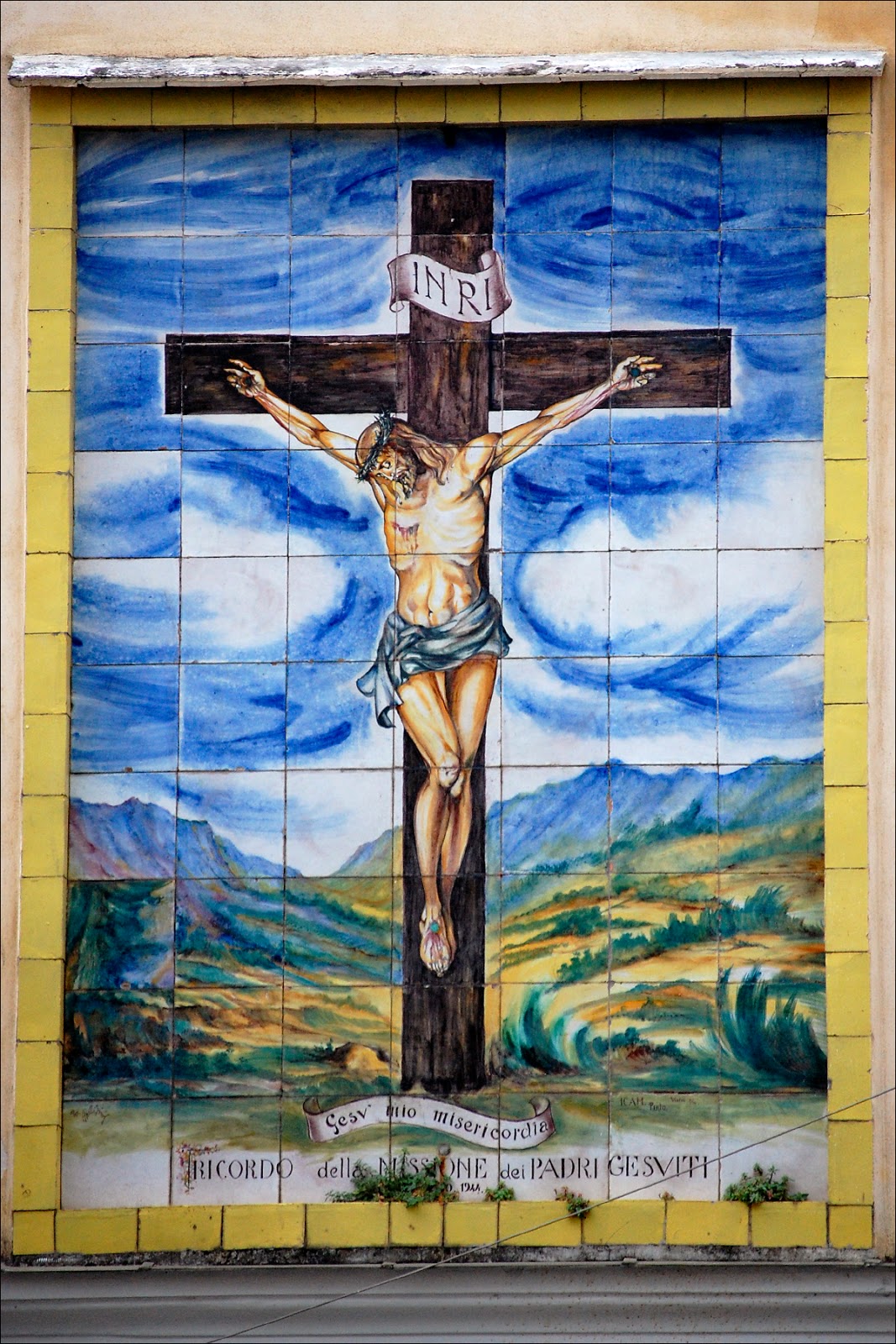
Photo of the Week: Painted Ceramic Wall Depicting the Crucifixion in Vietri sul Mare

Apropos of the Feast of the Exaltation of the Holy Cross (September 14th)
Painted ceramic wall depicting the Crucifixion in Vietri sul Mare
Photo by New York Scugnizzo

September 11, 2015

September 11: We Shall Never Forget

Street memorials honor the fallen
Our thoughts and prayers are with the victims of the September 11 terrorist attacks and their families. Requiescat in pace.

September 10, 2015

A Look at the 108th Annual Feast of Our Lady of Sorrows in Long Island City

Evviva Maria!
Photos by New York Scugnizzo
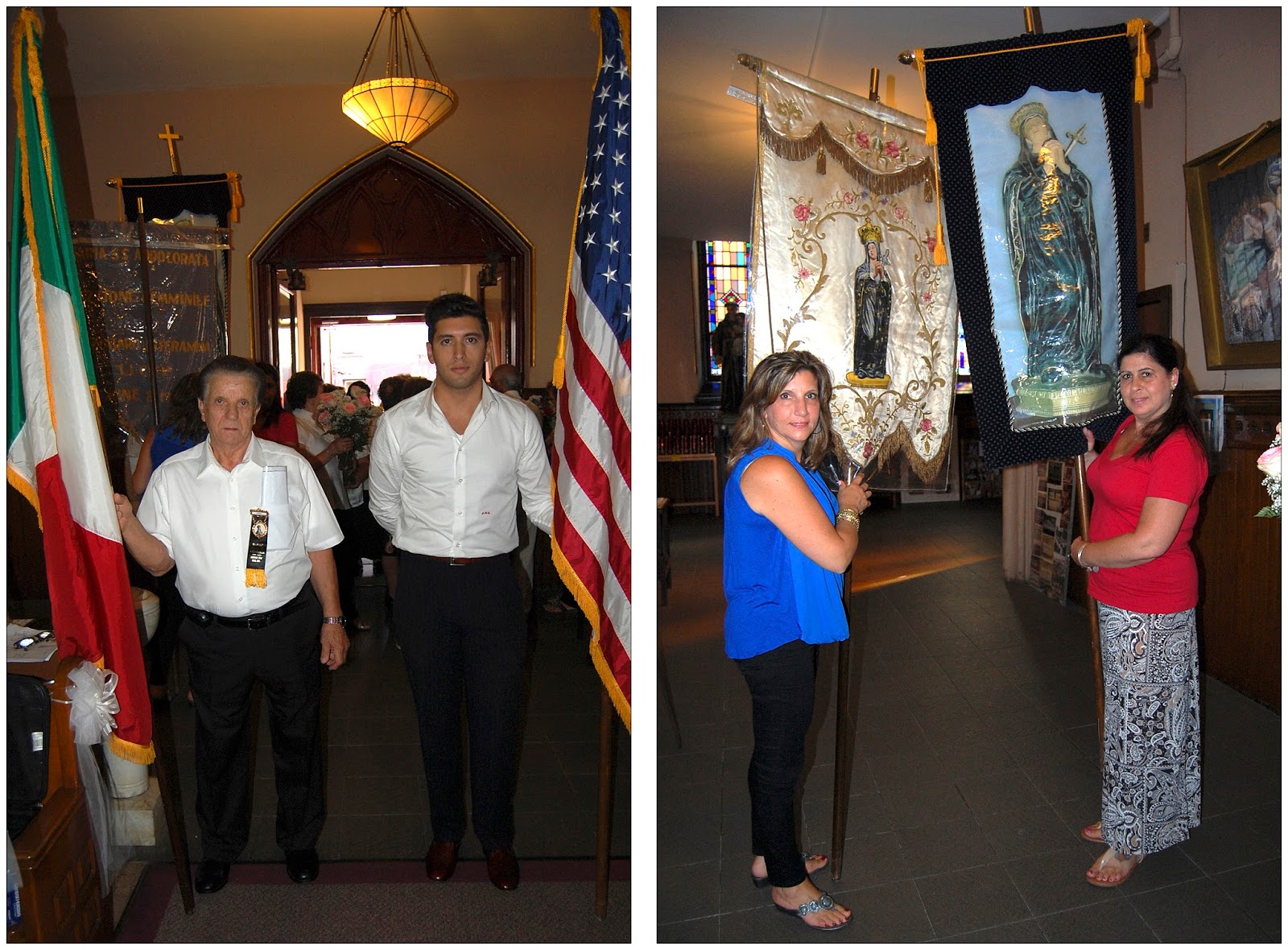
Saturday, September 5th, my friends and I joined members of the Società Maria SS. Addolorata di Pignataro Interamna at Saint Mary's Church in Long Island City, New York, to celebrate the 108th Annual Feast of the Madonna Addolorata. Thank you Emily, Rosetta, Celeste and all the members of the society for your warmth and hospitality, we had a terrific time and look forward to celebrating our faith and culture with you again next year. Evviva Maria!
The color guard and standard bearers led the way into Saint Mary's Church
Men carry images of the Seven Sorrows of the Blessed Mother
Ladies offer beautiful pink and red rose bouquets
The altar bedecked with flowers and images of the Seven Sorrows
(Left) During Mass, children offer roses to the Blessed Mother
(Right) A golden dagger is brought to the statue 
Next, the Immaculate Heart of Mary and golden crown are presented
Crowning of the statue
The statue is presented to the expectant crowd
A rousing rendition of the National Anthem
The crucifer leads the way
The procession wends its way through the neighborhood
Devotees pray and sing hymns to the Blessed Mother
Celebrants carry a large rose Rosary and lanterns
We offer thanks and prayers to New York's Bravest (left) and Finest (Right)
The Procession saunters down 49th Avenue
The Our Lady of Good Counsel Band
Afterward, we returned the statue to its place of honor beside the altar
(Above and below) The afterparty in the church auditorium was a blast!
There was plenty of delicious food, homemade wine and dancing
I enjoyed a little of everything

September 7, 2015

How My Immigrant Family Made It In America

Rocci Curci's popular Pronto Pup Creamery, San Jose, CA.
Photos courtesy of Cookie Curci
By Cookie Curci
It was to this "middle class" that I was born. It is where I have spent the past years of my life. Like most residents, I have a keen awareness and reverence for things past, as well as a feeling of pride in my present community. The generation I grew up in has undergone many changes and upheavals. But one thing still remains strong, the feelings of tradition and family unity that our parents and grandparents instilled in us and in our community .
Success for the Italian American immigrant depended a great deal on family unity. Working together as a unit was the catalyst for achieving a successful goal in the New World.
The year was 1939 when my Dad, Rocci Curci, and five of his younger brothers—Nick, Joe, Tony Frank and Sal, decided to take advantage of San Francisco’s busy downtown area to open a fast food diner. Growing up on a prune ranch in the Almaden valley of San Jose, they knew little about the restaurant business, but the young entrepreneurs sensed a golden opportunity in the bustling city and decided to make the best of a 50 mile commute to work to find some measure of success in a struggling economy.
The young brothers named their new business Hamburger King, featuring, what else, but juicy burgers hot off a sizzling grill: 10cents served on a bun and 15 cents served on a French roll. Some days the neon lights of the diner could hardly be seen through the thick fog that rolled in from the bay. The rumble and roll of the streetcars cut through this dense fog every morning with the clank, clank of their bells announcing their arrival on Chestnut Street, just in front of Hamburger King, the family owned diner. The trolley cars shuttled dozens of hungry customers in and out daily. Patrons enjoyed the family atmosphere of the diner and that lingering cup of hot java sipped over their morning chronicle.
The small business proved to be a good investment for the five brothers and Feeling a sense of new found security in their new business, they agreed to reinvest in their new business and expand the building. The paint on the walls of their new establishment wasn’t dried yet when the news of the attack on Pearl harbor blasted over the airwaves. Dec. 7th 1941 would bring an immediate and unforeseen change in their lives. Unexpected world events would suddenly put an end to their personal plans.
Just weeks after the United States declared war on Japan, Dad and his five brothers were drafted or volunteered to join the armed services. Dad, who failed to pass the Army physical exam, remained behind to run the business.
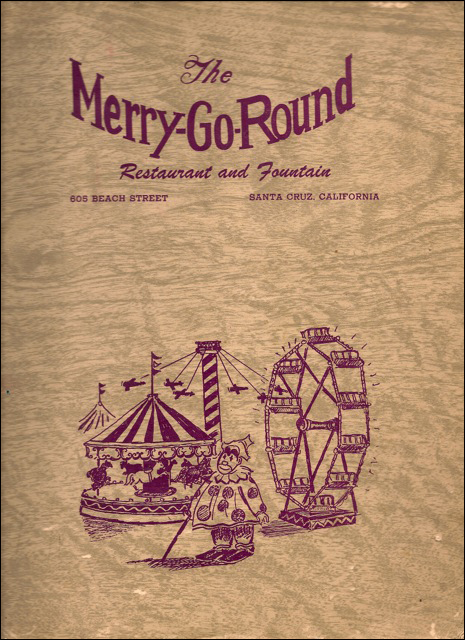
The Merry-Go-Round Restaurant menu
Overnight the Hamburger King became a favorite eating spot for the many GI’s stationed nearby at the San Francisco presidio, Trees Island and Yacht harbor.
Dad was overwhelmed by the success of the business. It was just too much for him to handle by himself. After a family meeting, it was decided that Grandma and Grandpa Dinaopli would rent an apartment in San Francisco for the duration. In that way Dad and the family could avoid a daily commute by spending a few days a week at their house. Mom and dad would often say of those days, "knowing we were all going to be together at the end of the work day, warm and comfortable in grandma’s home gave us the strength to see it through those impossible years."
The overwhelming obligation to meet the monthly bills kept my grandparents bustling frantically in the kitchen. Papa, a creative cook with a glistening smile, consistently came up with a new "dinner special" every day. They say necessity is the mother of invention, and the need to keep the bills paid helped inspire many of papa’s recipes. This pride and creativity that my grandparents felt in their cooking trickled down to their sons and their wives who were ready to step in to work at any station at the diner that needed attention.
It didn’t take long for the young serviceman to find a taste of home in grandma and grandpa's cooking style. Homemade staples were a favorite, such as sauces, stocks and soups seasoned with Italian herbs, flat parsley, and garlic. Their food was a warm reminder of what the servicemen were missing and the family they left behind.
During those long war years, everyone in the family pitched in to keep the business going. Mom recalls of that time, "learning the diner slang was half the work": a nervous pudding (Jell-O), Adam and Eve on a raft (two eggs on toast), a pig between two blankets (Ham on white bread), squeeze one (orange juice), and the popular sinkers and java (donuts and coffee).
After the war, all of Dad's brothers returned safely home from over seas. Dad, tired of the daily commute, decided to open a small business The Pronto Pup creamery in the Willow Glen area of San Jose. His brother Frank Dinaopli remained in San Francisco to open several more successful restaurants, among them, The Tides at Bodega Bay and the Vagabond Villa in San Francisco. Brothers, Tony and Nick moved to Santa Cruz California and opened the Merry–Go-Round restaurant, a Beach Street landmark for over 30 years. Later Nick and his wife Nancy opened the popular Di Napoli’s on Soquel Ave in Santa Cruz and Sal Dinapoli was the executive chef at Castagniola’s in Santa Cruz and Plateau 7 in San jose.
Pronto Pup Creamery, Willow Glen's favorite soda shop
What dad had learned from his experiences at the 1940s Hamburger King diner he brought to his 1950s Pronto Pup Creamery. The aromatic aroma of burgers and fries mixed with the tantalizing smell of Italian sausages; tomato sauce and delectable pasta made his version of the soda shop a unique experience and a huge success. Mom made all the sausages and tomato sauce in the soda shop’s a tiny back kitchen, while dad did the fry cooking.
The Pronto Pup creamery gave Dad the means to invest in real estate and to open several other businesses. Eventually, dad got out of the fast food business and, with his brother Tony, opened Curci’s Restaurant in Scott’s Valley Ca. Featuring fine Italian cuisine. This was to be Dad’s last business, but it was his most successful. Mom and I worked in the kitchen and waited tables. There was always a job available for family.
All together, Dad and his brothers owned over 15 different dinner houses, diners, and donut shops in the Bay Area. Sometimes the long hours and the nickels and dime income put the strain on family finances, but eventually all the Family businesses were successful.
Someone once asked my Grandpa DiNapoli his secret for success. His answer: "Pray for the things you want—work for the things you need.” My immigrant grandparents, and their children, worked long, hard, hours to acquire all the things they would need. And, eventually, they were granted all they could ever want in the new world.
Contact Cookie Curci at Cookiecurci@aol.com

Photo of the Week: La Chiesa di Santa Maria di Piedigrotta

Apropos of the Festa di Piedigrotta (September 8th)
La Chiesa di Santa Maria di Piedigrotta, Napoli. Photo by New York Scugnizzo

September 4, 2015

Evviva Santa Rosalia!

Scenes From the 40th Anniversary Feast of Santa Rosalia in Bensonhurst, Brooklyn
Evviva Santa Rosalia!
Photos by New York Scugnizzo
Brooklyn's eleven day celebration in honor of Santa Rosalia, beloved patroness of Palermo, Sicily culminated Sunday (August 30th) with Mass and procession through the neighborhood.
This year's Grand Marshals, Sal, Michele and Alison Strazzullo
Last year's Grand Marshal, Angelo Timoneri with Gino, Charlie and Anthony
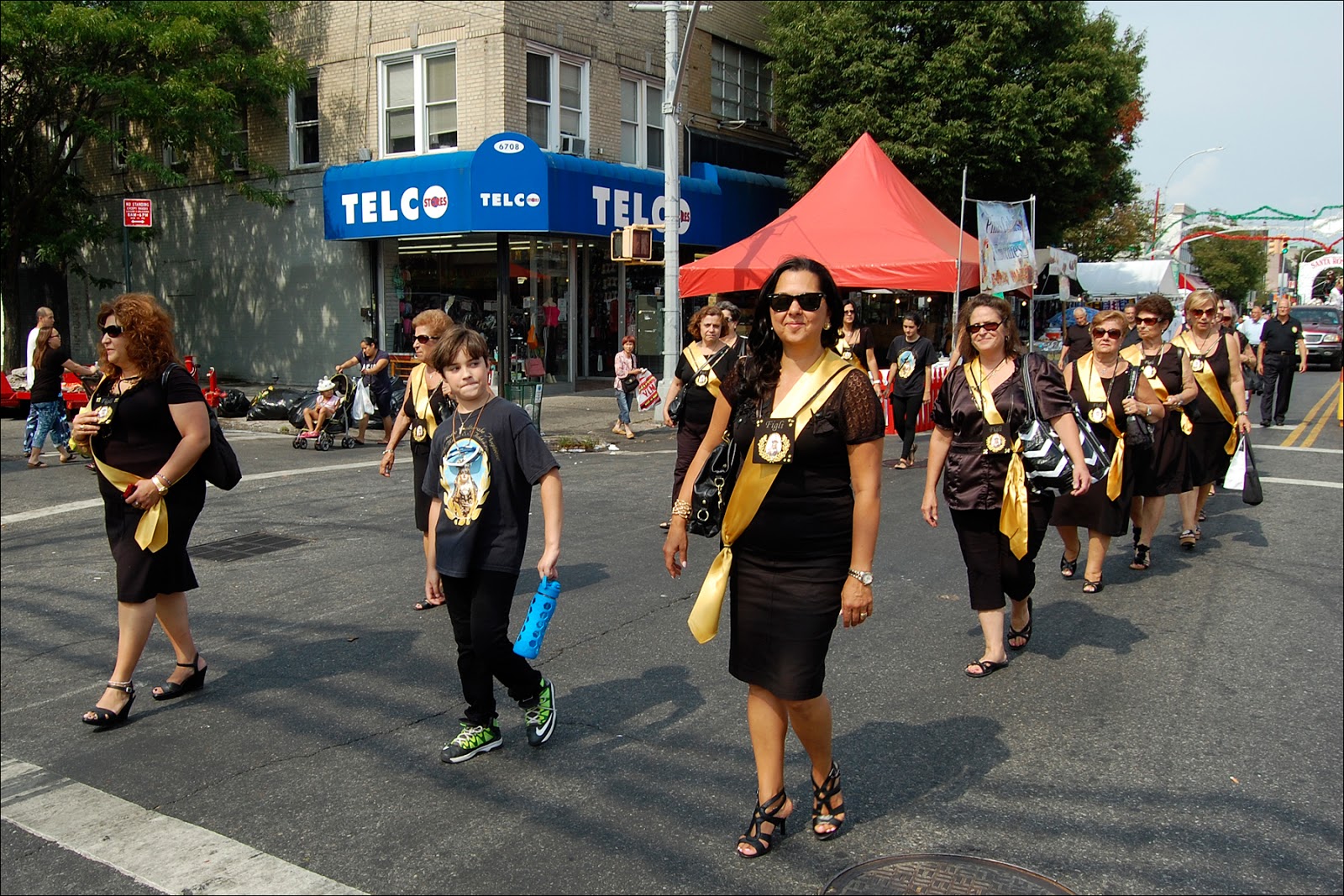
(Above and below) God bless the Associazione Culturale Pugliese Figli Maria SS. Addolorata for their continuous support and dedication to our community
Special thanks to Villabate Alba Pasticceria, who provided refreshments for the marchers. Every year they go above and beyond with their generosity 
Cannoli, a Villabate masterpiece
Our new friend Brother Gregory Cellini joined the celebration
The float makes its way down Bay Ridge Parkway
Its always great to see our friend Paolo from Joe's of Avenue U
Devotee made pilgrimage from Florida to venerate Santa Rosalia
Members of the Associazione Culturale Pugliese Figli Maria SS. Addolorata greet Santa Rosalia by the steps of St. Dominic's Church
Devotees help fix the statue's hair
After Mass, organizers take a group photo 
The statue is returned to the outdoor chapel on 18th Ave.